Brazil's Main Export: What It Is and What Buyers Can Source
What is Brazil's main export? A buyer's guide to Brazil's top exports in 2025, why sources rank them differently, who buys them, and how to source Brazilian goods safely.
Sep 26, 2026
Find verified suppliers on Tawaf
Create Free AccountCheck the label on your running shoes.
Odds are it says Made in Vietnam. The same goes for many phones, sofas and bags of coffee. Vietnam has become a major manufacturing base, and buyers now ask two questions: what does Made in Vietnam really mean, and who can I trust to supply it?
This guide answers both. It covers what the label means in trade terms, which products Vietnam makes and where, why buyers choose it over China, and how to verify a supplier and their origin claim before you send a deposit.
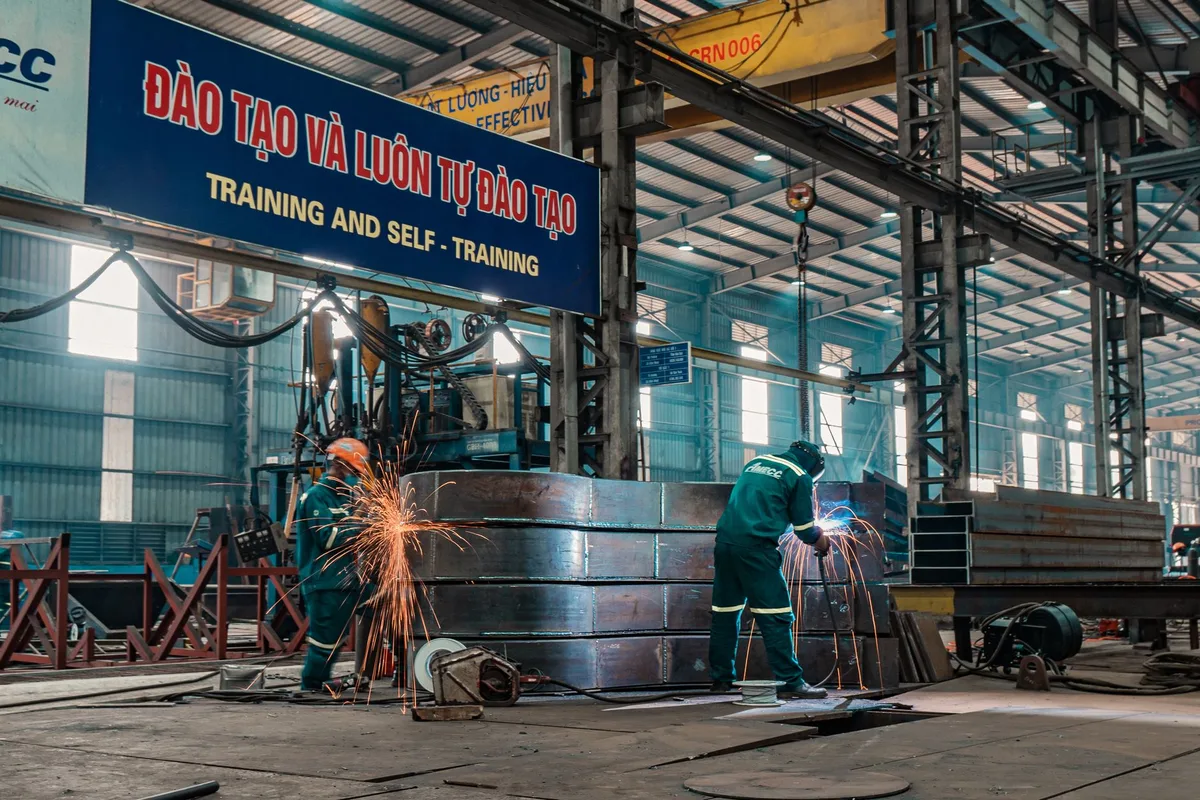
"Made in Vietnam" is a country-of-origin claim: the product was grown or produced in Vietnam, or its last substantial manufacturing step happened there. The WTO says rules of origin decide which tariffs and preferences apply. The EU-Vietnam agreement, which eliminates 99% of tariffs per the European Commission, only benefits goods that meet those origin rules.
Two ideas sit behind that label, and buyers often mix them up.
Origin is a legal test. Customs authorities decide origin by rules, not by what is printed on the carton. The WTO explains that rules of origin are the criteria used to define where a product was made, because parts and raw materials cross many borders before a product is finished. Goods wholly grown or made in one country qualify easily. Goods built from imported parts qualify only if they pass the test in the rules that apply, such as a change in tariff classification or a minimum share of local value added. Each trade agreement writes its own version.
The label is only a claim. Anyone can print "Made in Vietnam" on a box. The proof is a certificate of origin, issued by an authorised body after it reviews the exporter's production and shipping documents. In Vietnam, the Ministry of Industry and Trade and the Vietnam Chamber of Commerce and Industry (VCCI) issue these certificates.
The difference matters more than it sounds. A shirt can be cut and sewn in Vietnam from fabric woven elsewhere. Whether it counts as Vietnamese depends on the rule for that product and that trade route. It is also why tariff cuts in agreements such as the EU-Vietnam trade agreement reach only goods that qualify as Vietnamese under its rules.
So when a supplier says "Made in Vietnam," ask one follow-up every time: which certificate of origin can you provide, and under which agreement?
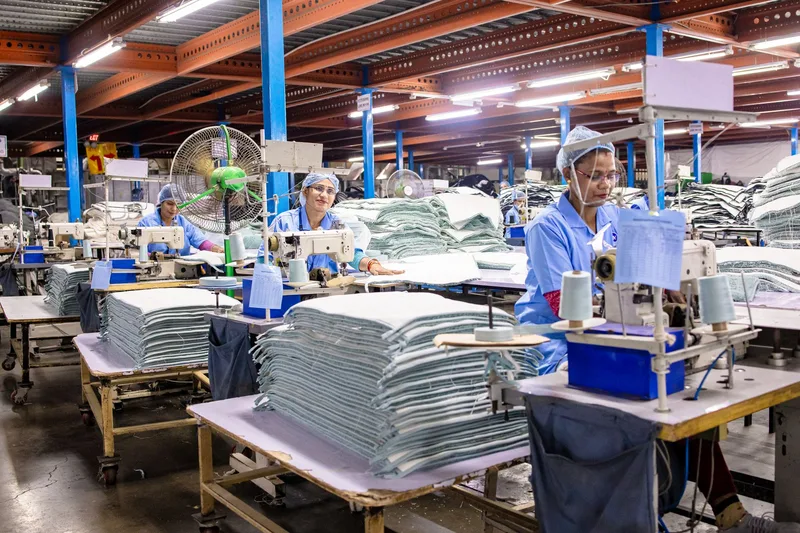
Vietnam makes electronics, garments, footwear, furniture, seafood and processed food, and it grows coffee, cashews and pepper for export. It shipped US$405.53 billion of goods abroad in 2024, of which foreign-invested firms exported US$290.94 billion and domestic firms US$114.59 billion, according to Vietnam's General Department of Customs.
The table groups what buyers source most often. Each row describes a category, not a guarantee. Always confirm that a specific factory makes your specific product.
| Category | Typical products | Where it clusters | Buyer note |
|---|---|---|---|
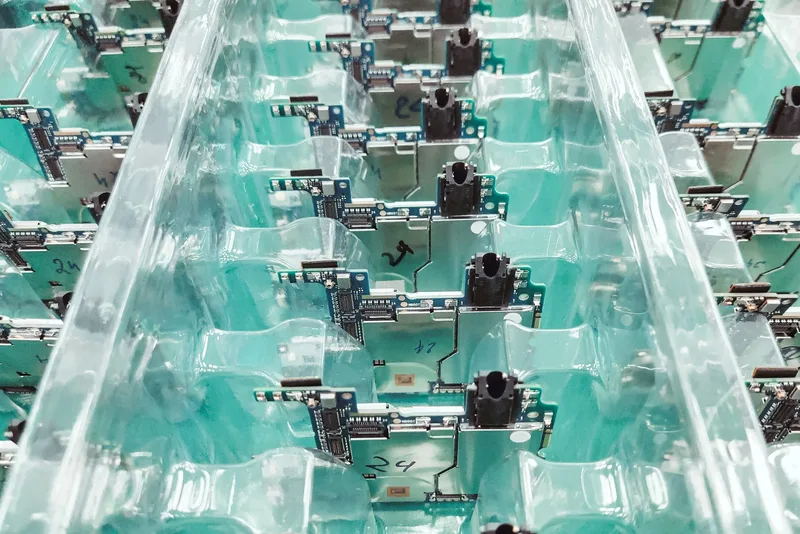
| Electronics and components | Phones, circuit boards, cables, chargers, audio parts | North around Hanoi, Bac Ninh, Thai Nguyen and Hai Phong; the high-tech park in Ho Chi Minh City | Large foreign-owned plants such as Samsung and Intel dominate. Small buyers usually reach this sector through component makers and contract assemblers. |
| Garments and textiles | T-shirts, sportswear, denim, uniforms, home textiles | Ho Chi Minh City, Dong Nai and Binh Duong zones; Hanoi and Hai Phong in the north | Fabric is often imported, so origin rules matter. |
| Footwear | Sneakers, sandals, work boots, soles and uppers | Ho Chi Minh City, Dong Nai and Long An zones; Hai Phong in the north | Contract factories supply brands such as Nike and Adidas. Ask about minimums per style. |
| Furniture and wood products | Indoor and outdoor furniture, kitchenware, flooring, panels | Binh Duong and Dong Nai zones; Quy Nhon on the central coast | Ask for timber legality papers if you sell into the EU or US. Compare with furniture from Indonesia. |
| Seafood | Pangasius, shrimp, tuna, frozen fillets | Mekong Delta | Look for HACCP certification and registered export plants. |
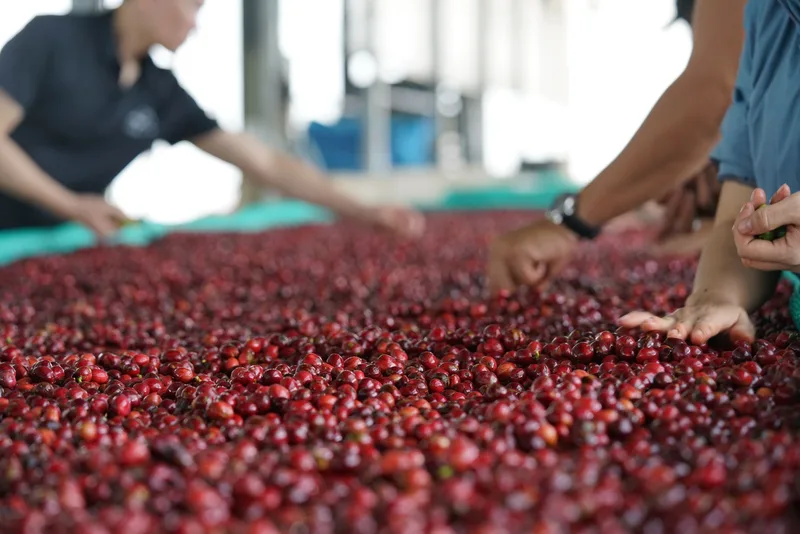
| Coffee, cashews, pepper, rice | Robusta coffee, raw and roasted cashews, black pepper, rice | Central Highlands (coffee, pepper); south-east (cashews); Mekong Delta (rice) | Vietnam is among the world's largest exporters of each. Check grade, moisture and phytosanitary papers. |
| Plastics, rubber, packaging | Housewares, rubber parts, cartons, bags | Around Ho Chi Minh City | Ask which resin or rubber grade the quote assumes. |
| Handicrafts and homeware | Bamboo and rattan goods, lacquerware, ceramics | Craft villages around Hanoi, such as Bat Trang for ceramics | Many small workshops. Minimums are lower, but quality varies more. |
Two patterns explain most sourcing outcomes. The biggest plants work for global brands, so their capacity is rarely open to small buyers. The mid-size domestic factories are where private-label, wholesale and custom orders usually land. The customs figure for foreign-invested firms also includes crude oil, so it is a trade total, not a count of factory output.
That mid-size tier is where a "Looking For" request on Tawaf works best. You describe the product, quantity and target price, and suppliers that actually make it respond.
Join Tawaf and connect with verified businesses across 47 countries. No middlemen, no commissions.
Join Tawaf FreeBuyers turn to Vietnam to spread supplier risk, use its trade agreements and, often, cut labour costs. Its trade equals nearly 170% of GDP, which the World Bank calls among the world's most open economies. Vietnam rarely replaces China outright: China supplied US$144.3 billion of Vietnam's imports in 2024, per Vietnam's General Department of Customs.
Three reasons come up in almost every buyer conversation.
Diversification. A buyer who sources everything from one country carries that country's risks: port delays, policy shifts, tariff changes. A Vietnamese supplier gives you a second route without leaving Asia. The World Bank's country overview describes Vietnam as one of the world's most open, trade-oriented economies, with a trade-to-GDP ratio of nearly 170 percent.
Trade agreements. Vietnam has signed agreements with many of the markets buyers sell into. The table lists the main ones, based on the US International Trade Administration's summary and the European Commission.
| Agreement | Status for Vietnam | Who benefits |
|---|---|---|
| ASEAN Free Trade Area (AFTA) | Vietnam is an ASEAN member | Buyers in Malaysia, Indonesia, Singapore, Thailand, the Philippines and other ASEAN members |
| CPTPP | In effect for Vietnam since 14 January 2019 | Partners include Australia, Canada, Japan, Malaysia, Mexico and Singapore |
| EU-Vietnam trade agreement | In force since 1 August 2020 | EU buyers. The Commission says it eliminates 99% of tariffs |
| RCEP | Vietnam a member since 2022 | ASEAN members plus Australia, China, Japan, South Korea and New Zealand |
| UK-Vietnam free trade agreement | Bilateral agreement | UK buyers |
Tariff cuts apply only to goods that qualify under each agreement's origin rules, and phase-in schedules differ by product. Check your own country's tariff schedule before you compare quotes.
Cost. Wages in Vietnam have generally been lower than in China's main manufacturing provinces, though the gap is narrowing. Compare landed cost, not the ex-factory price. Freight, duty and inspection can erase a small unit-price gap.
The catch. Vietnam is not a copy of China. China was the largest supplier of goods to Vietnam in 2024, at US$144.3 billion, according to Vietnam Government News, which reports customs data. Many Vietnamese factories depend on Chinese fabric, components and machinery. Ask suppliers where the key inputs come from, and what happens to your price and lead time if that supply tightens.
For a wider comparison of sourcing regions, see our guide to finding wholesale suppliers worldwide. Buyers in Malaysia can also compare Vietnamese quotes with local options in our guide to manufacturers in Malaysia.
Ready to source from Vietnam? Post a free "Looking For" request on Tawaf and let suppliers respond with quotes. Get started here. Takes a few minutes. Free. No obligation to buy.
Sourcing from Vietnam takes 6 steps: write a spec, shortlist suppliers, verify them, order samples, agree terms, and inspect before shipping. Buyers typically shortlist 5-10 suppliers before ordering samples from 2-3, so the process usually takes weeks, not days. Skipping verification is a common reason first orders fail.
Work through the steps in order. Each one protects the next.
Tawaf's threaded inquiry system keeps the spec, the quote and the sample approvals in one conversation. That helps if you later need to show what was agreed.
Verify a Vietnamese supplier in two layers: prove the business is real, then prove where the product is made. Run 5 checks: registration and tax code, factory proof, certifications, origin documents and references. Order a paid sample before any bulk deposit, because problems that surface after shipment are much harder to fix.
Use the table as a checklist. Each row pairs a check with the red flag that should stop you.
| Check | What to ask for | Red flag |
|---|---|---|
| Business identity | Enterprise registration certificate and tax code. Look the company up on Vietnam's National Business Registration Portal | Name, address or tax code that does not match the registry |
| Factory proof | Address, a live video walk-through of the production floor, machine list, staff numbers | Refuses a video call, or shows a showroom instead of a factory |
| Certifications | ISO 9001 for quality; social audits such as amfori BSCI or SMETA for apparel and footwear; HACCP for food | Certificates with no issuer, no date, or an expired date |
| Origin documents | Sample certificate of origin, bill of materials, and invoices for imported inputs | Cannot say where fabric, parts or ingredients come from |
| References | Two recent buyers, ideally in your region | Only testimonials posted on the supplier's own site |
Match the origin paperwork to your route. For trade inside ASEAN, ask about Form D. For other routes, ask which certificate or origin declaration your customs authority accepts under the agreement you plan to use. Confirm with your customs broker before you place the order.
A good supplier expects these questions. Vague or hostile answers to the first three checks are a reason to walk away. For the reasoning behind each step, read why supplier verification matters in B2B.
Costs and timelines vary by product, but the pattern is consistent. Samples typically take 1-3 weeks, standard production commonly takes 1-2 months after sample approval, and first orders often need a 30-50% deposit. Lunar New Year (Tết) closures can add 1-2 weeks or more. Confirm every figure in writing before you pay.
Treat every figure here as a starting point for your own quotes, not a promise. Ranges depend on the product, the factory and the season.
| Item | What to expect | How to manage it |
|---|---|---|
| Minimum order quantity | Varies widely. Factories serving global brands often set higher minimums than small workshops | Ask for the minimum per style, colour and size, not just per order |
| Samples | Typically 1-3 weeks for standard items; custom tooling takes longer | Pay for samples and keep the approved one as your benchmark |
| Production | Commonly 1-2 months after sample approval for standard orders | Build in a buffer for peak seasons |
| Deposit | Commonly 30-50% for a first order | Tie the balance to shipping documents or a passed inspection |
| Tết (Lunar New Year) | Factories commonly close for 1-2 weeks or longer, and output slows around the holiday | Order early and get restart dates in writing |
| Freight | Days for regional sea routes, several weeks to Europe or North America | Agree Incoterms before you sign |
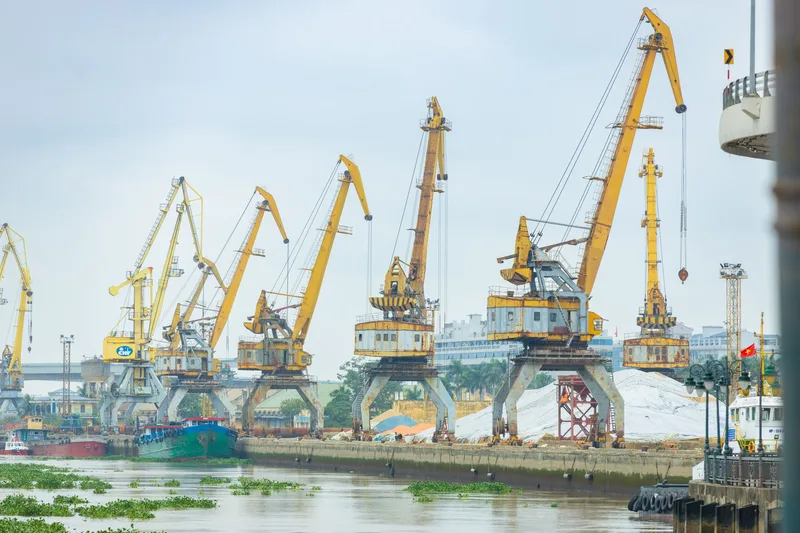
Goods leave through two main port systems: Hai Phong in the north, and the Ho Chi Minh City area in the south, including Cat Lai and Cai Mep-Thi Vai. Choose a supplier whose nearest port suits your route, because inland trucking adds cost and time.
Payment structure matters as much as price. A split payment, with a deposit to start production and the balance against shipping documents or a passed inspection, protects you better than paying in full upfront. For larger first orders, a letter of credit adds another layer. The trade finance guide for SMEs explains your options.
4 risks matter most: origin fraud, dependence on Chinese inputs, uneven quality between factories, and trade-defence duties. The European Commission has imposed anti-dumping measures on certain hot-rolled steel products from Vietnam, Egypt and Japan. Check duty exposure for your product code before you commit, because tariff treatment can change between quote and delivery.
None of these risks is a reason to avoid Vietnam. Each is a reason to ask better questions.
Quality depends on the factory, not the country. Foreign-invested firms exported US$290.94 billion of goods from Vietnam in 2024, per its General Department of Customs, and many meet the audit standards of global brands, while small workshops vary widely. Order a paid sample and inspect the bulk order before you release the balance.
Often for labour-heavy goods, but not always. Wages have generally been lower in Vietnam, yet China supplied US$144.3 billion of Vietnam's imports in 2024, so many input costs still track China's. Compare landed-cost quotes from both countries, including freight, duty and inspection, before you switch suppliers.
It varies by product and factory. Small workshops may accept 50-500 units per style, while contract factories serving global brands often ask for thousands. Ask for the minimum per style, colour and size, and confirm in writing whether the unit price changes if you order below it.
Vietnam belongs to the ASEAN free trade area, CPTPP (in effect since 14 January 2019), RCEP (since 2022) and the EU-Vietnam agreement (since 1 August 2020). Goods must meet each agreement's origin rules and carry the matching proof of origin, so ask your customs broker which one gives your product the lowest duty.
Get Started
Create your free account and start connecting with verified suppliers and buyers worldwide.
Create Free Account
We help businesses navigate cross-border trade. Our team covers supplier verification, trade compliance, and B2B marketplace strategies to connect verified businesses worldwide.
What is Brazil's main export? A buyer's guide to Brazil's top exports in 2025, why sources rank them differently, who buys them, and how to source Brazilian goods safely.
Sep 26, 2026
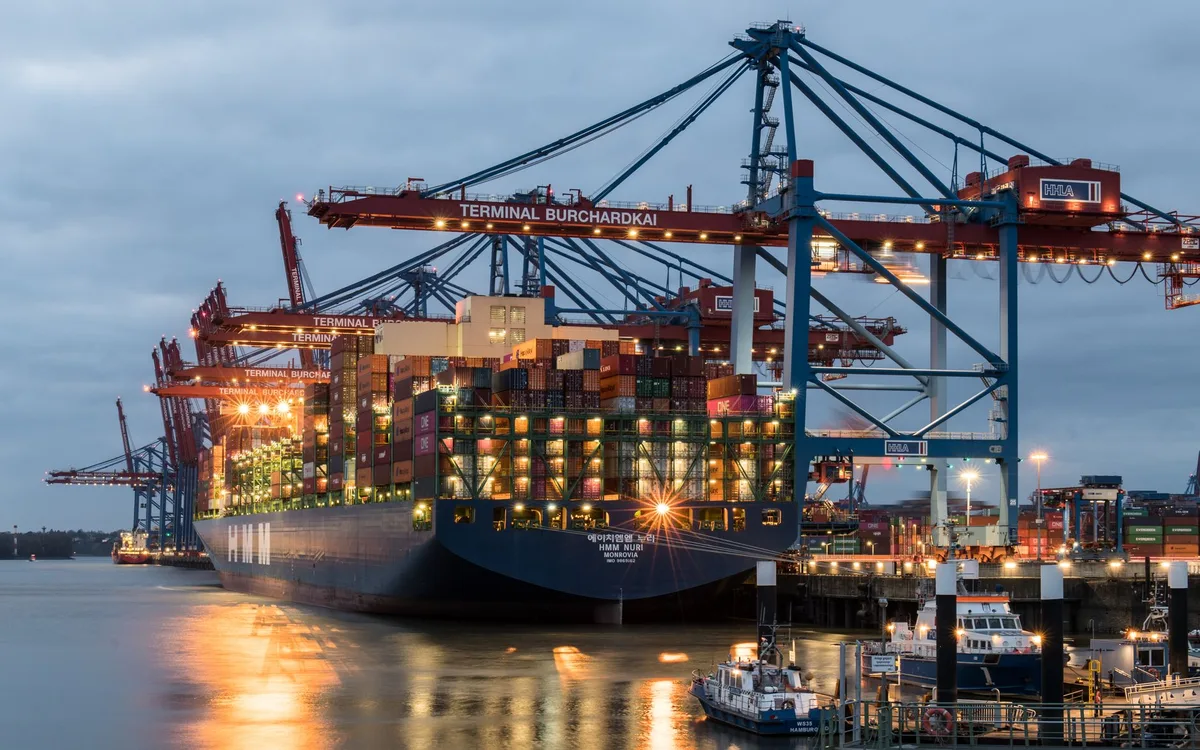
A practical guide to finding, vetting, and ordering from wholesale suppliers anywhere in the world, plus a region-by-region map of where to source what.
Sep 11, 2026
Dubai is the trading capital of the Middle East. Companies like Safco International have helped build Dubai's reputation as a global commerce hub, connecting manufacturers in Asia with buyers across the Middle East, Africa, and beyond. Whether you are researching Safco specifically or trying to unde
May 19, 2026