
Brazil's Main Export: What It Is and What Buyers Can Source
What is Brazil's main export? A buyer's guide to Brazil's top exports in 2025, why sources rank them differently, who buys them, and how to source Brazilian goods safely.
Sep 26, 2026
Find verified suppliers on Tawaf
Create Free AccountMalaysia manufactures more than you think.
Malaysia's manufacturing sector contributes 23% of GDP and employs 2.7 million workers across electronics and electrical products (38% of manufacturing exports), petroleum and chemical products (15%), palm oil and food processing (12%), rubber products (8%), automotive components (6%), and medical devices (5%). The country ranks as the world's sixth-largest semiconductor packaging and testing hub and the largest global exporter of rubber gloves.
Malaysia sits at a unique intersection of the global manufacturing map. It is not the cheapest production base — Vietnam and Bangladesh undercut it on labour costs. It is not the most technologically advanced — South Korea, Japan, and Taiwan lead there. What Malaysia offers is a middle ground: reasonably skilled labour, strong IP protection, reliable infrastructure, and a business-friendly regulatory environment.
The numbers back this up. Malaysia's total manufacturing exports exceeded $90 billion in 2025, according to the Malaysia External Trade Development Corporation (MATRADE). The sector has attracted over $40 billion in foreign direct investment since 2020, with a significant acceleration in electronics manufacturing as global companies diversify supply chains away from China.
The manufacturing base is geographically concentrated in three states: Penang (electronics), Johor (diversified manufacturing, proximity to Singapore), and Selangor (automotive, food processing, pharma). Each zone has distinct specializations, infrastructure, and incentive structures.
Tawaf currently lists 7 Malaysian businesses on the platform, covering electronics components, halal food products, and rubber manufacturing. Browse the full directory at Malaysian suppliers on Tawaf.
Penang earned the nickname because it hosts over 350 multinational electronics manufacturers — including Intel, AMD, Broadcom, Bosch, and Osram — in a concentrated industrial ecosystem that produces 5% of global semiconductor packaging and testing output. The state's Free Industrial Zones, established in 1972, created the foundation for a manufacturing cluster that now exports over $30 billion in electronics annually.
Penang's electronics story began in 1972 when the Malaysian government designated the Bayan Lepas Free Industrial Zone to attract foreign electronics manufacturers. Intel was among the first to arrive, opening its first offshore assembly plant. Over fifty years later, Penang has evolved from simple assembly operations to advanced semiconductor packaging, LED manufacturing, precision engineering, and medical device production.
The Penang electronics ecosystem today includes:
| Company Category | Examples | Products | Estimated Employment |
|---|---|---|---|
| Semiconductor firms | Intel, AMD, Broadcom, Infineon | Chip packaging, testing, assembly | 60,000+ |
| Electronic manufacturing services (EMS) | Flex, Jabil, Celestica, Plexus | PCB assembly, box build | 35,000+ |
| LED and optoelectronics | Osram, Cree, Lumileds | LED chips, lighting modules | 15,000+ |
| Precision engineering | Keysight, Vitrox, Pentamaster | Test equipment, automation | 12,000+ |
| Medical devices | B. Braun, Abbott, Smith & Nephew | Surgical instruments, disposables | 10,000+ |
| Automotive electronics | Bosch, Continental, Renesas | Sensors, control modules | 8,000+ |
What makes Penang compelling for sourcing is the cluster effect. Because so many related companies operate in close proximity, the entire supply chain — from raw materials to finished product testing — exists within a 30-kilometre radius. This reduces lead times, simplifies logistics, and makes quality audits practical.
The Penang Development Corporation offers tax incentives including Pioneer Status (0% tax for 5 years) and Investment Tax Allowance (60–100% on qualifying capital expenditure) for manufacturers investing in high-value activities.
Join Tawaf and connect with verified businesses across 47 countries. No middlemen, no commissions.
Join Tawaf FreeMalaysia's manufacturing concentrates in five zones: Penang (electronics hub with 3 Free Industrial Zones), Johor (diversified — food, petrochemicals, logistics, leveraging Singapore proximity), Selangor (automotive, pharma, halal products around Kuala Lumpur), Kedah (rice processing, rubber, emerging electronics), and Sarawak (LNG processing, aluminium smelting, timber). Each zone offers distinct incentive packages through the Malaysian Investment Development Authority (MIDA).
Here is a comparison of the major manufacturing corridors:
| Zone | State | Key Industries | Labour Availability | Infrastructure Rating | Proximity to Port | FDI Incentive Level |
|---|---|---|---|---|---|---|
| Bayan Lepas FIZ | Penang | Electronics, semiconductors | Tight (skilled) | Excellent | 15 km (Penang Port) | High |
| Kulim Hi-Tech Park | Kedah | Electronics, solar, biotech | Moderate | Good | 45 km (Penang Port) | Very high |
| Iskandar Malaysia | Johor | Diversified, logistics | Good | Excellent | 30 km (Port of Tanjung Pelepas) | High |
| Shah Alam / Klang | Selangor | Automotive, food, pharma | Good | Excellent | 20 km (Port Klang) | Moderate |
| Gebeng Industrial | Pahang | Petrochemicals, steel | Moderate | Good | 15 km (Kuantan Port) | High |
| Sama Jaya FIZ | Sarawak | Electronics, timber | Moderate | Good | 25 km (Kuching Port) | Very high |
For international buyers, the manufacturing zone matters because it affects shipping costs, lead times, and the type of products available. Electronics sourcing concentrates in Penang and Kulim. Food and halal products come primarily from Selangor and Johor. Rubber products ship from across the peninsula, with major factories in Perak and Selangor.
Malaysia leads global halal certification and manufacturing because of three structural advantages: the government-backed JAKIM halal certification (recognized by 80+ countries), a majority-Muslim population that creates natural domestic demand for halal products, and the world's most developed halal ecosystem — from halal-certified industrial parks to sharia-compliant logistics. Malaysia's halal exports exceeded $12 billion in 2025, targeting 1.9 billion Muslim consumers worldwide.
The halal opportunity is the most distinctive aspect of Malaysian manufacturing. While other countries manufacture halal products, no country has institutionalized the halal supply chain as comprehensively as Malaysia.
The Department of Islamic Development Malaysia (JAKIM) operates the world's most respected halal certification system. A JAKIM-certified product is automatically accepted in most Muslim-majority countries, eliminating the need for multiple certifications. This single-certification access to a 1.9-billion-person market is a significant competitive advantage.
Malaysia's halal manufacturing covers these categories:
| Halal Sector | Export Value (2025 est.) | Key Products | Target Markets |
|---|---|---|---|
| Food & beverages | $5.2B | Processed food, dairy, confectionery | GCC, Indonesia, China |
| Pharmaceuticals | $1.8B | Generic drugs, supplements | ASEAN, Middle East |
| Cosmetics & personal care | $1.4B | Skincare, haircare, fragrances | GCC, Europe, East Asia |
| Industrial ingredients | $2.1B | Food additives, chemicals | Global |
| Logistics | $1.5B | Cold chain, warehousing | Regional |
For B2B buyers sourcing halal products, Malaysia offers something that competitors like Turkey, Indonesia, and the UAE cannot match: end-to-end halal supply chain integrity from raw material through processing, packaging, storage, and shipping — all under JAKIM oversight.
The Malaysia Halal Council's standards cover not just the product itself but the entire manufacturing process: equipment cleanliness, ingredient sourcing, worker training, storage conditions, and transportation. This comprehensive approach means a "Made in Malaysia, Halal Certified" label carries genuine supply chain credibility.
Explore halal product manufacturers from Malaysia on Tawaf — the platform verifies trade licenses and halal certifications for listed businesses.
Malaysia provides aggressive FDI incentives through the Malaysian Investment Development Authority (MIDA): Pioneer Status granting 0% income tax for 5–10 years, Investment Tax Allowance covering 60–100% of capital expenditure, reinvestment allowance for expanding operations, and customs duty exemptions on raw materials and machinery. Special enhanced incentives apply to high-tech, green technology, and halal manufacturing projects.
The incentive structure is designed to attract specific types of manufacturing — Malaysia does not want low-value assembly; it wants high-value production that creates skilled jobs.
Here is the incentive landscape:
| Incentive | Benefit | Eligibility | Duration |
|---|---|---|---|
| Pioneer Status | 0% tax on 70–100% of statutory income | New manufacturing projects with RM 25M+ investment | 5–10 years |
| Investment Tax Allowance | 60–100% allowance on qualifying capex | Manufacturing companies, especially in promoted sectors | 5 years |
| Reinvestment Allowance | 60% allowance on capex for expansion | Existing manufacturers expanding capacity | 15 years |
| Custom Duty Exemption | 0% duty on raw materials, components, machinery | Export-oriented manufacturers (80%+ exports) | Ongoing |
| Green Technology Tax Incentive | 70% income tax exemption | Manufacturers using or producing green tech | 5 years |
| Principal Hub Incentive | 0–10% tax rate | Companies establishing regional HQ in Malaysia | 5 years + renewal |
| Halal Industry Incentive | Additional Pioneer Status extension | Halal-certified manufacturers in designated parks | 5 years |
The application process runs through MIDA and typically takes 6–12 months. Projects above RM 500 million get fast-tracked through the National Committee on Investment.
For international buyers, these incentives matter because they keep Malaysian manufacturing costs competitive despite higher wages than Vietnam or Bangladesh. The tax savings translate to factory-level pricing that remains attractive for medium to high complexity products.
Looking for verified Malaysian manufacturers? Create your free Tawaf account to browse 7 Malaysian businesses and growing — send enquiries directly, compare products, and start sourcing.
Malaysia occupies the quality-cost middle ground in ASEAN manufacturing. It is more expensive than Vietnam, Cambodia, and Indonesia on labour costs but cheaper than Singapore, Japan, and South Korea. Its advantages over cheaper neighbours include better IP protection, more reliable electricity and water infrastructure, English-speaking workforce, and stronger regulatory compliance — making it ideal for medium-complexity, quality-sensitive manufacturing.
Here is a direct comparison across key manufacturing metrics:
| Metric | Malaysia | Vietnam | Thailand | Indonesia | Philippines | Singapore |
|---|---|---|---|---|---|---|
| Manufacturing labour cost ($/hour) | $4.50–$7.00 | $2.50–$4.00 | $4.00–$6.00 | $2.00–$3.50 | $2.50–$4.50 | $15–$25 |
| Electricity reliability (hours/year downtime) | 50–80 | 200–400 | 80–120 | 300–600 | 400–700 | <10 |
| IP protection index (0–100) | 68 | 42 | 55 | 45 | 48 | 85 |
| English proficiency | High | Low–Medium | Low–Medium | Low | High | Very high |
| Logistics Performance Index | 3.2 | 3.0 | 3.1 | 2.9 | 2.8 | 4.0 |
| Ease of Doing Business | Top 15 | Top 70 | Top 25 | Top 75 | Top 95 | Top 3 |
The practical implication: if you need a product manufactured to exact specifications with consistent quality and reliable delivery, and Vietnam's infrastructure gaps or Indonesia's logistics challenges create unacceptable risk, Malaysia is the next logical choice before jumping to Singapore's premium pricing.
This is especially true for electronics, medical devices, and automotive components — product categories where quality variance has real consequences. A faulty consumer electronic from a Vietnamese factory costs a recall. A faulty medical device carries liability. Malaysian manufacturers have the quality systems, certifications (ISO 13485, IATF 16949), and regulatory track record that risk-sensitive buyers require.
The primary challenges are higher labour costs compared to Vietnam and Indonesia, tight skilled labour availability in electronics manufacturing zones (especially Penang), minimum order quantities that can be higher than expected for a mid-size manufacturing country, and longer lead times for customized products due to multi-tier approval processes. Currency fluctuation of the Malaysian Ringgit against the USD can also affect pricing predictability.
Understanding these challenges helps set realistic sourcing expectations:
Labour costs and availability. Malaysia's unemployment rate hovers around 3.5%, which means manufacturers compete for workers. In Penang's electronics corridor, talent poaching between factories is routine. This drives wages up and can cause production delays if a key shift loses experienced workers to a competitor.
MOQ expectations. Malaysian manufacturers have moved upmarket. Many no longer accept small trial orders that were common 10 years ago. Expect MOQs of 1,000–5,000 units for electronics components, 5,000–10,000 units for injection-moulded plastic parts, and 10,000+ units for commodity items like rubber gloves or packaging materials.
Communication style. Malaysian business culture is relationship-oriented. Cold emails requesting quotes often go unanswered. The more effective approach is to connect through platforms that facilitate introductions — like Tawaf's supplier directory — or attend Malaysian trade shows where face-to-face initial contact leads to productive business relationships.
Regulatory compliance. Malaysia's regulatory environment is stricter than some ASEAN neighbours. This is an advantage for quality but adds time and cost. Product certifications from SIRIM (Standards and Industrial Research Institute of Malaysia), halal certification from JAKIM, and environmental compliance from DOE all add lead time to the sourcing process.
Start with MATRADE (Malaysia External Trade Development Corporation) supplier directories and B2B platforms like Tawaf that verify trade licenses. Vet manufacturers by requesting their SSM (Companies Commission of Malaysia) registration, ISO certifications, factory audit reports, and customer references. Visit the factory if ordering above $50,000 — Malaysia's visa-on-arrival policy for 160+ countries makes this practical.
A step-by-step vetting process:
Identify potential suppliers. Search MATRADE's directory, industry-specific platforms, and general B2B marketplaces. Tawaf lists Malaysian suppliers with verified business credentials.
Verify registration. Every Malaysian company must be registered with SSM. Ask for the registration number and verify it online. This confirms the company legally exists and tells you when it was established.
Check certifications. For electronics: ISO 9001, ISO 14001. For medical devices: ISO 13485. For automotive: IATF 16949. For halal products: JAKIM certificate with current validity date.
Request samples. Reputable manufacturers send samples (sometimes free for low-cost items, paid for complex products). Test samples against your specifications before committing to production orders.
Conduct a factory audit. For significant orders, visit the factory or hire a third-party auditor. Malaysia's major manufacturing zones are within 2 hours of Kuala Lumpur International Airport. MIDA can facilitate factory visit arrangements.
Start with a trial order. Place a small production order (above MOQ but below your full demand) to test quality consistency, packaging, communication, and delivery reliability.
Malaysia's manufacturing strategy through 2030 focuses on four pillars: advanced electronics and semiconductors (leveraging the global chip supply chain diversification trend), green manufacturing (targeting $10B in green technology exports), halal economy expansion (targeting $25B in halal exports), and Industry 4.0 adoption (smart factories, IoT integration). Government investment of RM 50 billion in the New Industrial Master Plan 2030 backs these priorities.
The New Industrial Master Plan 2030 (NIMP 2030), launched in September 2023 by the Malaysian government, sets explicit targets for manufacturing sector growth. The plan focuses on moving Malaysia from volume-based to value-based manufacturing.
Key targets:
For international buyers, these strategic shifts mean Malaysian manufacturers are investing in automation, quality systems, and sustainability certifications. Products sourced from Malaysia in 2026 and beyond will increasingly carry certifications and compliance documentation that buyers in regulated markets (EU, US, Japan) require.
The semiconductor supply chain diversification triggered by US-China tensions has directed billions in new investment to Penang and Kulim. Intel announced a $7 billion expansion of its Penang operations. Multiple Chinese semiconductor firms have established Malaysian operations to maintain access to Western markets. This influx of investment strengthens the broader manufacturing ecosystem.
It depends on the sector. Electronics component manufacturers typically require MOQs of 1,000–5,000 units. Food manufacturers may accept trial orders of 500–1,000 units. Rubber product manufacturers often require 5,000+ units. The best approach is to use a B2B platform like Tawaf to communicate your requirements upfront and find manufacturers whose MOQs match your scale.
Yes. Malaysia's education system uses English for science and technical subjects. Most factory managers, sales teams, and quality personnel speak English fluently. Production floor workers may speak primarily Malay, Chinese (Mandarin, Hokkien, Cantonese), or Tamil, but this rarely affects buyer-supplier communication since it is handled by management.
Sea freight from Port Klang (Malaysia's largest port) to Jebel Ali (Dubai) takes 10–14 days. Air freight from Kuala Lumpur to Dubai takes 6–8 hours. The established Malaysia-GCC shipping route offers competitive freight rates and frequent sailings, reflecting strong bilateral trade volumes.
Yes. OEM and ODM manufacturing is a core strength, especially in electronics, plastics, and food processing. Malaysian manufacturers are experienced with brand-owner specifications, custom packaging, and compliance documentation for destination markets. Expect 8–16 weeks from approved design to first production run.
Standard payment terms are T/T (telegraphic transfer) with 30% deposit and 70% before shipping. Some established suppliers offer 30-day net terms for repeat buyers. Letters of credit (L/C) are accepted for orders above $50,000. Avoid Western Union or informal payment channels — use bank-to-bank transfers for documentation and dispute resolution.
Get Started
Create your free account and start connecting with verified suppliers and buyers worldwide.
Create Free Account
We help businesses navigate cross-border trade. Our team covers supplier verification, trade compliance, and B2B marketplace strategies to connect verified businesses worldwide.
What is Brazil's main export? A buyer's guide to Brazil's top exports in 2025, why sources rank them differently, who buys them, and how to source Brazilian goods safely.
Sep 26, 2026
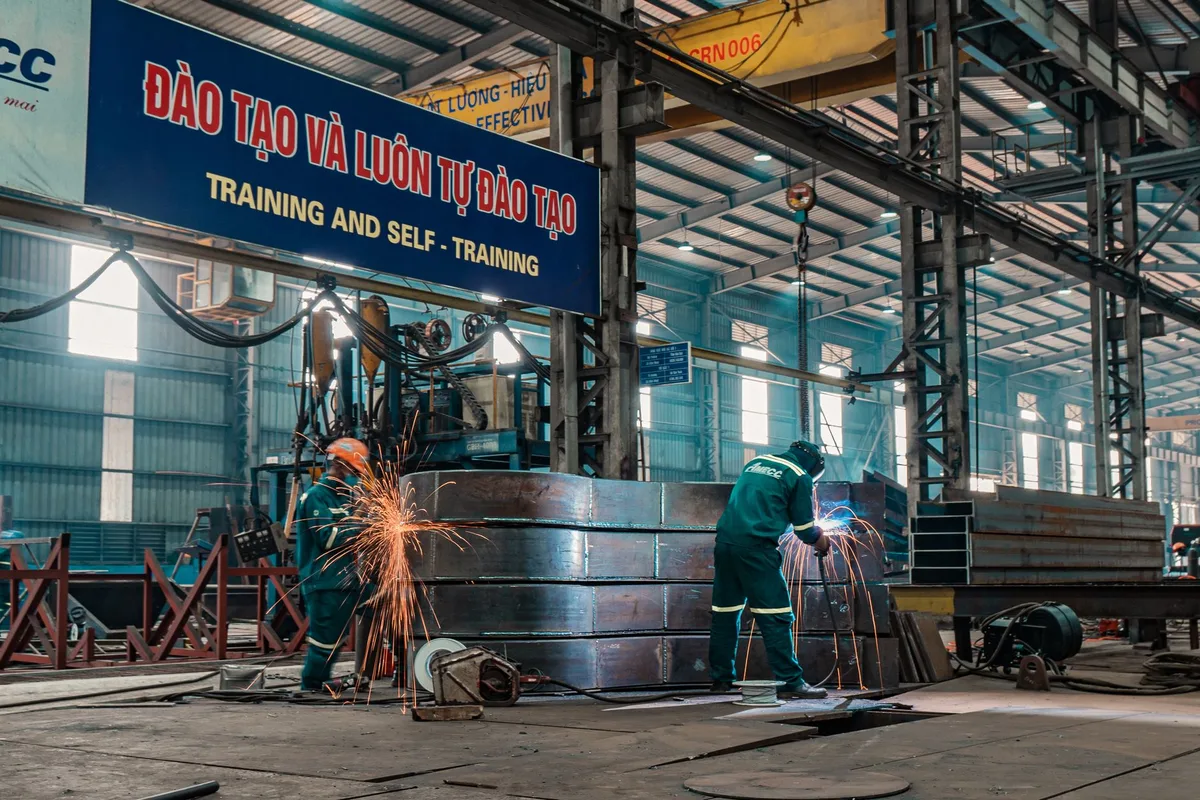
A buyer's guide to Made in Vietnam: what the label means, which products the country manufactures, and how to verify suppliers and origin claims before you order.
Sep 20, 2026
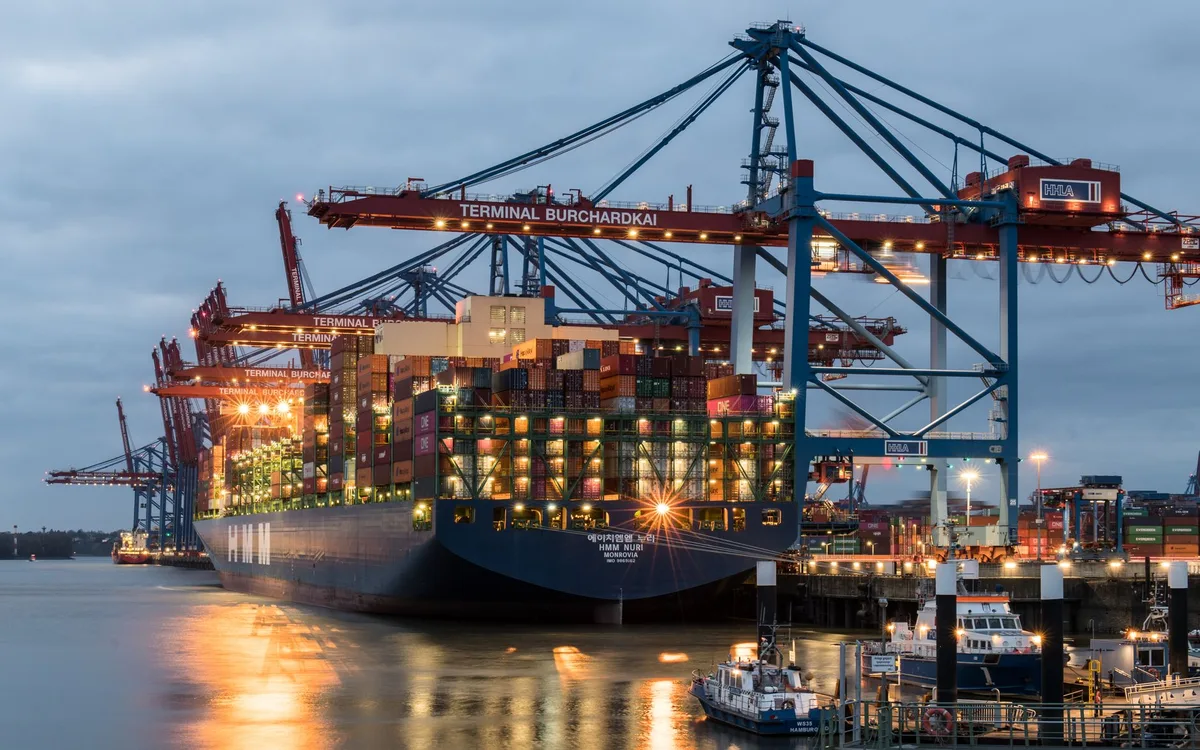
A practical guide to finding, vetting, and ordering from wholesale suppliers anywhere in the world, plus a region-by-region map of where to source what.
Sep 11, 2026