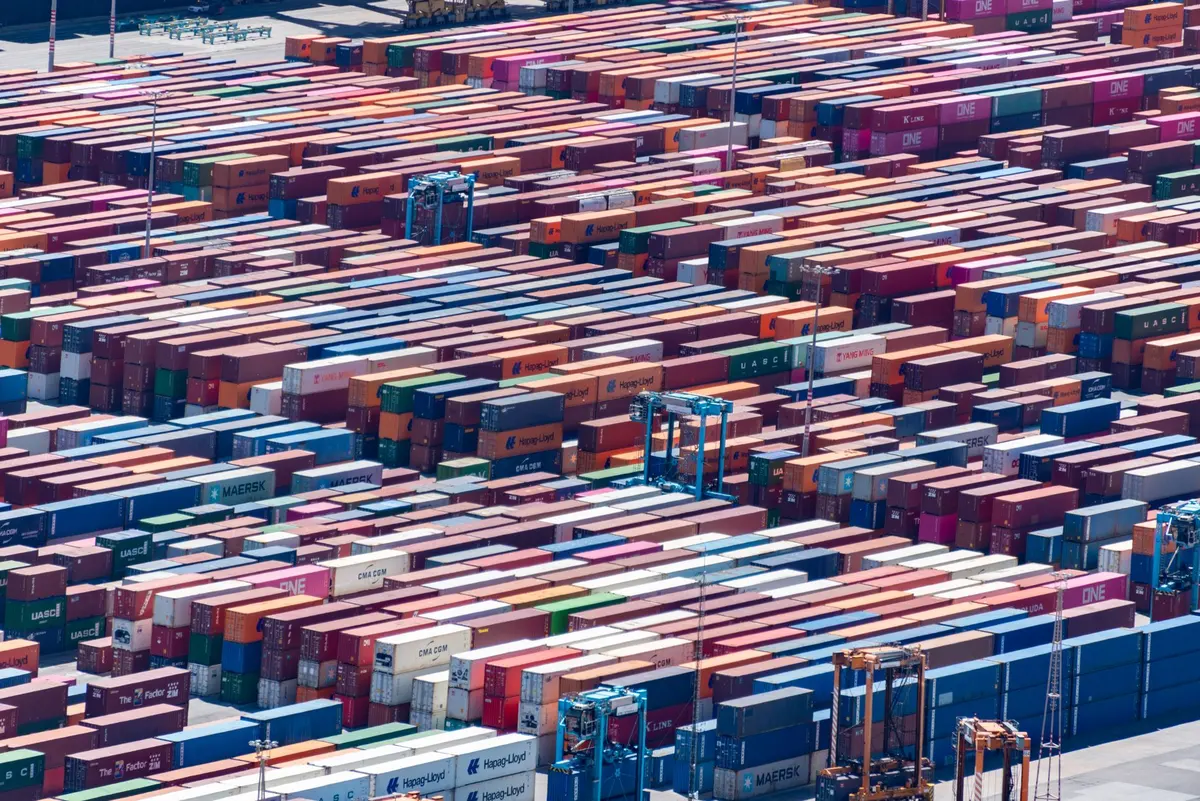
11 Best Sites Like Alibaba for B2B Sourcing in 2026
Alibaba is not always the right fit. Here are 11 alternative B2B marketplaces, ranked by sourcing region and use case, so you can find suppliers Alibaba's algorithm never surfaces.
Sep 30, 2026
Find verified suppliers on Tawaf
Create Free AccountIncoterms confuse most first-time importers. If you have ever received a quote labelled "FOB Shenzhen" or "CIF Jeddah" and wondered what exactly you are paying for, you are not alone. The International Chamber of Commerce (ICC) created Incoterms to standardise who pays what, who bears the risk, and at which point responsibility transfers from seller to buyer. This incoterms guide breaks down every single rule so you can negotiate smarter and avoid expensive surprises.
Incoterms (International Commercial Terms) are a set of 11 standardised trade rules published by the ICC that define the responsibilities of buyers and sellers in international transactions, covering costs, risks, and logistics obligations.
Think of Incoterms as the rulebook for who does what when goods cross borders. Without them, a seller in Turkey and a buyer in Nigeria would spend weeks arguing about who pays for freight, who arranges customs clearance, and who is liable if a container falls off a ship.
The current version, Incoterms 2020, came into effect on 1 January 2020 and replaced the 2010 edition. The ICC updates these rules roughly every ten years, and the 2020 version introduced changes to CIF and CIP insurance requirements along with a new FCA option for bills of lading.
Every international purchase order, invoice, and letter of credit should reference the specific Incoterm being used. Getting this wrong can mean unexpected costs of thousands of dollars on a single shipment.
If you are sourcing products through a B2B marketplace like Tawaf, understanding these terms is non-negotiable. They directly affect your landed cost, your insurance obligations, and your cash flow.
The 11 Incoterms 2020 are split into two groups: seven rules for any mode of transport and four rules exclusively for sea and inland waterway transport.
Here is the complete breakdown:
| Incoterm | Full Name | Seller's Responsibility Ends At | Best For |
|---|---|---|---|
| EXW | Ex Works | Seller's premises | Experienced buyers with own logistics |
| FCA | Free Carrier | Named place (carrier pickup) | Most versatile, suits containers |
| CPT | Carriage Paid To | Delivery to carrier (risk), destination (cost) | Multi-modal shipments |
| CIP | Carriage and Insurance Paid To | Same as CPT plus insurance to destination | High-value multi-modal goods |
| DAP | Delivered at Place | Destination, before unloading | Door-to-door without customs |
| DPU | Delivered at Place Unloaded | Destination, after unloading | Bulk cargo with unloading needs |
| DDP | Delivered Duty Paid | Buyer's door, all duties paid | Maximum convenience for buyer |
| Incoterm | Full Name | Seller's Responsibility Ends At | Best For |
|---|---|---|---|
| FAS | Free Alongside Ship | Quayside, next to vessel | Bulk commodities, raw materials |
| FOB | Free on Board | Goods loaded on vessel | Traditional sea freight |
| CFR | Cost and Freight | On board (risk), destination port (cost) | Sea freight, buyer arranges insurance |
| CIF | Cost, Insurance, and Freight | On board (risk), destination port (cost + insurance) | Sea freight, seller arranges insurance |
The most commonly used terms in B2B trade are EXW, FOB, CIF, and DDP. If you are just starting out, focus on these four first.
Join Tawaf and connect with verified businesses across 47 countries. No middlemen, no commissions.
Join Tawaf FreeEXW (Ex Works) means the seller makes goods available at their premises and the buyer assumes all costs and risks from that point forward, including export clearance, freight, and import duties.
EXW is the minimum obligation for the seller. They literally just need to make the goods available at their factory or warehouse. Everything else, from loading the truck to clearing customs on both ends, falls on the buyer.
This sounds like it gives the buyer maximum control, and it does. But it also gives you maximum headaches if you do not have a freight forwarder and customs broker lined up in the seller's country.
When to use EXW:
When to avoid EXW:
Many suppliers on Tawaf quote EXW as their default because it is simplest for them. If you see an EXW price and you are not ready to handle origin logistics, ask the supplier if they can quote FOB or CIF instead.
FOB (Free on Board) means the seller delivers goods loaded onto a vessel at the named port of shipment, transferring risk to the buyer once the goods are on board the ship.
FOB is arguably the most widely used Incoterm in international trade. It strikes a practical balance: the seller handles export clearance and gets the goods onto the ship, and the buyer takes over from there.
Here is why FOB works so well:
A practical example: you are buying textiles from a supplier in Karachi. With FOB Karachi, the supplier gets the goods through Pakistan customs, delivers them to the port, and loads them on your nominated vessel. From that moment, you are responsible for ocean freight, insurance, destination customs, and delivery to your warehouse.
According to the World Trade Organization, maritime transport accounts for over 80% of global merchandise trade by volume, which explains FOB's dominance.
The key difference is that under CIF the seller pays for freight and insurance to the destination port, while under FOB the buyer arranges and pays for freight and insurance from the origin port.
This is probably the most common question in international trade. Let us compare them directly:
| Factor | FOB | CIF |
|---|---|---|
| Freight cost | Buyer pays | Seller pays |
| Insurance | Buyer arranges | Seller arranges (minimum cover) |
| Risk transfer | Origin port (on board) | Origin port (on board) |
| Cost transfer | Origin port | Destination port |
| Buyer's control over shipping | Full | Limited |
| Best for | Experienced importers | New importers, smaller orders |
Notice something critical: under CIF, the risk still transfers at the origin port even though the seller pays freight to the destination. This means if the ship sinks halfway, the buyer bears the loss -- not the seller. The seller's insurance obligation under CIF 2020 is only Institute Cargo Clause C, which is the minimum level of cover.
If you want better insurance, negotiate for CIP instead, which requires the seller to obtain Institute Cargo Clause A (all-risks) cover under Incoterms 2020.
Ready to find verified suppliers who understand these terms? Create your free Tawaf account and start connecting with traders who speak your language -- literally and commercially.
DDP (Delivered Duty Paid) places maximum responsibility on the seller, who must deliver goods to the buyer's named destination cleared for import with all duties and taxes paid.
DDP is the opposite of EXW. The seller handles everything: export clearance, freight, insurance, import clearance, duties, and delivery to your door. As the buyer, all you do is receive the goods.
This sounds ideal, but there are catches:
DDP works best when:
For regular, high-volume trade, most buyers prefer FOB or CIF and manage their own logistics chain.
Choose your Incoterm based on four factors: your logistics capability, the transport mode, how much control you want over costs, and the level of risk you are willing to accept.
Here is a decision framework:
| Your Situation | Recommended Incoterm | Why |
|---|---|---|
| First-time importer, small order | CIF or DDP | Seller handles most logistics |
| Experienced importer, sea freight | FOB | Maximum control over freight costs |
| Multi-modal transport (air + land) | FCA or CIP | Designed for non-sea transport |
| You have a warehouse at destination | DAP | Seller delivers but you handle customs |
| You need everything door-to-door | DDP | Maximum convenience |
| You have logistics partners everywhere | EXW | Lowest purchase price |
| Bulk commodities via sea | FAS or FOB | Traditional for raw materials |
One important tip: the Incoterm you choose directly affects your landed cost calculation. If you are comparing quotes from different wholesale product suppliers, make sure you are comparing like for like. A $10,000 FOB quote and a $12,500 CIF quote might result in similar landed costs once you add your own freight to the FOB price.
Risk transfer is the exact moment when liability for loss or damage shifts from the seller to the buyer, and it varies significantly across the 11 Incoterms.
Understanding risk transfer is arguably more important than understanding cost allocation. Here is where risk shifts for each term:
| Incoterm | Risk Transfers When... |
|---|---|
| EXW | Goods are made available at seller's premises |
| FCA | Goods are delivered to the carrier at the named place |
| FAS | Goods are placed alongside the vessel |
| FOB | Goods are loaded on board the vessel |
| CPT | Goods are delivered to the first carrier |
| CFR | Goods are loaded on board the vessel |
| CIP | Goods are delivered to the first carrier |
| CIF | Goods are loaded on board the vessel |
| DAP | Goods arrive at destination, ready for unloading |
| DPU | Goods are unloaded at destination |
| DDP | Goods arrive at destination, cleared for import |
The critical insight here is that for CPT, CFR, CIP, and CIF, the cost and risk transfer points are different. The seller pays for transport to the destination, but risk transfers much earlier. This catches many new traders off guard.
The biggest mistakes include using sea-only terms for air freight, assuming CIF means the seller bears all risk to destination, and failing to specify the exact named place.
Here are the errors that cost businesses real money:
1. Using FOB for air freight or container shipments. FOB is technically for sea freight only. For containerised cargo picked up at the seller's premises, FCA is more appropriate because the goods are handed to the carrier at an inland point, not loaded onto a vessel.
2. Thinking CIF means risk-free delivery. As we covered, CIF only means the seller pays freight and insurance. Risk still transfers at the origin port.
3. Not specifying the named place precisely. "FOB China" is meaningless. You need "FOB Shanghai" or "FOB Ningbo" to be clear about which port.
4. Ignoring insurance adequacy. CIF only requires minimum insurance cover. For high-value goods, this is often insufficient.
5. Using DDP without understanding tax implications. If the seller is not registered for VAT or GST in your country, DDP can create tax compliance problems.
Browsing supplier profiles on Tawaf will show you which suppliers are experienced with specific Incoterms. Look for traders who list their preferred shipping terms upfront -- it is a sign of professionalism.
The Incoterm specified in a letter of credit determines which documents the seller must present to the bank, and mismatches between the LC and the commercial invoice are a leading cause of payment rejections.
If you are using trade finance instruments like letters of credit, the Incoterm has direct banking implications:
Banks are ruthless about document compliance. If your LC says "CIF Jeddah" and the insurance certificate is missing or shows the wrong amount, the bank will reject the documents and you will not get paid (if you are the seller) or receive your goods on time (if you are the buyer).
Always ensure your Incoterm is consistent across the purchase order, proforma invoice, commercial invoice, letter of credit, and bill of lading.
The main changes in Incoterms 2020 include higher insurance requirements for CIP, a new FCA bill of lading option, renamed DAT to DPU, and updated security-related transport obligations.
| Change | Incoterms 2010 | Incoterms 2020 |
|---|---|---|
| CIP Insurance | Institute Cargo Clause C (minimum) | Institute Cargo Clause A (all-risks) |
| CIF Insurance | Institute Cargo Clause C (minimum) | Institute Cargo Clause C (unchanged) |
| DAT | Delivered at Terminal | Renamed to DPU (Delivered at Place Unloaded) |
| FCA + B/L | No provision | Buyer/seller can agree seller obtains on-board B/L |
| Transport security | General reference | Specific allocation of security costs |
| Own transport | Not addressed | Seller/buyer can use own vehicles for FCA, DAP, DPU, DDP |
The CIP change is significant for buyers. If your supplier quotes CIP, they now must provide all-risks insurance, giving you substantially better protection compared to the 2010 rules.
Tawaf's supplier profiles include preferred Incoterms, and the platform's inquiry system lets you negotiate shipping terms directly with verified suppliers before committing to an order.
Finding a supplier is one thing. Agreeing on terms that protect both parties is another. On Tawaf, you can:
Whether you are a first-time importer needing DDP simplicity or a seasoned trader who wants EXW control, the right supplier will accommodate your preference.
CIF or DDP. Both minimise the logistics burden on the buyer. CIF is better if you want to handle customs clearance yourself (which gives you more control over duties), while DDP offloads everything to the seller.
Technically no. FOB is designated for sea and inland waterway transport only. For air freight, use FCA with the named airport or seller's premises as the delivery point. However, many traders informally use "FOB" for air freight -- just be aware this is not ICC-compliant and could cause disputes.
No. Incoterms define cost allocation and risk transfer, not the transfer of title or ownership. Ownership transfer is governed by the sales contract and applicable law, not the Incoterm.
Incoterms 2020 is the current version, but contracts can still reference Incoterms 2010 if both parties agree. However, it is best practice to use the 2020 rules for new contracts, as banks and insurers increasingly expect them.
This is a recipe for disputes. Without a specified Incoterm, each party may assume different obligations, leading to cost disagreements, insurance gaps, and potential legal conflicts. Always specify the Incoterm, version year, and named place in writing.
Get Started
Create your free account and start connecting with verified suppliers and buyers worldwide.
Create Free Account
We help businesses navigate cross-border trade. Our team covers supplier verification, trade compliance, and B2B marketplace strategies to connect verified businesses worldwide.
Alibaba is not always the right fit. Here are 11 alternative B2B marketplaces, ranked by sourcing region and use case, so you can find suppliers Alibaba's algorithm never surfaces.
Sep 30, 2026
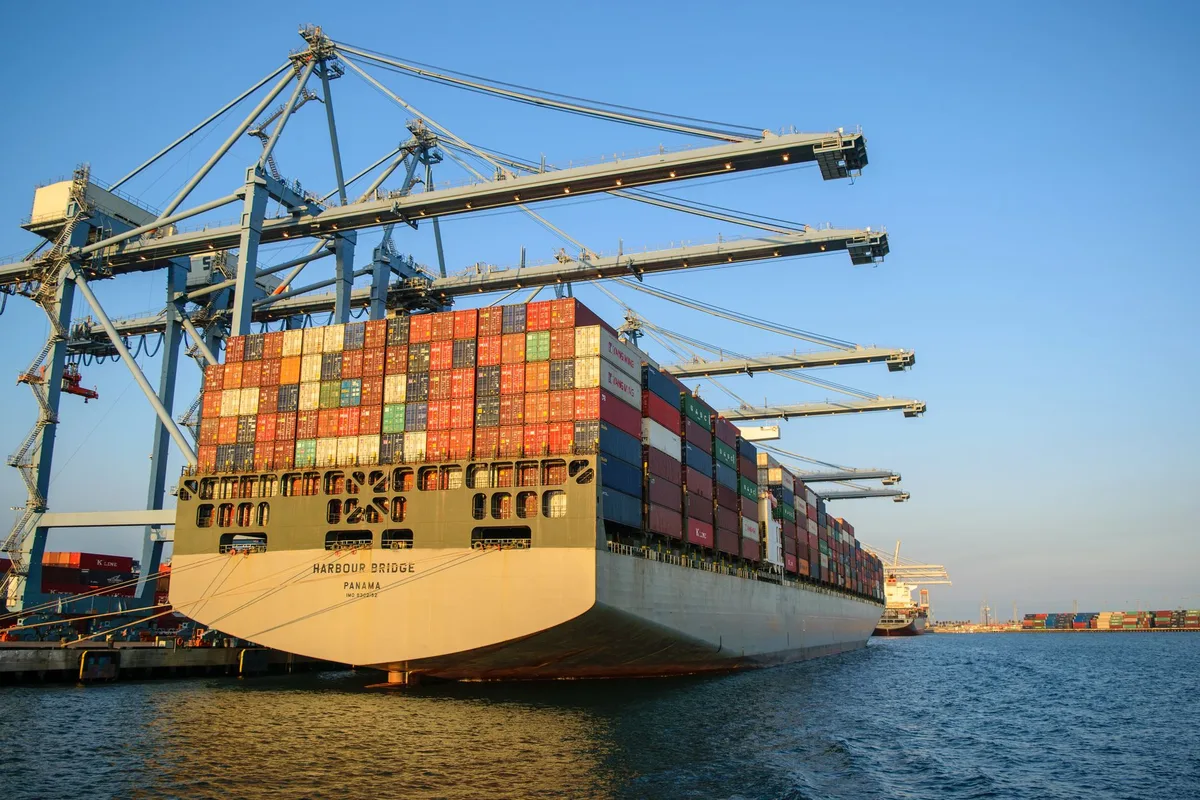
A trade marketplace connects buyers and sellers online. Here is how they work, what to check before joining one, and how Tawaf fits the Southeast Asian and cross-border trade landscape.
Sep 8, 2026
Trust is the currency of trade. Every international transaction requires a buyer to trust that a seller will deliver what was promised, and a seller to trust that a buyer will pay. When that trust is misplaced, the consequences are severe. The average SME fraud loss from unverified suppliers ranges
May 14, 2026