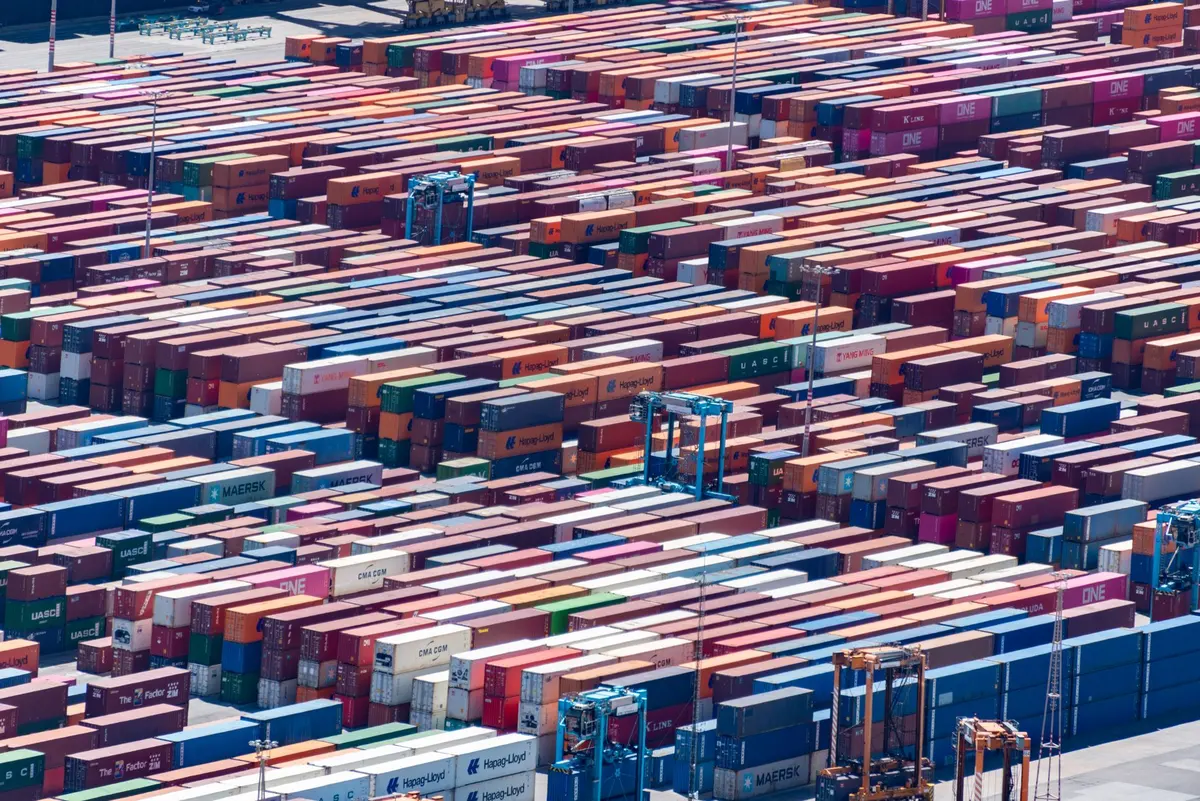
11 Best Sites Like Alibaba for B2B Sourcing in 2026
Alibaba is not always the right fit. Here are 11 alternative B2B marketplaces, ranked by sourcing region and use case, so you can find suppliers Alibaba's algorithm never surfaces.
Sep 30, 2026
Find verified suppliers on Tawaf
Create Free AccountTrade finance keeps global commerce moving. Without it, the $32 trillion global trade system would collapse overnight. Yet small and medium enterprises, the businesses that need trade finance the most, are the ones least likely to get it. The Asian Development Bank estimates the global trade finance gap at $2.5 trillion, and SMEs in Africa, South Asia, and the Middle East feel this gap hardest. This guide explains every trade finance option available to small businesses and how to actually access them.
Trade finance is the collection of financial instruments and products that facilitate international trade by bridging the gap between when a seller ships goods and when a buyer pays, reducing risk for both parties.
At its core, trade finance solves a trust problem. A seller in India does not want to ship goods to a buyer in Kenya without guarantee of payment. The buyer in Kenya does not want to pay upfront without guarantee of delivery. Trade finance instruments sit in the middle, ensuring both sides are protected.
The basic flow works like this:
For small businesses trading through B2B marketplaces like Tawaf, understanding these instruments is the difference between growing internationally and staying stuck in your domestic market.
The main types are letters of credit, documentary collections, trade credit insurance, factoring and forfaiting, supply chain finance, pre-export finance, and bank guarantees. Each serves a different stage of the trade cycle and risk profile.
Here is a comprehensive comparison:
| Instrument | What It Does | Cost (Typical) | Best For | Minimum Transaction |
|---|---|---|---|---|
| Letter of Credit (LC) | Bank guarantees payment if documents comply | 0.5-3% of value | Large orders, new relationships | $10,000+ |
| Documentary Collection | Bank handles documents but does not guarantee payment | 0.1-0.5% | Established relationships | $5,000+ |
| Trade Credit Insurance | Insures against buyer non-payment | 0.3-1.5% of insured value | Exporters with multiple buyers | Varies |
| Factoring | Sells receivables for immediate cash | 1-5% of invoice value | Improving cash flow | $1,000+ |
| Forfaiting | Sells medium/long-term receivables | 1-3% margin above LIBOR/SOFR | Capital goods, 6+ month terms | $100,000+ |
| Supply Chain Finance | Buyer's bank pays supplier early | 0.5-2% | Large buyer supply chains | $10,000+ |
| Pre-Export Finance | Loan secured by confirmed export order | 6-15% annually | Manufacturers with confirmed orders | $25,000+ |
| Bank Guarantee | Bank guarantees performance/payment | 1-3% annually | Tender bonds, advance payment guarantees | $5,000+ |
Join Tawaf and connect with verified businesses across 47 countries. No middlemen, no commissions.
Join Tawaf FreeA letter of credit is a bank-issued document guaranteeing that a seller will receive payment as long as they present documents proving the goods were shipped according to the agreed terms. It is the gold standard of trade finance security.
The step-by-step process:
Types of letters of credit:
For cross-border trade on Tawaf, letters of credit are particularly useful when you are connecting with new suppliers for the first time and neither party has a track record with the other.
Factoring is the sale of accounts receivable to a third party (the factor) at a discount, giving you immediate cash instead of waiting 30-90 days for the buyer to pay. International factoring typically recovers 80-90% of invoice value upfront.
Factoring works well for SMEs that:
How factoring works:
Costs: Factoring fees range from 1-5% of invoice value, depending on the buyer's creditworthiness, the country, and the payment terms. For a $50,000 invoice with a 3% fee, you would receive $48,500 within 1-2 business days instead of waiting 60 days for $50,000.
The International Factoring Association maintains a directory of factoring companies by country, which is useful for finding providers in your market.
Export factoring versus domestic factoring: Export factoring involves two factors -- one in your country and one in the buyer's country. The import factor provides credit risk protection on the foreign buyer, making it particularly valuable for SMEs entering new markets.
Supply chain finance (also called reverse factoring) is initiated by the buyer rather than the seller, uses the buyer's stronger credit rating to get better rates, and pays the supplier early while the buyer pays the bank on the original due date.
The key differences:
| Feature | Factoring | Supply Chain Finance |
|---|---|---|
| Initiated by | Seller | Buyer |
| Credit assessed | Buyer's creditworthiness | Buyer's creditworthiness |
| Cost based on | Buyer risk + seller risk | Buyer risk only (usually lower) |
| Relationship | Seller-factor | Buyer-bank-supplier triangle |
| Typical cost | 1-5% | 0.5-2% |
| Control | Seller controls | Buyer controls |
| Best for | SME sellers with good buyers | Large buyers supporting SME suppliers |
Supply chain finance has grown enormously, with the World Supply Chain Finance Report estimating the market at over $1.8 trillion annually.
If you are a supplier selling to large buyers, ask if they offer a supply chain finance programme. If you are a buyer on Tawaf sourcing from wholesale product suppliers, setting up SCF can strengthen your supply chain by ensuring your suppliers always have working capital.
Trade credit insurance protects sellers against the risk of buyer non-payment due to insolvency, protracted default, or political events. It typically covers 80-95% of the invoice value and is essential for SMEs extending credit terms to international buyers.
When you need it:
Major providers:
How it works in practice:
Cost: Premiums typically range from 0.3-1.5% of insured turnover, depending on your industry, buyer creditworthiness, and the countries involved.
Ready to start trading internationally with confidence? Create your Tawaf account to connect with verified suppliers and explore trade finance-friendly partnerships.
SMEs in developing countries can access trade finance through government export credit agencies, development finance institutions (AfDB, IsDB, IFC), microfinance trade facilities, fintech platforms, and supplier credit programmes on B2B marketplaces.
The trade finance gap hits developing country SMEs hardest. Here is a practical roadmap:
1. Government export credit agencies (ECAs)
Most countries have an ECA that provides export credit insurance, guarantees, and sometimes direct lending. Examples:
2. Development Finance Institutions (DFIs)
3. Fintech trade finance platforms
A new generation of fintech companies is filling the gap:
4. Supplier credit on B2B marketplaces
Platforms like Tawaf enable direct negotiation of payment terms between buyers and sellers. While not traditional "trade finance," the ability to negotiate payment terms directly with verified suppliers reduces the need for external financing.
Most trade finance applications require company registration documents, financial statements (2-3 years), a proforma invoice or purchase order, buyer information, a brief business plan, and bank reference letters.
Here is a document checklist by instrument:
| Document | LC | Factoring | Trade Insurance | Pre-Export Finance |
|---|---|---|---|---|
| Company registration | Yes | Yes | Yes | Yes |
| Financial statements (2-3 years) | Yes | Yes | Yes | Yes |
| Bank statements (6-12 months) | Sometimes | Yes | No | Yes |
| Proforma invoice / PO | Yes | No | No | Yes |
| Sales contract | Yes | No | No | Yes |
| Buyer information | Yes | Yes | Yes | Sometimes |
| Trade references | Sometimes | Sometimes | No | Yes |
| Collateral/security | Sometimes | Receivables | No | Export order |
| Business plan | No | No | No | Sometimes |
Tips for improving your chances of approval:
Islamic trade finance instruments follow Shariah principles by avoiding interest (riba) and excessive uncertainty (gharar). The main structures are Murabaha (cost-plus sale), Musawamah (negotiated sale), Salam (forward sale), and Istisna (manufacturing finance).
For businesses trading through Muslim business networks or seeking Shariah-compliant financing:
| Instrument | Conventional Equivalent | How It Works |
|---|---|---|
| Murabaha | Trade loan | Bank buys goods and resells to buyer at a disclosed markup |
| Musawamah | Negotiated credit | Like Murabaha but markup is not disclosed |
| Salam | Forward contract | Buyer pays full price upfront for future delivery |
| Istisna | Manufacturing finance | Progressive payments for goods being manufactured |
| Wakala | Agency arrangement | Bank acts as agent to purchase goods on buyer's behalf |
The ITFC (International Islamic Trade Finance Corporation) is the largest Islamic trade finance provider, part of the IsDB Group. They focus on intra-OIC trade, which aligns directly with the markets Tawaf serves.
Hidden costs include bank charges (amendment fees, discrepancy fees, SWIFT charges), currency conversion markups, document courier fees, insurance premiums not included in headline rates, and opportunity costs of tied-up collateral.
A letter of credit that is quoted at "1.5% commission" might actually cost you significantly more once you add all the fees:
| Fee Type | Typical Amount | When It Applies |
|---|---|---|
| LC issuance commission | 0.5-3% | When LC is opened |
| Advising fee | $50-200 | When LC reaches seller's bank |
| Confirmation fee | 0.3-1.5% | If seller requests confirmation |
| Discrepancy fee | $50-100 per discrepancy | When documents do not match LC terms |
| Amendment fee | $50-150 per amendment | When LC terms need changing |
| SWIFT charges | $30-75 per message | Every bank communication |
| Negotiation fee | 0.1-0.25% | When seller's bank processes documents |
| Courier fees | $50-100 | Sending physical documents |
To minimise these costs:
Choose based on the transaction size, your relationship with the trading partner, your cash flow needs, the risk level of the destination country, and the cost relative to your profit margin.
A quick decision framework:
For businesses actively sourcing suppliers by country, the risk profile of the destination country should heavily influence your choice of instrument.
It is difficult but not impossible. Start with trade credit insurance (which is based more on your buyers' creditworthiness than yours), or use a confirmed letter of credit where the bank's guarantee replaces your track record. Some fintechs also offer first-transaction financing based on the specific deal rather than your history.
Typically 3-7 business days once you submit the application and all documents. Amendments can take 1-3 additional days. For time-sensitive shipments, apply early and ensure your proforma invoice terms match exactly what the LC will require.
Trade finance is often more expensive on a per-transaction basis but less risky because each transaction is self-liquidating -- the goods themselves are the security. A regular bank loan might be 8-12% annually, while an LC costs 1-3% per transaction. For a 60-day transaction cycle, the annualised rate of the LC might be higher, but the risk profile is fundamentally different.
Letters of credit are generally practical above $10,000 due to fixed bank fees. Factoring can work for invoices as small as $1,000 with some fintechs. Trade credit insurance usually requires minimum annual turnover of $100,000-500,000, though some providers offer single-buyer policies.
For importers, the primary instruments are letters of credit (to reassure the seller) and supply chain finance (to pay suppliers early). For exporters, the primary instruments are factoring (to get paid faster), export credit insurance (to protect against non-payment), and pre-export finance (to fund production). Many SMEs are both importers and exporters and use different instruments for each side of their business.
Get Started
Create your free account and start connecting with verified suppliers and buyers worldwide.
Create Free Account
We help businesses navigate cross-border trade. Our team covers supplier verification, trade compliance, and B2B marketplace strategies to connect verified businesses worldwide.
Alibaba is not always the right fit. Here are 11 alternative B2B marketplaces, ranked by sourcing region and use case, so you can find suppliers Alibaba's algorithm never surfaces.
Sep 30, 2026
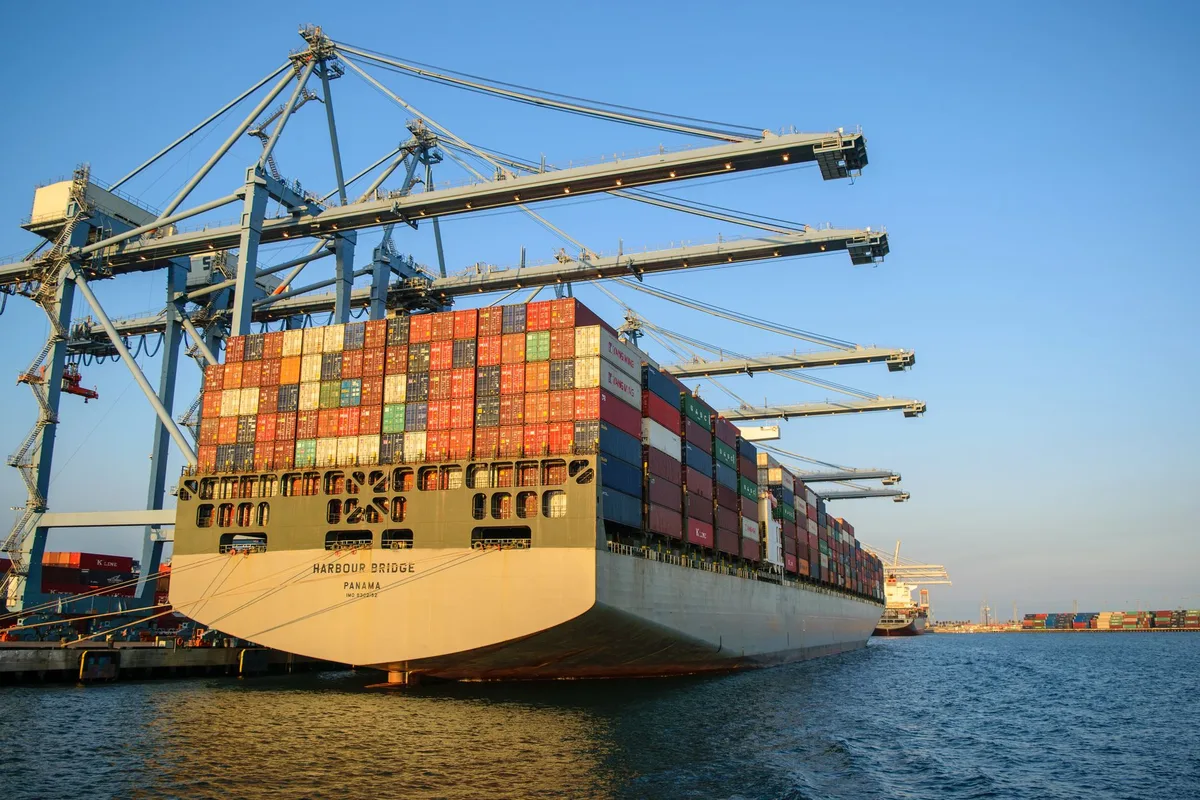
A trade marketplace connects buyers and sellers online. Here is how they work, what to check before joining one, and how Tawaf fits the Southeast Asian and cross-border trade landscape.
Sep 8, 2026
Trust is the currency of trade. Every international transaction requires a buyer to trust that a seller will deliver what was promised, and a seller to trust that a buyer will pay. When that trust is misplaced, the consequences are severe. The average SME fraud loss from unverified suppliers ranges
May 14, 2026