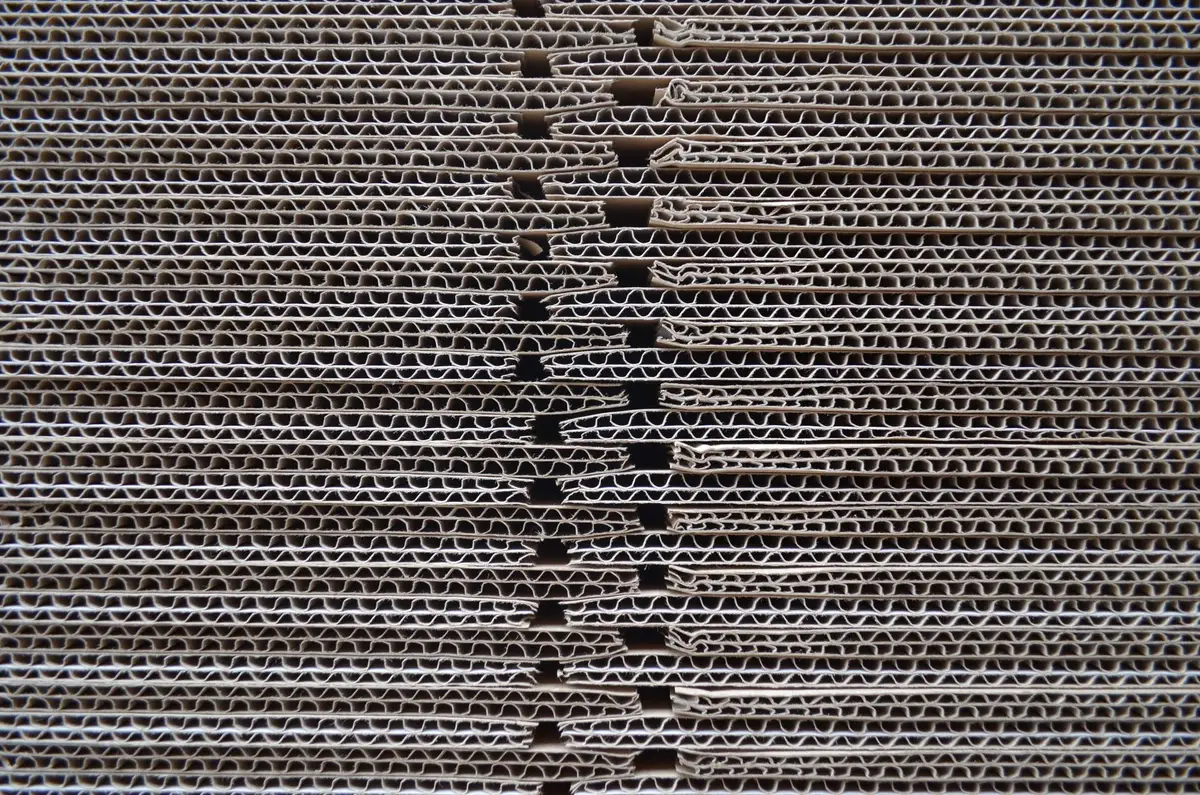
Corrugated Box Maker: How to Find and Vet the Right Supplier
A sourcing guide to corrugated box makers: how boxes are made, which flute type fits your product, pricing ranges, and how to verify a supplier before ordering.
Sep 23, 2026
Find verified suppliers on Tawaf
Create Free AccountIndia is the world's fabric factory. The country produces over 85 billion square meters of fabric annually, making it the second-largest textile producer on the planet after China. Whether you need raw cotton greige, polyester chiffon by the tonne, or hand-embroidered silk yardage, there is an Indian wholesale market — often an entire city — dedicated to producing exactly that.
This guide walks B2B buyers through India's fabric wholesale landscape, covering the major hubs, fabric types, pricing structures, quality standards, and practical sourcing strategies.
A fabric wholesaler is a B2B supplier that buys textiles in bulk from mills and weavers and sells them in large quantities to garment manufacturers, retailers, interior designers, and exporters — typically at 30-50% below retail price, with minimum order quantities starting from 100 to 500 meters.
Fabric wholesalers operate as the critical middle layer in the textile supply chain. They sit between the raw fabric producers (mills, power loom operators, handloom weavers) and the end users (garment factories, fashion brands, home textile companies, upholstery businesses).
In India, fabric wholesaling is an industry worth approximately USD 60 billion annually at the domestic level, with another USD 15+ billion in export-oriented wholesale. The sector employs millions of workers across trading, warehousing, logistics, and finishing operations.
The wholesale model works differently depending on the fabric type:
Mill fabrics (cotton, polyester, blended) are produced by large-scale textile mills and sold through authorized dealers or directly to major buyers. Mills like Arvind, Raymond, and Vardhman have their own wholesale distribution networks.
Power loom fabrics are produced by tens of thousands of small power loom units, particularly in Surat, Bhilwara, and Malegaon. These fabrics are sold through local wholesale markets (mandis) where traders aggregate production from multiple units.
Handloom fabrics are artisan-produced and sold through cooperatives, government emporiums (Khadi Gramodyog), and private traders. Handloom is a smaller segment but commands premium prices for export markets.
India's top fabric wholesale hubs are Surat (synthetic and silk), Tirupur (cotton knits), Bhilwara (polyester and blended), Erode (cotton and handloom), Ludhiana (woolens and hosiery), Ichalkaranji (power loom cotton), and Mumbai's Mangaldas Market (mixed, trading hub). Each city specializes in distinct fabric categories.
| Hub | State | Primary Fabrics | Annual Output (Est.) | Price Level |
|---|---|---|---|---|
| Surat | Gujarat | Polyester, silk, saree fabric, embroidered | 30+ billion meters | Budget to mid |
| Tirupur | Tamil Nadu | Cotton jersey, interlock, pique, rib | 8 billion meters | Mid |
| Bhilwara | Rajasthan | Polyester suiting, uniform fabric, PV blends | 4 billion meters | Budget to mid |
| Erode | Tamil Nadu | Cotton shirting, dhoti, handloom | 2 billion meters | Mid to premium |
| Ludhiana | Punjab | Woolen fabric, acrylic knits, hosiery | 1.5 billion meters | Mid |
| Ichalkaranji | Maharashtra | Grey cotton, power loom fabric | 3 billion meters | Budget |
| Malegaon | Maharashtra | Power loom cotton, viscose | 2 billion meters | Budget |
| Varanasi | Uttar Pradesh | Silk brocade, Banarasi sarees | 0.5 billion meters | Premium |
| Mumbai (Mangaldas) | Maharashtra | Multi-fabric trading hub | — (trading) | Variable |
| Delhi (Chandni Chowk) | Delhi | Multi-fabric trading hub, embroidered | — (trading) | Variable |
Surat deserves special emphasis. This Gujarat city is the undisputed capital of Indian synthetic fabric production, producing more polyester fabric than any other city in the world. The Surat textile market employs an estimated 1.5 million workers across 650,000 power looms, 400 textile processing mills, and thousands of trading shops. If you need any variety of polyester, georgette, chiffon, crepe, net, or synthetic saree fabric, Surat is where the global supply chain begins.
Tirupur is equally dominant in cotton knitted fabric. This Tamil Nadu city produces approximately 50% of India's cotton knitwear exports and supplies knitted fabric to garment manufacturers worldwide. The city has over 6,000 knitting and garment units, and its cotton jersey, pique, and interlock fabrics are globally competitive.
For B2B buyers exploring Indian textiles, Tawaf's supplier directory lists fabric wholesalers across these hubs, making it possible to compare options without visiting each market physically.
Join Tawaf and connect with verified businesses across 47 countries. No middlemen, no commissions.
Join Tawaf FreeIndia produces virtually every fabric type, from basic cotton sheeting and polyester suiting to luxury silk brocade and technical textiles. The strongest categories for wholesale sourcing are cotton (knit and woven), polyester and polyester blends, viscose/rayon, silk, denim, and embroidered fabrics.
Here is a comprehensive fabric type reference:
| Fabric Type | Primary Hub | Wholesale Price (USD/meter) | MOQ (typical) | Key Applications |
|---|---|---|---|---|
| Cotton Jersey (single) | Tirupur | 0.80 – 1.50 | 500 kg | T-shirts, underwear, activewear |
| Cotton Woven (shirting) | Erode, Ichalkaranji | 0.60 – 2.00 | 1,000 meters | Shirts, blouses, uniforms |
| Polyester Georgette | Surat | 0.30 – 0.80 | 500 meters | Sarees, dresses, scarves |
| Polyester Chiffon | Surat | 0.25 – 0.70 | 500 meters | Sarees, scarves, linings |
| Polyester Crepe | Surat | 0.35 – 0.90 | 500 meters | Dresses, formal wear |
| Denim (cotton) | Ahmedabad, Bengaluru | 1.50 – 4.00 | 3,000 meters | Jeans, jackets, bags |
| Silk (raw/Mulberry) | Varanasi, Bangalore | 5.00 – 25.00 | 100 meters | Sarees, bridal wear, luxury apparel |
| Viscose/Rayon | Surat, Bhilwara | 0.40 – 1.20 | 500 meters | Dresses, linings, home textiles |
| PV Blend (polyester-viscose) | Bhilwara | 0.50 – 1.50 | 1,000 meters | Suiting, uniforms, trousers |
| Net/Tulle | Surat | 0.20 – 0.60 | 500 meters | Bridal, embroidery base, decor |
| Embroidered Fabric | Surat, Lucknow | 1.50 – 15.00 | 300 meters | Occasion wear, home decor |
| Terry Towel Fabric | Solapur, Karur | 1.00 – 3.00 | 500 kg | Towels, bathrobes |
| Twill (cotton/blend) | Ichalkaranji | 0.70 – 2.00 | 1,000 meters | Workwear, trousers, bags |
| Technical Textiles | Various | 2.00 – 20.00 | Varies | Geotextiles, medical, automotive |
Prices shown are approximate FOB India rates for bulk wholesale orders. Actual prices depend on GSM (grams per square meter), fiber quality, finish, and order volume.
The Surat fabric market operates through a network of over 170 textile trading markets (mandis) where 65,000+ shops sell polyester, silk, and blended fabrics. Power loom operators produce greige fabric, processing mills dye and finish it, and traders sell the finished product to domestic and international buyers — all within a 30-kilometer radius.
Surat's textile ecosystem is vertically integrated at the city level, even though individual businesses specialize in single steps:
Step 1: Yarn supply. Polyester yarn comes from large producers like Reliance Industries, Indorama, and Garden Silk Mills. Cotton yarn is sourced from spinning mills in Tamil Nadu, Maharashtra, and Gujarat.
Step 2: Weaving. Over 650,000 power looms in Surat weave yarn into greige (unfinished) fabric. Most power loom units are family-owned, operating 4 to 12 looms each.
Step 3: Processing. About 400 processing mills in and around Surat handle dyeing, printing, bleaching, and finishing. This step transforms greige fabric into market-ready material.
Step 4: Embroidery and embellishment (optional). Surat is also a major center for machine embroidery, with thousands of units adding embroidered designs, sequins, and beadwork to fabric.
Step 5: Trading. Finished fabric flows into the trading markets. The largest are Ring Road Textile Market, Raghukul Textile Market, and Millennium Textile Market. Buyers walk through shops, examine fabric samples, negotiate prices, and place orders.
For international buyers, the process is typically managed through export agents or trading companies that aggregate orders from multiple shops and handle export documentation. Alternatively, several Surat-based wholesalers are now listed on B2B platforms like Tawaf, enabling direct digital sourcing.
Key quality parameters include fabric weight (GSM), thread count (for woven), pilling resistance, colorfastness (washing, rubbing, light), shrinkage percentage, tensile strength, and compliance with buyer-specific standards like OEKO-TEX, GOTS (for organic), or specific retailer RSLs (Restricted Substance Lists).
| Test | Standard | Acceptable Range | Testing Lab Cost (approx.) |
|---|---|---|---|
| GSM (weight) | ISO 3801 | As specified +/- 5% | USD 15 |
| Colorfastness (wash) | ISO 105-C06 | Grade 4+ (out of 5) | USD 25 |
| Colorfastness (rubbing) | ISO 105-X12 | Dry: 4+, Wet: 3+ | USD 25 |
| Shrinkage | ISO 6330 | Less than 3% (woven), 5% (knit) | USD 30 |
| Tensile Strength | ISO 13934 | Depends on fabric type | USD 30 |
| Pilling Resistance | ISO 12945 | Grade 3+ (out of 5) | USD 30 |
| OEKO-TEX Standard 100 | OEKO-TEX | No restricted substances | USD 500+ (certification) |
| GOTS (organic) | GOTS 6.0 | Full organic supply chain | USD 2,000+ (certification) |
Always request a lab test report (also called a test certificate or TC) before placing a bulk order. Reputable Indian wholesalers will either provide recent lab reports or allow you to send fabric samples to an independent testing lab.
Testing labs in India include SGS, Bureau Veritas, Intertek, TUV SUD, and NABL-accredited domestic labs. For critical orders, send samples to a lab in your own country for independent verification.
Looking for verified fabric wholesalers? Join Tawaf to connect with pre-vetted textile suppliers across Surat, Tirupur, Bhilwara, and other Indian hubs. Post your fabric requirements and get quotes within 48 hours.
Standard payment terms for new international buyers are 30-50% advance payment with the balance against shipping documents (Bill of Lading) or irrevocable Letter of Credit at sight. Established relationships may transition to 30-60 day open credit terms after 3-5 successful orders.
Payment practices vary by buyer size and relationship stage:
First order: Expect to pay 30-50% advance via wire transfer (TT) and 50-70% against Bill of Lading or upon confirmed loading. Some wholesalers may request 100% advance for first orders under USD 10,000.
Established relationships (3+ orders): Terms typically relax to 30-day open credit or payment against documents at sight through banking channels.
Large orders (USD 50,000+): Letter of Credit (LC) is the standard instrument. Indian banks are well-versed in LC documentation, and most major wholesalers have pre-approved LC limits with their banks.
Escrow services: For mid-sized orders where neither party wants to assume full payment risk, trade escrow services (or using a sourcing platform like Tawaf that facilitates verified transactions) provide security for both sides.
Important: always confirm the payment recipient's bank details through a phone call or video call. Invoice fraud (where a scammer intercepts email communications and substitutes their bank details) is a real risk in international textile trade.
Fabric imports from India typically ship by sea in 20-foot or 40-foot containers from ports like Nhava Sheva (Mumbai), Mundra, or Tuticorin. A 40-foot container holds approximately 20,000 to 25,000 meters of medium-weight fabric. Transit time to the Middle East is 5-8 days, to Europe 18-25 days, and to the USA 25-35 days.
Logistics considerations specific to fabric:
Packaging. Fabric rolls must be wrapped in polyethylene to prevent moisture damage during transit. Rolls should be stacked vertically (not horizontally) to prevent crease marks. Bale packing is standard for knitted fabric; roll packing is standard for woven.
Container loading. A standard 20-foot container holds approximately 10,000 to 12,000 meters of medium-weight woven fabric or 8,000 to 10,000 kg of knitted fabric. A 40-foot high-cube container doubles this capacity.
Insurance. Marine cargo insurance is essential. Fabric is susceptible to water damage, and claims are common for containers that experience condensation during transit (container rain). Institute Cargo Clause A provides the broadest coverage.
Customs documentation. Key documents include commercial invoice, packing list, bill of lading, certificate of origin (for FTA benefits), and pre-shipment inspection certificate (if required by the destination country). For exports to the UAE, the India-UAE CEPA provides preferential duty rates on most textiles.
Mill-direct prices are typically 10-20% lower than wholesale market prices because they eliminate the trader margin. However, mills require larger MOQs (5,000-10,000+ meters), offer less variety in a single order, and have longer lead times (4-6 weeks vs. 1-2 weeks from wholesale stock).
| Factor | Wholesale Market | Mill Direct |
|---|---|---|
| Price | Base +10-20% | Lowest |
| MOQ | 100 – 1,000 meters | 5,000 – 10,000 meters |
| Variety per order | High (mix and match) | Limited (mill's range) |
| Lead Time | 1-2 weeks (ex-stock) | 4-6 weeks (production) |
| Customization | Limited (existing designs) | Full (custom colors, GSM, width) |
| Quality Consistency | Variable (check each lot) | High (mill QC systems) |
| Payment Flexibility | More flexible | Stricter (advance + LC) |
For B2B buyers, the choice depends on your order pattern. If you buy small quantities of diverse fabrics frequently, wholesale markets offer the flexibility you need. If you buy large quantities of standardized fabric (e.g., a uniform manufacturer needing 50,000 meters of the same navy polyester-viscose blend), going mill-direct saves money and ensures consistency.
Many buyers use a hybrid approach: wholesale for sampling and small runs, mill-direct for production orders once the design is finalized.
The top challenges are quality inconsistency between sample and bulk production, color matching across batches (dye lot variation), communication gaps with smaller wholesalers, delayed shipping timelines, and navigating India's complex GST and export documentation.
Quality inconsistency is the number one complaint from international fabric buyers. A sample may be perfect, but the bulk production can differ in GSM, hand feel, or color shade. Mitigation: always request a pre-production sample (strike-off) from the actual production lot, and arrange a third-party inspection before shipping.
Color matching is technically challenging, especially for deep colors and pastels. Indian dye houses use both reactive dyes (for cotton) and disperse dyes (for polyester), and batch-to-batch variation of 0.5 to 1.0 Delta E is common. For color-critical orders, provide Pantone references and request a lab dip (small-scale dye test) before bulk production.
Communication can be uneven. Large exporters have professional English-speaking sales teams. Smaller wholesalers in Surat or Bhilwara may communicate primarily in Hindi or Gujarati. A local sourcing agent or platforms that provide verified supplier contacts (like Tawaf's wholesale products directory) can bridge this gap.
Shipping delays occur when processing mills fall behind schedule, particularly during peak season (October-January, before the wedding and festival season). Build 2-week buffers into your production calendar.
Essential certifications include OEKO-TEX Standard 100 (chemical safety), GOTS (organic textiles), ISO 9001 (quality management), BCI (Better Cotton Initiative for sustainable sourcing), and specific retailer compliance certificates like WRAP or SEDEX for ethical manufacturing.
Certification requirements depend on your destination market and end customers:
For European Union: REACH compliance (Registration, Evaluation, Authorization and Restriction of Chemicals) is mandatory. OEKO-TEX certification satisfies most EU chemical safety requirements.
For organic claims: GOTS (Global Organic Textile Standard) is the gold standard. The entire supply chain — from cotton farm to finished fabric — must be certified.
For ethical sourcing: WRAP (Worldwide Responsible Accredited Production) and SEDEX (Supplier Ethical Data Exchange) cover labor practices, workplace safety, and environmental compliance.
For sustainable cotton: BCI (Better Cotton Initiative) certifies that cotton is grown with reduced water and chemical usage.
Many Surat and Tirupur wholesalers have invested in these certifications to access European and American markets. When evaluating potential suppliers on Tawaf, check their listed certifications and request copies before placing orders.
MOQs vary significantly. Surat wholesale market shops may sell as little as 50 to 100 meters of ex-stock fabric. Tirupur knitting mills typically require 500 kg minimum for production orders. Large weaving mills may require 5,000 to 10,000 meters. For custom-dyed or printed fabric, expect 3,000 to 5,000 meter minimums because dyeing machines need a minimum batch size to operate efficiently.
Contact the wholesaler directly (email, WhatsApp, or through a B2B platform like Tawaf) and request a sample swatch card or specific yardage. Most wholesalers will send swatch cards (small cuttings) for free. For larger samples (1-5 meters), expect to pay for the fabric and shipping. International courier delivery for fabric samples from India costs USD 30 to USD 60 via DHL or FedEx and takes 3 to 5 days.
Yes. India has a well-developed digital and rotary printing industry, particularly in Surat and Jaipur. Digital printing allows for unlimited colors and photographic designs with no minimum (as low as 50 meters). Rotary screen printing requires higher minimums (2,000+ meters) but is more cost-effective for large runs. Block printing (hand printing) is available from Jaipur and Rajasthan artisans for traditional designs.
Absolutely. India is the largest fabric exporter to Africa (particularly East and West Africa) and a major supplier to the Middle East. Surat polyester fabrics are the dominant product in African markets due to their low cost and vibrant colors. For Middle Eastern markets, Indian cotton and blended fabrics are popular for traditional garments (thobe/dishdasha fabric). Transit times from Indian ports to Mombasa, Dar es Salaam, or Djibouti are 8-12 days.
Visit between January and March or August and September. These periods fall between peak seasons and offer the best availability of wholesaler time and attention. Avoid October through December (Indian wedding and festival season, when domestic demand peaks) and April through June (extreme heat in many textile cities). The annual Vastra textile exhibition in Jaipur (February) and the India International Garment Fair (IIGF) in Delhi (January and July) are worth aligning your visit with.
Get Started
Create your free account and start connecting with verified suppliers and buyers worldwide.
Create Free Account
We help businesses navigate cross-border trade. Our team covers supplier verification, trade compliance, and B2B marketplace strategies to connect verified businesses worldwide.
A sourcing guide to corrugated box makers: how boxes are made, which flute type fits your product, pricing ranges, and how to verify a supplier before ordering.
Sep 23, 2026

A directory guide to product wholesalers by category: beauty, fashion, food, jewelry, and craft. Compare sourcing paths and connect with verified suppliers.
Sep 14, 2026

Medical equipment is a massive market. The global medical device industry exceeded $595 billion in 2025 and is projected to reach $750 billion by 2030, driven by aging populations, expanding healthcare access in emerging markets, and technological innovation. For B2B buyers --- hospital procurement
May 18, 2026