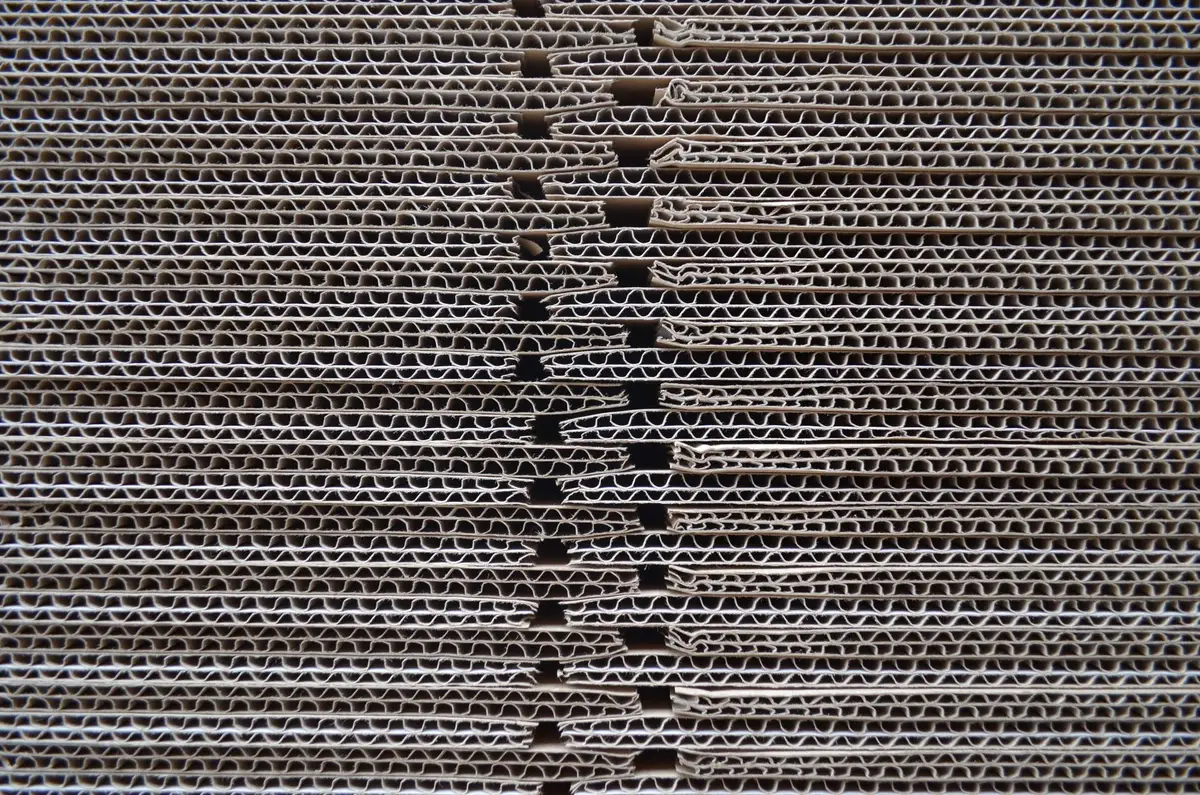
Corrugated Box Maker: How to Find and Vet the Right Supplier
A sourcing guide to corrugated box makers: how boxes are made, which flute type fits your product, pricing ranges, and how to verify a supplier before ordering.
Sep 23, 2026
Find verified suppliers on Tawaf
Create Free AccountGlass bottles are having a revival. As global markets shift away from single-use plastics and consumers demand sustainable packaging, glass bottle manufacturing in India has entered a growth phase that few predicted a decade ago. India now produces over 5 million tonnes of container glass annually, making it the fourth-largest glass packaging market in the world after China, the USA, and Germany.
This guide covers India's glass bottle manufacturing landscape, profiles the major producers, breaks down pricing and quality standards, and shows international buyers how to source glass packaging from Indian factories.
Glass bottle manufacturing is the industrial process of melting raw materials (silica sand, soda ash, limestone, and cullet/recycled glass) at temperatures exceeding 1,500 degrees Celsius and forming them into containers using IS (Individual Section) machines — producing bottles for pharmaceuticals, food, beverages, cosmetics, and chemicals at speeds of 100 to 700 bottles per minute.
The manufacturing process follows a standard sequence across all producers:
Batch preparation: Raw materials are weighed, mixed, and conveyed to the furnace. The typical batch composition is 70-72% silica sand, 13-15% soda ash (sodium carbonate), 10-12% limestone (calcium carbonate), and 0-30% cullet (recycled glass).
Melting: The batch is melted in a regenerative or oxy-fuel furnace at 1,500-1,600 degrees C. Furnaces run continuously for 8-15 years before requiring a rebuild.
Forming: Molten glass is cut into gobs (measured portions) and dropped into IS machines that blow or press the glass into bottle shapes using metal molds.
Annealing: Formed bottles pass through a lehr (annealing oven) that slowly cools them from 500 degrees C to room temperature over 30-60 minutes, relieving internal stresses.
Inspection: Automated cameras and sensors inspect every bottle for defects — cracks, dimensional variations, thickness uniformity, and cosmetic flaws. Rejection rates at modern plants run 2-5%.
Packaging: Approved bottles are packed in cartons, shrink-wrapped on pallets, or loaded into bulk bins for shipment.
Understanding this process helps buyers communicate effectively with manufacturers about specifications, customization options, and quality expectations.
India's top glass bottle manufacturers are Hindusthan National Glass (HNG), Piramal Glass (now PGP Glass), AGI Glaspac (HSIL Group), Borosil, Schott Kaisha, Empire Industries, and Haldyn Glass — together controlling approximately 70% of the Indian glass container market.
| Company | Headquarters | Capacity (TPD) | Plants | Specialization | Key Clients |
|---|---|---|---|---|---|
| AGI Glaspac (HSIL) | Hyderabad | 2,200 | 5 | Food, beverage, pharma | Hindustan Unilever, Diageo, ITC |
| Hindusthan National Glass (HNG) | Kolkata | 1,800 | 4 | Beverages, food, pharma | Coca-Cola, Pepsi, UB Group |
| PGP Glass (Piramal) | Mumbai | 1,500 | 3 (India) | Cosmetics, perfumery, pharma | L'Oreal, Estee Lauder, Diageo |
| Borosil | Mumbai | 600 | 2 | Pharma (Type I borosilicate) | Sun Pharma, Cipla, Biocon |
| Schott Kaisha | Mumbai | 400 | 1 | Pharma (ampoules, vials, syringes) | Top 20 global pharma |
| Empire Industries | Mumbai | 350 | 1 | Food, liquor, pharma | Maharashtra breweries, food cos |
| Haldyn Glass | Vadodara | 450 | 2 | Food, beverages, pharma | Gujarat-based food companies |
| Pragati Glass | Hyderabad | 300 | 1 | Cosmetics, perfumery | Indian and export cosmetic brands |
| Vitrum Glass | Pondicherry | 200 | 1 | Food, beverages, specialty | Regional food brands |
| Gerresheimer (India) | Mumbai | 250 | 1 | Pharma (primary packaging) | MNC pharma companies |
TPD = Tonnes Per Day of glass melted, a standard measure of manufacturing capacity.
The industry is consolidating. AGI Glaspac has acquired several smaller players in the past five years and is now India's largest glass container producer by capacity. PGP Glass has pivoted toward premium cosmetics and perfumery packaging, where margins are significantly higher than in commodity beverage bottles.
For international buyers looking for Indian glass bottle suppliers, Tawaf's supplier directory includes packaging manufacturers across pharma, food, and cosmetics categories.
Join Tawaf and connect with verified businesses across 47 countries. No middlemen, no commissions.
Join Tawaf FreeIndian manufacturers produce pharmaceutical glass (Type I, II, and III), food-grade containers (jars, sauce bottles, jam jars), beverage bottles (beer, spirits, soft drinks, water), cosmetic packaging (perfume bottles, cream jars, dropper bottles), and specialty glass (laboratory, industrial chemical containers).
| Category | Typical Products | Glass Type | Price Range (USD/unit) | MOQ |
|---|---|---|---|---|
| Pharma Vials | 2ml to 100ml vials | Type I (borosilicate) | 0.08 – 0.50 | 50,000 |
| Pharma Bottles | 30ml to 500ml | Type III (soda-lime) | 0.05 – 0.25 | 25,000 |
| Ampoules | 1ml to 30ml | Type I (borosilicate) | 0.02 – 0.10 | 100,000 |
| Beer Bottles | 330ml, 500ml, 650ml | Amber soda-lime | 0.08 – 0.15 | 50,000 |
| Spirits Bottles | 180ml to 1L | Flint (clear) or green | 0.12 – 0.60 | 25,000 |
| Food Jars | 200ml to 1L | Clear soda-lime | 0.06 – 0.20 | 25,000 |
| Sauce/Ketchup | 200ml to 500ml | Clear or green | 0.05 – 0.15 | 50,000 |
| Perfume Bottles | 10ml to 100ml | Crystal-clear flint | 0.30 – 3.00 | 10,000 |
| Cosmetic Jars | 15ml to 200ml | Clear, frosted, colored | 0.20 – 2.00 | 10,000 |
| Water Bottles | 500ml, 1L | Clear flint | 0.04 – 0.10 | 100,000 |
Pricing is highly dependent on:
India's glass packaging market is valued at approximately USD 4.5 billion and growing at 6-7% annually, driven by pharmaceutical sector growth, premiumization of spirits and food packaging, government restrictions on single-use plastics, and increasing health consciousness among consumers preferring glass over plastic.
| Segment | Market Share | Growth Rate | Key Driver |
|---|---|---|---|
| Beverages (beer, spirits, soft drinks) | 40% | 5% | Premiumization, craft beer |
| Pharmaceuticals | 25% | 8% | Vaccine programs, biosimilar growth |
| Food | 20% | 6% | Premium packaging, organic food |
| Cosmetics & Perfumery | 10% | 12% | Luxury beauty brands entering India |
| Other (industrial, lab) | 5% | 4% | Industrial chemicals, R&D |
The pharmaceutical segment is the fastest-growing in absolute terms. India's pharmaceutical industry — the world's largest generic drug supplier (see our India manufacturing directory for details) — requires billions of glass vials, ampoules, and bottles annually. The COVID-19 vaccine rollout in 2021-2023 exposed capacity constraints in pharma glass, prompting investments that are now boosting overall capacity.
The cosmetics segment has the highest growth rate, driven by international beauty brands like L'Oreal, Estee Lauder, and LVMH choosing Indian manufacturers for glass perfume bottles and cream jars. PGP Glass has been the primary beneficiary of this trend.
Glass bottles from India must comply with IS (Indian Standard) specifications from BIS, USP/EP standards for pharmaceutical glass, FDA 21 CFR for food contact materials, and ISO 4802 for hydrolytic resistance. Key tests include thermal shock resistance, internal pressure testing, dimensional accuracy, and heavy metal leaching limits.
| Standard | Application | Key Requirements |
|---|---|---|
| IS 5765 | Pharma glass (Type III) | Hydrolytic resistance, alkali leaching limits |
| IS 6775 | Food-grade glass containers | Heavy metal limits, thermal shock |
| USP 660 | Pharma glass (all types) | Surface and powdered glass tests |
| EP 3.2.1 | European pharma glass | Hydrolytic resistance classification |
| ISO 7459 | Glass containers — thermal shock | Resistance to sudden temperature changes |
| ISO 4802 | Hydrolytic resistance | Internal surface resistance grading |
| FDA 21 CFR 177 | Food contact materials (USA) | Chemical migration limits |
| ASTM C149 | Internal pressure | Pressure resistance for carbonated beverages |
For pharmaceutical glass specifically, the classification system is critical:
Type I (Borosilicate): Made from borosilicate glass (Borosil, Schott Kaisha specialize). Highest chemical resistance. Required for injectable drugs, vaccines, and sensitive biologics.
Type II (Treated Soda-Lime): Regular soda-lime glass with internal surface treatment (dealkalization). Used for acidic and neutral parenteral preparations.
Type III (Regular Soda-Lime): Standard soda-lime glass. Used for oral medications, dry powders for injection, and non-parenteral applications.
When sourcing pharma glass from India, always confirm the glass type, request Certificates of Analysis (COA) for each batch, and verify that the manufacturer holds drug master files (DMFs) with relevant regulatory authorities.
Need glass packaging suppliers? Create your Tawaf account to search verified glass manufacturers in India, request samples, and get competitive quotes for pharma, food, and cosmetic glass containers.
Indian glass bottles are 20-40% cheaper than European equivalents and 10-20% cheaper than Chinese alternatives, primarily due to lower energy costs (natural gas vs. electricity in Europe), lower labor costs, and competitive raw material sourcing. However, the gap narrows for premium and specialty glass.
| Product | India (USD/unit) | China (USD/unit) | Europe (USD/unit) |
|---|---|---|---|
| 500ml beer bottle | 0.08 – 0.12 | 0.10 – 0.14 | 0.15 – 0.22 |
| 750ml spirits bottle | 0.15 – 0.35 | 0.18 – 0.40 | 0.30 – 0.70 |
| 10ml pharma vial (Type I) | 0.10 – 0.25 | 0.12 – 0.30 | 0.25 – 0.55 |
| 50ml perfume bottle | 0.40 – 1.50 | 0.50 – 1.80 | 1.00 – 4.00 |
| 500ml food jar | 0.06 – 0.12 | 0.08 – 0.14 | 0.12 – 0.20 |
The cost advantage is most pronounced for commodity glass (beer, food jars, basic pharma bottles) and least pronounced for premium cosmetics and specialty pharma glass, where the quality gap between Indian and European producers narrows.
Shipping costs must be factored in. Glass is heavy — a 20-foot container holds approximately 20,000 to 40,000 bottles depending on size, weighing 15 to 22 tonnes. Sea freight from India to the UAE runs USD 600 to USD 1,000 per container; to Europe, USD 1,500 to USD 2,500. On a per-unit basis, shipping adds USD 0.02 to USD 0.08 per bottle.
India's glass manufacturing is concentrated in four clusters: Western India (Gujarat — Vadodara, Kosamba), Southern India (Telangana — Hyderabad, Bhongir), Eastern India (West Bengal — Rishra, Baranagar), and Central India (Madhya Pradesh — Firozabad). Gujarat and Telangana account for roughly 60% of national production capacity.
| Cluster | Key Companies | Specialization | Proximity to Ports |
|---|---|---|---|
| Gujarat (Vadodara, Kosamba) | Haldyn, HNG, mid-tier units | Beverages, food, pharma | Mundra, Pipavav (200-400 km) |
| Telangana (Hyderabad) | AGI Glaspac, Pragati | Full range, cosmetics | Krishnapatnam (300 km) |
| Maharashtra (Mumbai, Pune) | PGP Glass, Empire, Borosil | Cosmetics, pharma, premium | JNPT/Nhava Sheva (50-100 km) |
| West Bengal (Rishra) | HNG, small units | Beverages, food | Kolkata/Haldia (30-80 km) |
| Madhya Pradesh (Firozabad) | Thousands of small units | Bangles, decorative glass | Inland (not export-oriented) |
| Pondicherry | Vitrum Glass | Specialty, food | Chennai (150 km) |
For export-oriented buyers, the Gujarat and Maharashtra clusters offer the best logistics. Factories near Mundra and JNPT ports minimize inland transport costs, which matter significantly for heavy glass containers.
Indian manufacturers offer full customization including custom bottle shapes (requiring new mold development), color options (flint, amber, green, blue, black, custom colors), surface treatments (frosting, coating, embossing), decoration (screen printing up to 6 colors, organic printing, hot stamping, labeling), and closures (caps, corks, droppers, pumps).
Mold development is the starting point for custom shapes. Lead times and costs:
| Mold Type | Lead Time | Cost (USD) | Notes |
|---|---|---|---|
| Standard catalog mold | 0 weeks | 0 | Use existing shapes |
| Minor modification | 3-4 weeks | 1,500 – 3,000 | Change neck finish, adjust dimensions |
| New design (simple) | 6-8 weeks | 5,000 – 10,000 | New shape, standard production method |
| New design (complex) | 8-12 weeks | 10,000 – 25,000 | Unusual shapes, multi-cavity molds |
| Premium/luxury design | 12-16 weeks | 15,000 – 50,000 | Intricate details, perfumery bottles |
Color options are achieved by adding metal oxides to the glass batch. Amber (iron + sulfur), green (chromium), blue (cobalt), and black (heavy metal oxides) are standard. Custom colors require a minimum batch size of 50 to 100 tonnes of glass (equivalent to roughly 200,000 to 500,000 bottles).
Surface decoration is often handled by specialized decorating companies rather than the glass manufacturer itself. India has a well-developed glass decoration industry, particularly in Mumbai and Gujarat, offering screen printing, pad printing, hot stamping (gold/silver), acid etching, sandblasting, and organic coatings.
The main challenges are high breakage rates during shipping (3-8% is common for poorly packed shipments), long lead times for custom molds (8-16 weeks), inconsistent color matching across production batches, limited capacity for ultra-premium cosmetic glass compared to European specialists, and the weight penalty of shipping glass internationally.
Breakage is the single biggest risk. Glass is fragile, and Indian inland roads can be rough. Mitigation strategies:
Color consistency across batches requires careful furnace management. Specify Delta E tolerances (typically 1.0 to 1.5 for commercial glass, 0.5 for premium) in your purchase order and request color approval samples from each production batch.
Capacity constraints during peak season (October-March for spirits, pre-monsoon for food) can push lead times from the standard 4-6 weeks to 8-12 weeks. Place orders early and maintain buffer stock.
For buyers new to Indian glass sourcing, platforms like Tawaf's wholesale products directory can help identify pre-vetted suppliers with proven export track records, reducing the risk of working with an unknown factory.
Yes. Several Indian manufacturers (AGI Glaspac, PGP Glass, Borosil) are EU-certified and supply regularly to European food, pharma, and cosmetics companies. Products must comply with EU Regulation 1935/2004 (food contact materials), REACH regulations, and specific customer requirements. Most major Indian producers hold these certifications. Smaller manufacturers may need to obtain certifications before they can export to the EU, which typically takes 3-6 months.
Standard catalog bottles from stock: 2-4 weeks including shipping. Custom bottles with new molds: 12-20 weeks (mold development + production + shipping). Re-orders of custom bottles: 6-8 weeks. For time-sensitive orders, some manufacturers offer express production at a 10-15% premium.
Hire a third-party inspection agency (SGS, Bureau Veritas, Intertek) to conduct a pre-shipment inspection at the factory. The inspection should cover dimensional accuracy (measured against your drawing), visual defects (using AQL 1.0 to 2.5 sampling), weight consistency, capacity verification, and leak testing. Cost: approximately USD 300-500 per inspection for a standard container load.
Yes, but with caveats. Indian manufacturers use 15-30% cullet (recycled glass) in their batch mix, which is lower than European manufacturers (50-80%). Fully recycled glass products are limited because India's glass recycling infrastructure is less developed than Europe's. However, the recycled content is increasing as manufacturers invest in cullet processing facilities.
The minimum practical order for international shipment is typically 10,000 to 25,000 units for standard bottles (filling a portion of a container). Some manufacturers accept smaller orders at higher per-unit prices. For very small quantities (under 5,000), consider working through a trading company or a B2B marketplace like Tawaf that can aggregate orders or connect you with distributors who hold stock.
Get Started
Create your free account and start connecting with verified suppliers and buyers worldwide.
Create Free Account
We help businesses navigate cross-border trade. Our team covers supplier verification, trade compliance, and B2B marketplace strategies to connect verified businesses worldwide.
A sourcing guide to corrugated box makers: how boxes are made, which flute type fits your product, pricing ranges, and how to verify a supplier before ordering.
Sep 23, 2026

A directory guide to product wholesalers by category: beauty, fashion, food, jewelry, and craft. Compare sourcing paths and connect with verified suppliers.
Sep 14, 2026

Medical equipment is a massive market. The global medical device industry exceeded $595 billion in 2025 and is projected to reach $750 billion by 2030, driven by aging populations, expanding healthcare access in emerging markets, and technological innovation. For B2B buyers --- hospital procurement
May 18, 2026