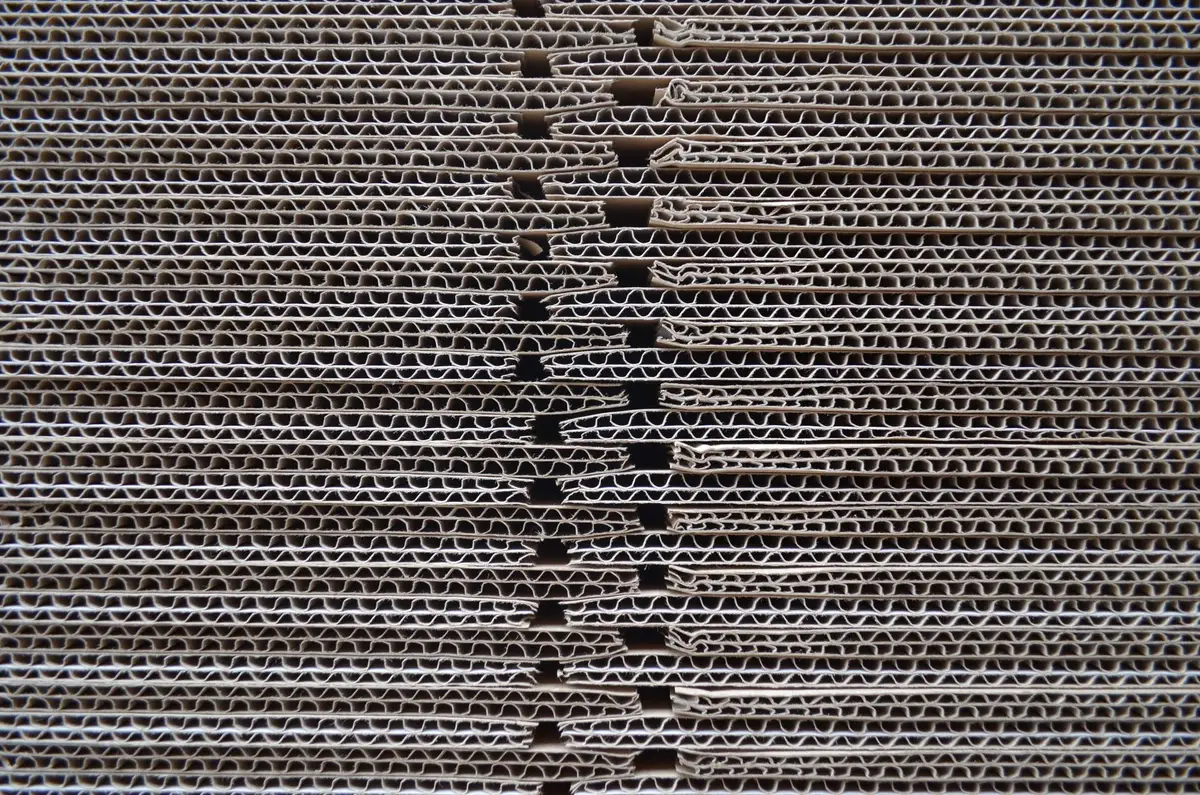
Corrugated Box Maker: How to Find and Vet the Right Supplier
A sourcing guide to corrugated box makers: how boxes are made, which flute type fits your product, pricing ranges, and how to verify a supplier before ordering.
Sep 23, 2026
Find verified suppliers on Tawaf
Create Free AccountIndia ranks second in global aluminium production. With abundant bauxite reserves, low-cost smelting operations, and a growing domestic market, the country has built an aluminium industry that serves everything from packaging and construction to aerospace and electric vehicles.
This guide is written for B2B buyers who want to understand India's aluminium manufacturing landscape — the major producers, product types, pricing dynamics, quality standards, and how to source effectively.
India's aluminium industry produces over 4 million tonnes annually through a combination of primary smelters (Hindalco, Vedanta, NALCO) and hundreds of downstream fabricators making extrusions, rolled products, foil, and castings.
The industry is structured in two tiers:
Primary producers — These companies mine bauxite, refine it into alumina, and smelt it into aluminium ingots. India has three major primary producers that account for virtually all domestic smelting capacity.
Downstream fabricators — Hundreds of companies buy primary aluminium and convert it into finished products: extruded profiles, rolled sheets, foil, wire, castings, and forgings. Many of these fabricators are clustered around industrial hubs in Gujarat, Maharashtra, and Tamil Nadu.
| Metric | Value (FY 2025-26) |
|---|---|
| Primary aluminium production | 4.1 million tonnes |
| Global rank | 2nd (after China) |
| Bauxite reserves | 3.7 billion tonnes |
| Number of primary smelters | 8 |
| Downstream fabricators | 500+ |
| Export value (aluminium products) | $6.8 billion |
| Domestic consumption | 3.2 million tonnes |
The surplus between production and domestic consumption flows into exports, making India a net exporter of aluminium. This export surplus gives international buyers consistent access to Indian supply.
Hindalco Industries (Aditya Birla Group) and Vedanta Limited together control over 75 % of India's primary aluminium capacity, followed by state-owned NALCO.
| Company | Capacity (MTPA) | Products | Key Facilities | Export Focus |
|---|---|---|---|---|
| Hindalco Industries | 1.5 (smelting) + downstream | Ingots, billets, rolled products, extrusions, foil | Renukoot (UP), Hirakud (Odisha), Aditya (Odisha) | Yes — global via Novelis subsidiary |
| Vedanta Aluminium | 2.3 (smelting) | Ingots, billets, wire rods, primary foundry alloys | Jharsuguda (Odisha), BALCO (Chhattisgarh) | Yes — Middle East, SE Asia |
| NALCO (National Aluminium Co.) | 0.46 (smelting) | Ingots, billets, rolled products | Angul (Odisha) | Yes — government-owned |
| Century Aluminium Mfg. | Downstream only | Extrusions, architectural profiles | Multiple (Gujarat, Maharashtra) | Limited |
| Jindal Aluminium | Downstream only | Extrusions, flat-rolled products | Bengaluru (Karnataka) | Yes |
| Hindalco Almex Aerospace | Downstream | Aerospace-grade plates and forgings | Taloja (Maharashtra) | Yes — aerospace OEMs |
Hindalco deserves special mention. Through its acquisition of Novelis (the world's largest aluminium rolling company), Hindalco operates a truly global aluminium business. For B2B buyers, this means you can source primary aluminium from India and have it processed at Novelis plants in North America, Europe, or Asia.
Vedanta's Jharsuguda smelter in Odisha is the largest single-location aluminium smelter in India and one of the largest in the world. It runs on a captive power plant, which keeps energy costs — the single biggest cost component in aluminium smelting — highly competitive.
Find aluminium suppliers on Tawaf's supplier directory to compare capabilities and certifications.
Join Tawaf and connect with verified businesses across 47 countries. No middlemen, no commissions.
Join Tawaf FreeIndian manufacturers produce the complete range — from primary ingots and billets to finished extrusions, rolled sheets, foil, castings, and specialty alloys for automotive and aerospace applications.
Primary products:
Rolled products:
Extrusions:
Castings and forgings:
Indian aluminium prices are benchmarked to the London Metal Exchange (LME) plus a regional premium, with downstream products carrying additional conversion costs that vary by product complexity.
Understanding the pricing structure is essential:
Primary aluminium pricing formula:
Price = LME Cash Settlement + Regional Premium + Conversion/Fabrication Cost
| Component | Typical Range (USD) | Notes |
|---|---|---|
| LME cash settlement | 2,200–2,600/tonne | Fluctuates daily |
| India regional premium | 80–140/tonne | Depends on supply-demand balance |
| Billet premium (over ingot) | 120–180/tonne | For extrusion-grade billets |
| Extrusion conversion cost | 400–1,200/tonne | Depends on profile complexity |
| Rolling conversion cost | 300–800/tonne | Depends on thickness and alloy |
| Foil conversion cost | 800–2,000/tonne | Thin gauge commands higher premiums |
For a practical example: if LME aluminium is at $2,400/tonne, a standard 6063 extrusion profile from an Indian manufacturer might cost:
$2,400 (LME) + $100 (premium) + $150 (billet) + $600 (extrusion) = $3,250/tonne FOB India
That same profile from a Chinese extruder might be $3,100–$3,200, but Indian extrusions often carry better surface quality for architectural applications. European equivalents would be $3,800–$4,200.
Sourcing aluminium from India? Create your free account on Tawaf to connect with verified manufacturers, compare quotes, and manage your supplier relationships in one place.
Odisha dominates primary smelting (Jharsuguda, Angul, Hirakud), while Gujarat, Maharashtra, Tamil Nadu, and Karnataka are the centres for downstream fabrication and extrusion.
Odisha — The aluminium capital of India. Home to Vedanta's Jharsuguda smelter, NALCO's Angul complex, and Hindalco's Hirakud operations. Rich bauxite deposits in the nearby hills feed the refineries. Over 60 % of India's primary aluminium comes from this single state.
Gujarat — Major hub for extrusion and fabrication. Companies like Hindalco, Jindal Aluminium, and dozens of SME extruders operate in the Ahmedabad-Rajkot-Vadodara industrial belt.
Maharashtra — Hindalco's Taloja facility handles aerospace-grade plates. Mumbai and Pune host numerous aluminium traders and distributors.
Tamil Nadu and Karnataka — Growing centres for automotive aluminium castings and extrusions, driven by the auto industry in Chennai and Bengaluru.
Uttar Pradesh — Hindalco's oldest and largest integrated facility at Renukoot includes smelting, rolling, and extrusion capabilities.
For country-specific sourcing, explore our suppliers by country directory.
Indian aluminium products are manufactured to IS (BIS) standards with equivalences to EN, ASTM, and JIS. Primary aluminium meets LME P1020A specifications, while downstream products follow application-specific standards.
| Product | Indian Standard | International Equivalent | Key Properties Tested |
|---|---|---|---|
| Primary ingot | IS 407 (99.7 %) | EN 576 / ASTM B233 | Purity, trace elements |
| Extrusion (6063-T6) | IS 733 | EN 755 / ASTM B221 | Tensile, hardness, surface |
| Sheet (5052-H32) | IS 737 | EN 485 / ASTM B209 | Tensile, bend, thickness tolerance |
| Foil | IS 1235 | EN 546 / ASTM B479 | Thickness, pinholes, wettability |
| Casting (A356-T6) | IS 617 | EN 1706 / ASTM B108 | Tensile, elongation, porosity |
Define your alloy, temper, dimensions, and annual volume first. Then approach both primary producers (for commodity products) and specialist fabricators (for value-added products) to get competitive quotes.
A step-by-step sourcing process:
Specify clearly. Aluminium alloy designations (1100, 3003, 5052, 6061, 6063, 7075) are precise. Each has different properties. Specify alloy, temper (T4, T5, T6, H32, etc.), and dimensional tolerances.
Identify supplier tier. For ingots, billets, and wire rods, go directly to Hindalco, Vedanta, or NALCO. For extrusions, sheets, or castings, mid-size fabricators often offer better pricing and flexibility.
Request material test certificates. All aluminium shipments should come with MTCs showing chemical composition and mechanical properties per EN 10204 Type 3.1.
Consider surface treatment. If you need anodised, powder-coated, or PVDF-painted aluminium, confirm that the supplier has in-house surface treatment or a reliable subcontractor.
Plan logistics. Aluminium is lighter than steel but still incurs significant freight costs on volume orders. Containerised shipping from Indian ports (Mundra, JNPT, Chennai) is standard.
Build relationships. Indian aluminium suppliers value long-term partnerships. Annual contracts with quarterly price adjustments (linked to LME) are the norm for large buyers.
Post your aluminium requirement on Tawaf's B2B marketplace to receive quotes from multiple verified suppliers.
Green aluminium (low-carbon smelting), recycled aluminium, and automotive lightweighting are the three trends reshaping India's aluminium industry and creating new opportunities for international buyers.
Green aluminium. Vedanta has committed to achieving net-zero carbon by 2050 and is already producing "green aluminium" using renewable energy at its Jharsuguda smelter. Hindalco's Aditya smelter in Odisha also runs partly on hydro and solar power. As EU CBAM comes into force, Indian green aluminium will become increasingly attractive for European buyers.
Recycled aluminium. India recycles approximately 1 million tonnes of aluminium annually, and this is growing at 8–10 % per year. Recycled aluminium uses 95 % less energy than primary production. Companies like Novelis (Hindalco subsidiary) are global leaders in closed-loop recycling for beverage cans and automotive sheet.
Automotive lightweighting. As Indian and global automakers push for fuel efficiency and EV range, aluminium content per vehicle is rising from 150 kg to 250+ kg. This is driving demand for automotive-grade extrusions, castings, and sheet — and Indian fabricators are investing to capture this growth.
Solar sector demand. India's target of 500 GW renewable energy by 2030 is creating massive demand for aluminium solar mounting structures. Several Indian extruders now specialise exclusively in solar aluminium profiles.
Lead times for custom products can stretch to 6–8 weeks, surface quality consistency varies among smaller fabricators, and LME price volatility requires careful contract structuring.
Challenges and solutions:
Lead time. Standard products (ingots, billets, common extrusion profiles) are available from stock. Custom profiles, specific alloys, or tight tolerances require 4–8 weeks. Plan accordingly and maintain buffer stock.
Surface quality. For architectural extrusions that will be anodised, surface quality is critical. Smaller Indian extruders may not match the consistency of European or Japanese producers. Always request samples before placing volume orders.
Price volatility. Aluminium prices on the LME can swing 10–20 % in a quarter. Use LME-linked contracts with monthly or quarterly price adjustments to manage this risk. Some Indian suppliers also offer fixed-price contracts for 3–6 months with appropriate premiums.
Minimum order quantities. Primary producers (Hindalco, Vedanta) typically require 20+ tonnes per order. Smaller fabricators may accept 1–5 tonnes for standard products.
Customs duties. Check your country's import duty on aluminium from India. Many countries apply MFN rates of 3–7 % on aluminium products. Free trade agreements (India-UAE CEPA, India-Australia ECTA) may offer preferential rates.
For primary ingots and billets, most suppliers require 20–50 tonnes minimum. Extrusion fabricators may accept 1–5 tonnes for standard profiles, or 5–10 tonnes for custom dies. Foil manufacturers typically require 10+ tonnes per grade.
A new extrusion die typically takes 7–14 days to manufacture in India. Complex multi-cavity dies or very large profiles may take 3–4 weeks. Die costs range from $200–$2,000 depending on complexity, and Indian die shops are significantly cheaper than European equivalents.
Yes. Hindalco Almex Aerospace in Taloja (Maharashtra) produces aerospace-grade plates and forgings in 2024, 7050, and 7075 alloys with AS9100 certification. They supply to global aerospace OEMs and defence contractors. However, options are limited compared to Alcoa or Constellium — India is still building depth in this segment.
For primary aluminium (P1020 ingots), there is no meaningful quality difference — both meet LME specifications. For downstream products, it depends on the specific manufacturer. Top Indian fabricators like Hindalco and Jindal Aluminium match Chinese quality while often offering better consistency in surface finish for architectural applications. Price-wise, Chinese products are often 5–10 % cheaper on commodity items.
Some countries have anti-dumping duties on Indian aluminium products. The US has imposed duties on certain aluminium extrusions and sheet from India. The EU has separate investigations. Always check your national trade authority before ordering to understand the applicable duty rate.
Get Started
Create your free account and start connecting with verified suppliers and buyers worldwide.
Create Free Account
We help businesses navigate cross-border trade. Our team covers supplier verification, trade compliance, and B2B marketplace strategies to connect verified businesses worldwide.
A sourcing guide to corrugated box makers: how boxes are made, which flute type fits your product, pricing ranges, and how to verify a supplier before ordering.
Sep 23, 2026

A directory guide to product wholesalers by category: beauty, fashion, food, jewelry, and craft. Compare sourcing paths and connect with verified suppliers.
Sep 14, 2026
Medical equipment is a massive market. The global medical device industry exceeded $595 billion in 2025 and is projected to reach $750 billion by 2030, driven by aging populations, expanding healthcare access in emerging markets, and technological innovation. For B2B buyers --- hospital procurement
May 18, 2026