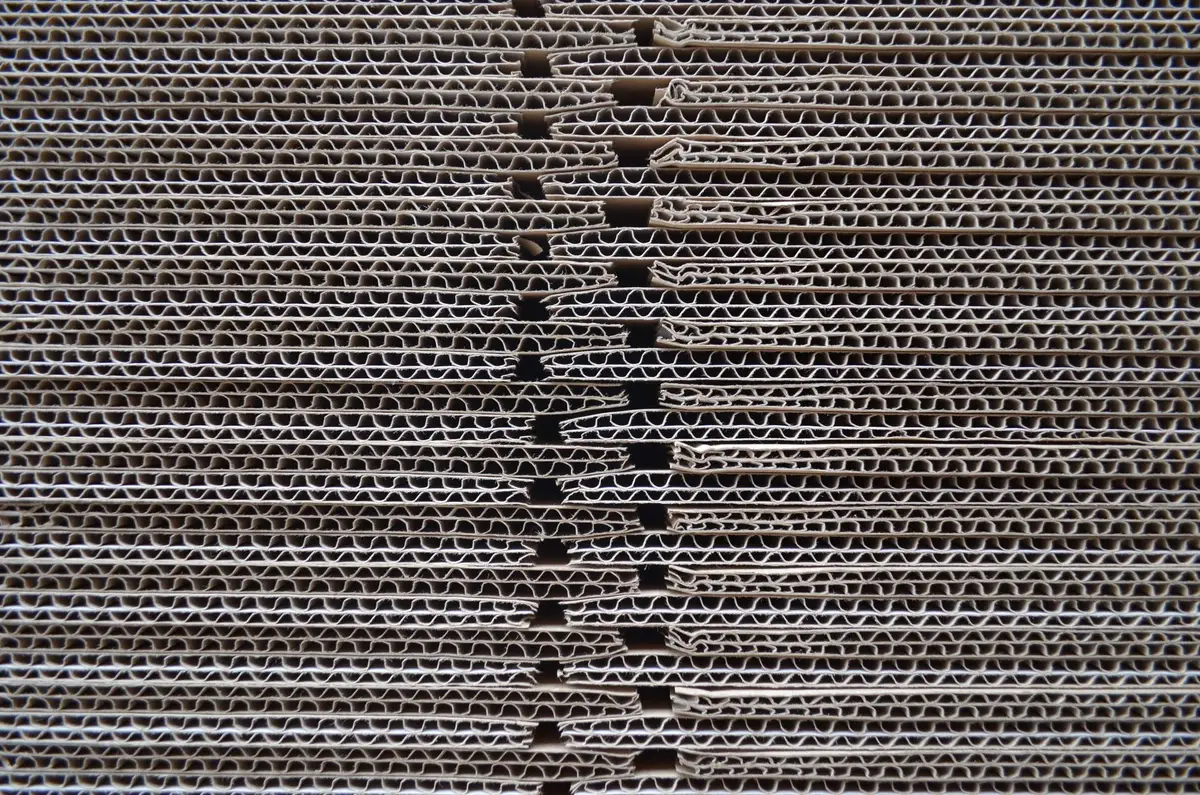
Corrugated Box Maker: How to Find and Vet the Right Supplier
A sourcing guide to corrugated box makers: how boxes are made, which flute type fits your product, pricing ranges, and how to verify a supplier before ordering.
Sep 23, 2026
Find verified suppliers on Tawaf
Create Free AccountIndia manufactures over 600 million bearings annually. That number makes it one of the top five bearing-producing countries in the world, alongside China, Japan, Germany, and the United States. For B2B buyers sourcing industrial components, Indian bearing manufacturers offer a compelling combination of quality, variety, and price competitiveness.
This guide examines the Indian bearing industry in depth — from the types of bearings available to the major manufacturing clusters, quality standards, pricing benchmarks, and how to connect with verified suppliers on Tawaf.
A bearing manufacturer in India is a company that designs and produces anti-friction components — including ball bearings, roller bearings, needle bearings, and plain bearings — for industrial, automotive, and consumer applications, typically registered under the Bureau of Indian Standards (BIS) framework.
India's bearing industry has its roots in the 1940s, when the country began import substitution for critical industrial components. Today, the industry comprises a mix of large integrated manufacturers, mid-size specialists, and thousands of small-scale producers concentrated in specific geographic clusters.
The total Indian bearing market is valued at approximately USD 4.2 billion (2025 estimates), with domestic consumption accounting for roughly 70 percent and exports making up the remaining 30 percent. Major export destinations include the United States, Germany, the UAE, Turkey, and Southeast Asian countries.
Indian manufacturers serve every major industry that uses bearings: automotive, railways, mining, agriculture, textile machinery, wind energy, and general industrial equipment.
Indian manufacturers produce a full range of bearing types including deep groove ball bearings, tapered roller bearings, cylindrical roller bearings, spherical roller bearings, needle bearings, thrust bearings, and plain (sleeve) bearings.
Here is a breakdown of the major bearing types and their applications:
| Bearing Type | Common Sizes (ID range) | Key Applications | Indian Production Share |
|---|---|---|---|
| Deep groove ball bearings | 3mm - 200mm | Electric motors, pumps, household appliances | 35% |
| Tapered roller bearings | 15mm - 500mm | Automotive hubs, gearboxes, heavy machinery | 22% |
| Cylindrical roller bearings | 20mm - 800mm | Machine tools, rolling mills, electric motors | 15% |
| Spherical roller bearings | 25mm - 1000mm | Mining equipment, paper mills, vibrating screens | 10% |
| Needle bearings | 5mm - 100mm | Automotive transmissions, compressors | 8% |
| Thrust bearings | 10mm - 300mm | Machine tool spindles, automotive clutches | 5% |
| Plain/sleeve bearings | 10mm - 500mm | Turbines, large engines, construction equipment | 5% |
Deep groove ball bearings dominate production because of their versatility and the massive automotive aftermarket demand. However, India's capabilities in specialised roller bearings have expanded significantly in the past decade, driven by investment in precision grinding and heat treatment technology.
Join Tawaf and connect with verified businesses across 47 countries. No middlemen, no commissions.
Join Tawaf FreeThe three largest bearing manufacturing clusters are in Jaipur (Rajasthan), Gujarat (Ahmedabad-Rajkot corridor), and Maharashtra (Pune), collectively accounting for over 65 percent of India's total bearing output.
India's bearing industry is geographically concentrated:
Jaipur, Rajasthan: The single largest cluster, with over 3,000 small and medium bearing manufacturers. Jaipur specialises in deep groove ball bearings and tapered roller bearings for the automotive aftermarket. The cluster is known for competitive pricing but variable quality — due diligence is essential.
Gujarat (Ahmedabad-Rajkot): Strong in industrial bearings for textile machinery, pumps, and agricultural equipment. Gujarat manufacturers tend to be mid-size companies with better quality control than the Jaipur cluster average.
Pune, Maharashtra: Home to several large, export-oriented bearing manufacturers. Pune specialises in precision bearings for automotive OEMs and industrial machinery. Quality standards are generally higher here, reflecting the city's proximity to major automotive plants.
Chennai-Bengaluru corridor: Emerging cluster focused on precision and miniature bearings for electronics, medical devices, and aerospace applications.
You can filter Indian bearing suppliers by location and specialisation on Tawaf's supplier directory.
Quality varies significantly across Indian bearing manufacturers — top-tier companies match ISO 492 and ABEC-7 standards comparable to Japanese and German bearings, while small-scale manufacturers may only meet ABEC-1 or ABEC-3 levels.
The ABEC (Annular Bearing Engineers Committee) rating system is the standard way to assess bearing precision:
| ABEC Class | Tolerance Grade | Typical Indian Manufacturers | Price Index (vs. China) |
|---|---|---|---|
| ABEC-1 (Normal) | ISO P0 | Small-scale Jaipur cluster | 0.7-0.8x |
| ABEC-3 (Extra) | ISO P6 | Mid-size Gujarat/Rajasthan | 0.8-0.9x |
| ABEC-5 (Super) | ISO P5 | Large Pune/Chennai manufacturers | 0.9-1.0x |
| ABEC-7 (Ultra) | ISO P4 | Top-tier exporters, JV companies | 1.0-1.1x |
| ABEC-9 (Ultra-precision) | ISO P2 | Very few Indian manufacturers | 1.1-1.3x |
The price difference between ABEC-1 and ABEC-7 for the same bearing size can be 300-500 percent. For most industrial applications (pumps, conveyors, agricultural equipment), ABEC-1 or ABEC-3 bearings are perfectly adequate. For machine tool spindles, precision instruments, or high-speed applications, you need ABEC-5 or better.
Indian manufacturers at the ABEC-5 and above level have invested in Japanese and European grinding machines, climate-controlled production halls, and statistical process control systems. These companies are genuinely world-class.
Essential certifications for Indian bearing manufacturers include ISO 9001:2015, ISO/TS 16949 (automotive), IS 3824/IS 3823 (Indian standards), and specific OEM approvals from bearing users like Bosch, Siemens, or Caterpillar.
Certifications to verify:
On Tawaf's B2B marketplace, you can filter suppliers by certification type, making it easy to shortlist qualified manufacturers.
Indian bearing prices are typically 20-40 percent below European equivalents and 10-20 percent below Chinese equivalents for comparable quality grades, with further discounts of 5-15 percent for annual volume commitments.
Pricing factors:
For standard deep groove ball bearings (6200-6300 series), expect pricing in the range of USD 0.30 to USD 3.00 per unit, depending on size and ABEC class. Tapered roller bearings are typically 2-3 times more expensive than ball bearings of similar dimensions.
Ready to source bearings from verified Indian manufacturers? Create your free Tawaf account to compare suppliers, request samples, and get competitive quotes.
The automotive sector consumes 40 percent of India's bearing output, followed by industrial machinery (20%), railways (12%), electrical equipment (10%), and two-wheelers (8%).
Understanding the demand drivers helps you assess a manufacturer's capabilities:
Manufacturers who serve automotive OEMs and Indian Railways tend to have the best quality control systems, because both sectors impose strict incoming inspection standards.
The sourcing process involves supplier identification, sample ordering, quality testing, price negotiation, trial order, and finally annual contract — typically taking 8-16 weeks from first contact to first shipment.
Here is a practical step-by-step process:
Define specifications: Bearing type, dimensions (bore/OD/width), ABEC class, material, sealing type, and expected annual quantity.
Identify suppliers: Search Tawaf's supplier directory for bearing manufacturers matching your specifications. Shortlist 5-8 candidates.
Request quotations: Send your specifications to all shortlisted suppliers. Include your target price if you have one, annual volume projection, and required certifications.
Order samples: Request 5-10 samples of each bearing type. Expect to pay for samples plus shipping — legitimate manufacturers do not give away precision components.
Test samples: Conduct dimensional inspection, noise testing, and if possible, accelerated life testing. Compare results against your specifications.
Negotiate pricing: Armed with test results and competitive quotes, negotiate final pricing. Key levers are annual volume commitment, payment terms, and packaging.
Place trial order: Start with a single container or small batch to validate production consistency.
Establish annual contract: Once the trial order is satisfactory, move to an annual supply agreement with defined quality standards, delivery schedules, and pricing.
The most frequently reported quality issues are dimensional inconsistency between batches, inadequate surface finish on raceways, premature seal failure, and insufficient heat treatment depth.
Being aware of these issues helps you focus your quality checks:
The Bureau of Indian Standards publishes specifications for rolling bearings (IS 3824 series) that serve as useful reference documents for quality benchmarking.
Bearing exports from India require GST invoice, shipping bill, certificate of origin, packing list, and phytosanitary certificate (for wooden packaging), with most shipments clearing customs within 2-3 days through electronic filing.
India has significantly streamlined its export process in recent years. Key steps:
Transit times from major Indian ports:
| Origin Port | Destination | Sea Freight Transit | Air Freight Transit |
|---|---|---|---|
| JNPT (Mumbai) | Jebel Ali (Dubai) | 4-6 days | 4 hours |
| JNPT (Mumbai) | Rotterdam | 18-22 days | 9 hours |
| Chennai | Singapore | 5-7 days | 5 hours |
| Mundra (Gujarat) | Mombasa (Kenya) | 10-14 days | 8 hours |
Most Indian bearing manufacturers work with established freight forwarders and can arrange door-to-port or door-to-door delivery. For first-time buyers, Tawaf's trade facilitation can help coordinate logistics.
MOQs vary widely. Large manufacturers may require 5,000-10,000 units per SKU. Small Jaipur cluster manufacturers may accept 500-1,000 units. For custom or non-standard sizes, expect MOQs of 1,000-5,000 units with a tooling charge.
Yes. Top-tier Indian manufacturers produce bearings conforming to ISO 492, DIN, JIS, and ANSI standards. Many hold IATF 16949 certification and supply directly to European and Japanese automotive OEMs. Request standard-specific test reports during the qualification process.
For standard ball bearings at ABEC-1/ABEC-3, Indian prices are 10-20 percent lower than Chinese equivalents. For precision bearings (ABEC-5+), prices are comparable. India's advantage is particularly strong in tapered roller bearings and spherical roller bearings due to domestic raw material availability.
Some countries, including the EU and US, have historically imposed anti-dumping duties on certain categories of Chinese bearings but generally not on Indian bearings. Check your country's customs tariff schedule for the specific HS code (typically 8482.xx) before importing.
Check their registration on India's MCA (Ministry of Corporate Affairs) portal, verify ISO certifications through the certifying body's website, request factory audit access, and look for verified supplier badges on Tawaf's platform.
Get Started
Create your free account and start connecting with verified suppliers and buyers worldwide.
Create Free Account
We help businesses navigate cross-border trade. Our team covers supplier verification, trade compliance, and B2B marketplace strategies to connect verified businesses worldwide.
A sourcing guide to corrugated box makers: how boxes are made, which flute type fits your product, pricing ranges, and how to verify a supplier before ordering.
Sep 23, 2026

A directory guide to product wholesalers by category: beauty, fashion, food, jewelry, and craft. Compare sourcing paths and connect with verified suppliers.
Sep 14, 2026
Medical equipment is a massive market. The global medical device industry exceeded $595 billion in 2025 and is projected to reach $750 billion by 2030, driven by aging populations, expanding healthcare access in emerging markets, and technological innovation. For B2B buyers --- hospital procurement
May 18, 2026