
Brazil's Main Export: What It Is and What Buyers Can Source
What is Brazil's main export? A buyer's guide to Brazil's top exports in 2025, why sources rank them differently, who buys them, and how to source Brazilian goods safely.
Sep 26, 2026
Find verified suppliers on Tawaf
Create Free AccountJebel Ali Free Zone (JAFZA) is a government-established trade hub in Dubai, UAE, founded in 1985 to attract foreign investment. It sits directly adjacent to Jebel Ali Port and hosts over 8,700 companies from 100+ countries, making it the largest free zone in the Middle East by both size and tenant count.
JAFZA changed global trade. The zone spans 57 square kilometers of warehouses, offices, and light industrial facilities southwest of Dubai, positioned between Abu Dhabi and the city center. The Dubai government created it specifically to leverage Jebel Ali Port — at the time a new deepwater port that could handle the largest cargo vessels on earth.
The logic was straightforward: build a port, then build a tax-free zone next to it so companies would actually use the port. That bet paid off. Within a decade, JAFZA became the single largest contributor to Dubai's non-oil GDP. Today it generates roughly 23.8% of Dubai's total foreign direct investment.
What makes JAFZA different from the other 30+ free zones in the UAE is its physical connection to port infrastructure. Companies registered here can move goods from a container ship to their warehouse in hours, not days. That logistics advantage is the reason multinationals like Unilever, Nestlé, and Samsung operate regional distribution hubs from JAFZA rather than from cheaper locations.
Companies choose JAFZA for zero corporate and personal income tax, 100% foreign ownership, full profit repatriation, and direct access to Jebel Ali Port — the 9th busiest container port in the world. These incentives are locked in for 50 years under UAE federal law.
The financial incentives alone justify the setup costs for most international businesses. Here is a breakdown of the core benefits:
| Benefit | Details |
|---|---|
| Corporate tax | 0% for qualifying free zone entities (QFZE status) |
| Personal income tax | 0% on all earnings |
| Foreign ownership | 100% — no local sponsor required |
| Profit repatriation | 100% — no restrictions on capital movement |
| Import/export duties | 0% on goods within the free zone |
| Currency restrictions | None — trade in any currency |
| Guarantee period | 50-year renewable concession |
| Minimum lease | 1 year for flexi-offices, 3 years for warehouses |
Beyond tax, the operational infrastructure is what keeps companies renewing their leases. JAFZA provides pre-built warehouses ranging from 275 sqm to 100,000+ sqm, office space, worker accommodation, and on-site customs clearance. Companies don't need to build anything from scratch.
The zone also connects to Al Maktoum International Airport (Dubai World Central), which handles cargo flights to Africa, Asia, and Europe. Having both sea and air freight within a 15-minute drive radius is a logistics advantage that very few trade zones globally can match.
Join Tawaf and connect with verified businesses across 47 countries. No middlemen, no commissions.
Join Tawaf FreeJAFZA's top sectors by company count are trading and logistics (45%), food and beverage (12%), automotive (10%), metals and construction materials (9%), and petrochemicals (8%). The zone handles approximately 30% of all UAE re-exports, valued at over $100 billion annually.
The sector mix reflects JAFZA's role as a redistribution hub. Most companies here don't manufacture for the UAE market — they import from Asia, repackage or lightly process goods, and re-export to Africa, the Middle East, and the CIS countries.
The largest segment. Companies import electronics, textiles, machinery, and consumer goods in bulk, store them in JAFZA warehouses, and break bulk for redistribution. This is the classic Dubai re-export model, and JAFZA is its epicenter.
JAFZA hosts major food importers and distributors serving the GCC. The zone has temperature-controlled warehouses and food-grade storage facilities. Companies like Al Islami Foods and Iffco operate from here. For businesses looking to find food suppliers in the UAE, many of the largest are based in JAFZA.
Global car manufacturers including Toyota, Honda, and BMW run regional parts distribution from JAFZA. The automotive sector benefits from the zone's proximity to Jebel Ali Port, where vehicles and parts arrive by RoRo (Roll-on/Roll-off) ships.
Steel traders, aluminum suppliers, and construction material importers use JAFZA as a staging ground for projects across the Middle East and East Africa. The heavy-lift capacity at Jebel Ali Port makes it the preferred entry point for oversized industrial cargo.
Oil and gas service companies, chemical distributors, and polymer traders maintain JAFZA operations to serve the broader GCC energy sector. The zone's industrial plots accommodate hazardous material storage that standard commercial zones cannot.
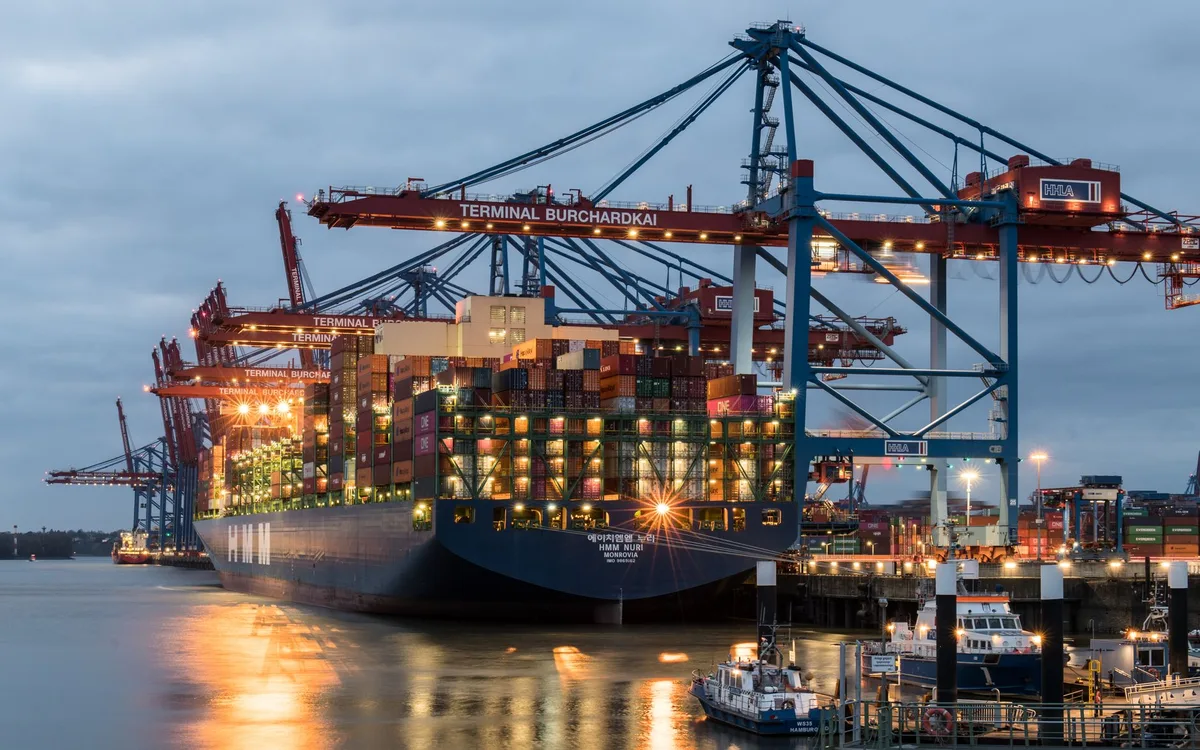
Jebel Ali Port is the 9th busiest container port globally, handling 13.7 million TEU (twenty-foot equivalent units) annually. It connects to JAFZA by road, with many warehouses located less than 2 km from the port gates, enabling same-day customs clearance and goods transfer.
The port-to-zone connection is JAFZA's defining feature. Operated by DP World, Jebel Ali Port has 80+ berths, including deepwater berths that can handle Ultra Large Container Vessels (ULCVs). The port connects to over 180 shipping lines serving 150+ ports worldwide.
For a JAFZA company, the workflow looks like this:
The average dwell time — the period between a container arriving at port and leaving the free zone — is under 4 days. That's fast by global standards and a significant cost advantage for companies managing just-in-time supply chains.
Companies exploring free zone options across Dubai will find that JAFZA's port access is difficult to replicate. DMCC, the other major free zone, is located in the city center and relies on road transport to reach the port — adding time and cost.
JAFZA company setup costs range from AED 15,000 ($4,085) for a flexi-desk license to AED 50,000+ ($13,600+) for a full trading license with warehouse space. Annual renewal costs include the trade license fee, establishment card, and visa allocations.
Setup costs depend on the type of entity and the physical space required. JAFZA offers several company structures:
| Entity Type | Setup Cost (AED) | Setup Cost (USD) | Best For |
|---|---|---|---|
| Free Zone Establishment (FZE) | 35,000 - 50,000 | 9,500 - 13,600 | Single shareholder, trading |
| Free Zone Company (FZCO) | 40,000 - 60,000 | 10,900 - 16,300 | Multiple shareholders |
| Branch of Foreign Company | 30,000 - 45,000 | 8,170 - 12,250 | Regional office of existing company |
| Flexi-Desk | 15,000 - 20,000 | 4,085 - 5,450 | Trading license without physical office |
| National Industrial License | 50,000+ | 13,600+ | Manufacturing operations |
These figures cover the trade license and initial registration. You'll also need to budget for:
The total first-year cost for a small trading company with a warehouse and 5 employee visas typically falls between AED 120,000 and AED 200,000 ($32,700 - $54,500).
Looking for trade partners in JAFZA and across the UAE? Register on Tawaf to connect directly with verified businesses operating in Jebel Ali Free Zone and other UAE trade hubs. Browse supplier profiles, send inquiries, and negotiate deals — all in one platform.
Trading with JAFZA companies requires understanding the free zone's customs procedures, documentation requirements, and payment norms. Most JAFZA businesses accept Letters of Credit, Telegraphic Transfers, and open account terms for established relationships.
If you're outside the UAE and want to buy from or sell to a JAFZA-registered company, the process is more straightforward than trading with mainland UAE businesses. Free zone entities operate under federal customs law but with simplified documentation.
JAFZA companies typically work with:
Platforms like Tawaf's B2B marketplace can accelerate the process of finding and vetting JAFZA suppliers before you commit to a purchase order. You can review company profiles, product listings, and certifications before initiating contact.
JAFZA leads in logistics and physical trade due to its port access, while DMCC dominates commodities trading and DIFC focuses on financial services. Each zone targets different business types — JAFZA is the clear choice for companies that physically move goods.
Dubai has over 30 free zones, each specializing in different sectors. Here's how the top three compare:
| Feature | JAFZA | DMCC | DIFC |
|---|---|---|---|
| Founded | 1985 | 2002 | 2004 |
| Companies | 8,700+ | 22,000+ | 4,000+ |
| Primary focus | Logistics, manufacturing, trading | Commodities, services, crypto | Financial services, fintech |
| Port access | Direct (Jebel Ali Port) | Indirect (road transport) | None |
| Warehouse space | Yes (57 km2 of facilities) | Limited | No |
| Minimum setup cost | AED 15,000 | AED 11,750 | AED 50,000+ |
| Best for | Physical goods traders | Service companies, commodity traders | Banks, funds, legal firms |
DMCC has more registered companies, but many are service-based businesses that don't require warehouse space. If your business involves importing, storing, and re-exporting physical products, JAFZA is the stronger choice.
For a detailed comparison of DMCC and its company landscape, we've published a separate guide.
JAFZA businesses must comply with UAE federal law, JAFZA Authority regulations, and sector-specific requirements from bodies like Dubai Municipality (food), ESMA (standards), and the UAE Central Bank (financial transactions). Annual license renewal and audit requirements apply to all entities.
Regulatory compliance in JAFZA is lighter than mainland Dubai, but it's not a free-for-all. Key requirements include:
Annual compliance:
Sector-specific:
Recent changes: The UAE's corporate tax regime, introduced in June 2023, applies a 9% tax on mainland companies. However, qualifying free zone entities (including JAFZA companies) that meet certain conditions — primarily earning income from transactions with other free zone entities or from foreign sources — maintain the 0% rate. Companies earning income from the UAE mainland face the standard 9% rate on that portion.
This is an important distinction. A JAFZA company selling entirely to customers outside the UAE pays 0% corporate tax. The same company selling to a mainland Dubai customer pays 9% on those sales. According to PwC's analysis of UAE corporate tax, the qualifying conditions are activity-based, not entity-based.
JAFZA functions as the central redistribution node for goods entering the Middle East, Africa, and South Asia. Approximately 70% of goods passing through Jebel Ali Port are re-exported, with top destinations including Saudi Arabia, Iraq, Iran, East Africa, and the Indian subcontinent.
The re-export model is the engine that drives JAFZA. Companies import goods from manufacturing hubs in China, India, South Korea, and Europe. They store, repackage, label, and sometimes lightly assemble these goods in JAFZA warehouses. Then they ship smaller quantities to buyers across the region.
This hub-and-spoke model works because of geography. Dubai sits at the intersection of three continents. A container from Shanghai reaches Jebel Ali in 14-18 days. From there, goods reach Riyadh in 2 days by truck, Nairobi in 5 days by sea, and Cairo in 4 days by sea.
According to DP World's annual report, Jebel Ali Port handled 13.7 million TEU in 2024, with container volumes growing 3.2% year-over-year. The port's expansion plans include a new terminal (Terminal 5) that will increase capacity to 22.4 million TEU by 2030.
For businesses looking to reach Middle Eastern and African markets, establishing a JAFZA presence — or partnering with an existing JAFZA company — is one of the most efficient routes. Browse suppliers by country on Tawaf to find potential partners already operating in the region.
Finding JAFZA companies requires searching JAFZA's official tenant directory, UAE trade databases, or B2B marketplaces like Tawaf. You can filter by sector, product category, and company size to identify relevant trade partners without cold-calling the entire zone.
The JAFZA Authority publishes a tenant directory, but it's not always easy to navigate for specific product searches. More practical approaches include:
When evaluating a JAFZA company, verify their trade license number (starts with the JAFZA authority code), check their JAFZA registration status, and request references from existing customers before committing to large orders.
No. Jebel Ali Port is a maritime shipping facility operated by DP World. Jebel Ali Free Zone (JAFZA) is the adjacent business park and trade zone managed by the JAFZA Authority, a subsidiary of DP World. They share a name and location, but they serve different functions — the port handles vessel operations and container logistics, while the free zone provides business licensing, warehouse space, and regulatory services for registered companies.
Yes, but with conditions. A JAFZA company can sell to mainland UAE customers by paying a 5% import duty when goods cross from the free zone into mainland territory. Additionally, the 9% corporate tax applies to income earned from mainland UAE sales. Many JAFZA companies maintain a dual structure — a free zone entity for international trade and a mainland branch for domestic sales.
The minimum investment varies by entity type. A flexi-desk license (trading only, no physical space) starts at approximately AED 15,000 ($4,085). A full trading license with a small warehouse starts around AED 120,000 ($32,700) when you factor in the lease, visa costs, and setup fees. There is no minimum capital requirement for most license types, though JAFZA may request proof of financial capability for industrial licenses.
Standard setup takes 5 to 15 business days from submission of a complete application. This includes trade license issuance, establishment card, and initial visa allocation. Warehouse lease negotiations may take longer depending on availability. Companies importing regulated goods (food, pharmaceuticals, chemicals) should add 2-4 weeks for sector-specific permits from relevant UAE authorities.
No. JAFZA allows 100% foreign ownership for all entity types. This has been the case since the zone's inception in 1985 and is one of its primary attractions for international businesses. The UAE mainland introduced 100% foreign ownership in 2021, but free zones like JAFZA had this advantage for decades prior.
Get Started
Create your free account and start connecting with verified suppliers and buyers worldwide.
Create Free Account
We help businesses navigate cross-border trade. Our team covers supplier verification, trade compliance, and B2B marketplace strategies to connect verified businesses worldwide.
What is Brazil's main export? A buyer's guide to Brazil's top exports in 2025, why sources rank them differently, who buys them, and how to source Brazilian goods safely.
Sep 26, 2026
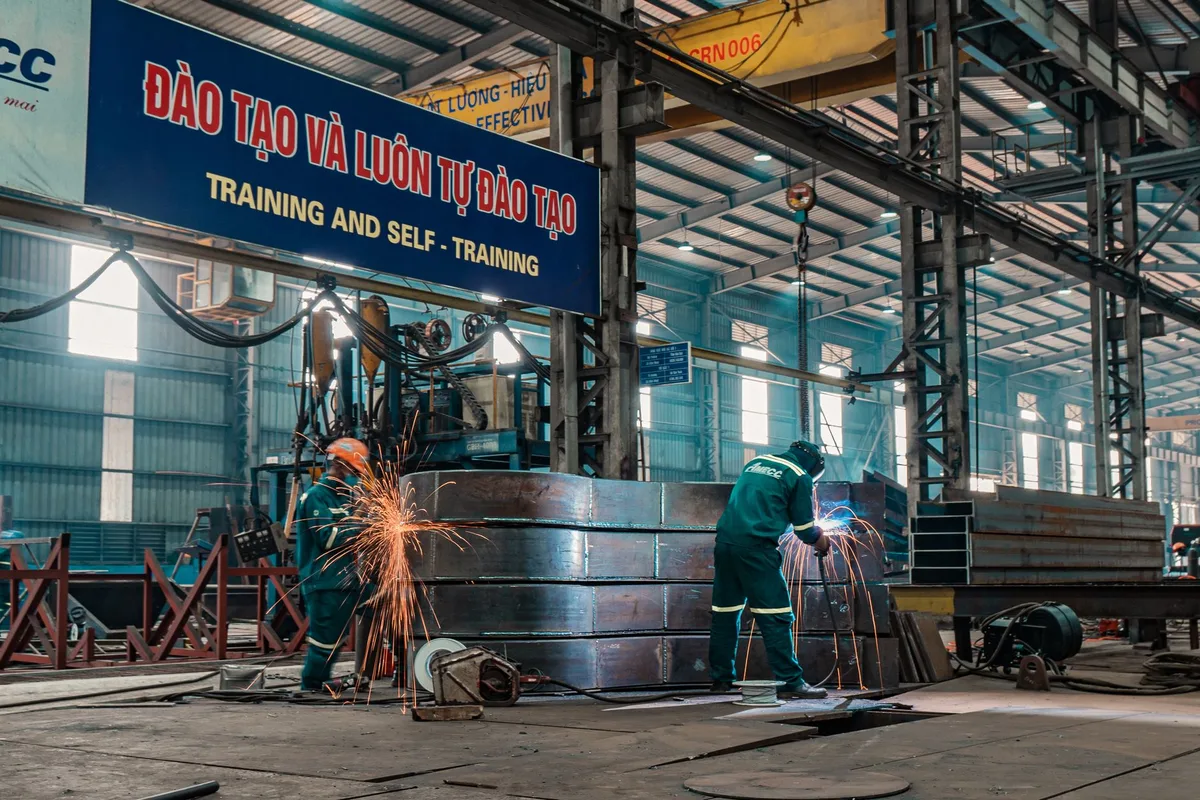
A buyer's guide to Made in Vietnam: what the label means, which products the country manufactures, and how to verify suppliers and origin claims before you order.
Sep 20, 2026
A practical guide to finding, vetting, and ordering from wholesale suppliers anywhere in the world, plus a region-by-region map of where to source what.
Sep 11, 2026