
Brazil's Main Export: What It Is and What Buyers Can Source
What is Brazil's main export? A buyer's guide to Brazil's top exports in 2025, why sources rank them differently, who buys them, and how to source Brazilian goods safely.
Sep 26, 2026
Find verified suppliers on Tawaf
Create Free AccountSaudi Arabia's contracting sector employs over 3 million workers. The Kingdom's $1.1 trillion project pipeline means contractors at every grade level and specialization have work available. But accessing that work requires understanding the classification system, market entry requirements, and how projects flow from developer to main contractor to subcontractor.
Saudi Arabia's contractor classification system, administered by MOMRA (Ministry of Municipal, Rural Affairs and Housing), assigns grades 1 through 5 to contracting companies based on financial capacity, technical capability, equipment ownership, and completed project track record. Grade 1 contractors handle unlimited project values while Grade 5 is capped at SAR 50 million ($13.3 million). Classification is mandatory for all construction and contracting work in the Kingdom.
The classification system is the entry point for every contracting company operating in Saudi Arabia. No classification means no bidding, no subcontracting on formal projects, and no government work. Understanding the grades determines your market positioning and project access.
Grade structure and requirements:
| Grade | Max Project Value | Min Capital | Min Annual Revenue | Typical Company Profile |
|---|---|---|---|---|
| 1 | Unlimited | SAR 100M+ ($26.7M+) | SAR 500M+ ($133M+) | Major national/international contractors |
| 2 | SAR 500M ($133M) | SAR 50M ($13.3M) | SAR 200-500M ($53-133M) | Large regional contractors |
| 3 | SAR 200M ($53M) | SAR 25M ($6.7M) | SAR 100-200M ($26.7-53M) | Mid-size contractors |
| 4 | SAR 100M ($26.7M) | SAR 10M ($2.7M) | SAR 50-100M ($13.3-26.7M) | Established specialized firms |
| 5 | SAR 50M ($13.3M) | SAR 5M ($1.3M) | Up to SAR 50M ($13.3M) | Small contractors, new entrants |
Classification specialization categories: MOMRA classifies contractors across specific trade disciplines. A company can hold different grades in different categories:
Assessment criteria weighting:
| Criteria | Weight | What MOMRA Evaluates |
|---|---|---|
| Financial capacity | 30% | Audited financials, bank facilities, working capital |
| Technical capability | 25% | Key staff qualifications, organizational structure |
| Equipment ownership | 20% | Plant and equipment register, condition, capacity |
| Project experience | 25% | Completed projects (value, complexity, client references) |
The classification process takes 3-6 months from application to grade assignment. Annual renewal is required, and grades can be upgraded or downgraded based on updated documentation.
Saudi Arabia's contracting market segments into five primary types: general contractors (managing entire building projects), civil contractors (infrastructure, roads, earthworks), MEP contractors (mechanical, electrical, plumbing systems), finishing contractors (interior fit-out, facades, painting), and specialty contractors (piling, waterproofing, fire protection). Each type serves a distinct role in the project delivery chain and holds different classification categories.
Understanding contractor types matters because each occupies a different position in the project supply chain and faces different competitive dynamics.
General Contractors These companies take overall responsibility for delivering complete building projects. They manage the construction program, coordinate subcontractors, and hold the primary contract with the project owner. In Saudi Arabia, general contractors typically hold Grade 1-3 classification in the Buildings category.
Major Saudi general contractors include Saudi Binladin Group, Al Bawani, El Seif Engineering, Almabani General Contractors, and Al Rashid Trading and Contracting. International general contractors operating in the Kingdom include Samsung C&T, Bechtel, Webuild, CSCEC (China State Construction), and Hyundai Engineering.
General contractors subcontract 40-60% of project value to specialized firms. This creates the largest pool of opportunity for smaller contracting companies.
Civil Contractors Specialize in infrastructure: roads, bridges, tunnels, earthworks, utilities, and site development. Saudi Arabia's infrastructure pipeline — new cities, road networks connecting giga-projects, airport expansions — creates sustained demand for civil contractors.
Key civil contractors: Al-Latifia Trading and Contracting, Al Arrab Contracting, Mohammed Al-Mojil Group, and Abdullah A.M. Al-Khodari Sons.
MEP Contractors Mechanical, electrical, and plumbing contractors install the building systems that make structures functional: HVAC, power distribution, lighting, plumbing, drainage, fire protection, and building management systems. MEP typically represents 30-40% of total building cost.
This is one of the highest-demand specializations in Saudi Arabia right now. The simultaneous construction of thousands of buildings across Vision 2030 projects has created a severe shortage of qualified MEP contractors.
Finishing Contractors Handle interior fit-out, painting, flooring, ceiling systems, joinery, curtain wall installation, and external cladding. Finishing contractors become critical in the later phases of construction when buildings transition from structural shells to usable spaces.
The hospitality segment (hotels across Diriyah Gate, Qiddiya, The Red Sea, NEOM) drives particular demand for high-end finishing contractors capable of delivering luxury interiors.
Specialty Contractors Cover niche trades requiring specific equipment and expertise: foundation piling, structural waterproofing, thermal insulation, swimming pool construction, kitchen equipment installation, elevator installation, and facade engineering.
Specialty contractors often operate across the GCC region, following projects between Saudi Arabia, UAE, Qatar, and Oman.
Browse contracting companies and their specializations at /suppliers-by-country to find partners for specific project needs.
Join Tawaf and connect with verified businesses across 47 countries. No middlemen, no commissions.
Join Tawaf FreeThe MOMRA classification application involves five steps: preparing a documentation package (financial statements, project certificates, equipment registers, staff qualifications), submitting through the Balady platform, undergoing document verification and potential site inspection, receiving a classification committee review, and obtaining your grade certificate. Processing takes 3-6 months, and applicants should budget SAR 15,000-50,000 for application fees, document preparation, and professional advisory support.
The application process is detailed and documentation-heavy. Companies that prepare thoroughly achieve faster approvals and higher initial grades.
Step 1: Document preparation (4-8 weeks)
Required documents:
Step 2: Online submission through Balady platform MOMRA's Balady platform handles all contractor classification submissions digitally. Create an account, upload documentation, and pay the application fee.
Step 3: Document verification and inspection MOMRA staff review submitted documents for completeness and accuracy. They may request additional documentation or clarification. For higher grades (1-3), a physical inspection of company facilities, equipment yards, and active project sites may be conducted.
Step 4: Classification committee review A MOMRA committee evaluates the application against grade criteria. The committee considers financial capacity, technical capability, equipment resources, and project track record in determining the appropriate grade.
Step 5: Grade certificate issuance Upon approval, MOMRA issues a classification certificate specifying your grade in each applied category. The certificate is valid for one year and must be renewed annually with updated documentation.
Common reasons for application rejection or downgrade:
For context on how this classification system interacts with the broader Saudi construction market, read our comprehensive guide on construction companies in Saudi Arabia.
International contractors enter Saudi Arabia through three primary vehicles: establishing a licensed branch (100% foreign ownership, requires MISA license), forming a joint venture with a classified Saudi contractor (most common for market entry), or setting up a Saudi LLC with foreign ownership (post-2019 foreign investment reforms allow up to 100% in many sectors). Each vehicle has distinct capital requirements, timeline, and operational implications.
Market entry for international contractors has become more straightforward since the 2019 Foreign Investment Law reforms, but it still requires careful structuring.
Option 1: Licensed Branch A foreign company establishes a branch office registered in Saudi Arabia. This allows the international company to contract directly without a Saudi partner.
Requirements:
Timeline: 3-6 months from application to operational status.
Advantage: Full control, no local partner required, repatriation of profits permitted. Disadvantage: Building MOMRA classification from scratch (no Saudi project history), Saudization requirements apply immediately, and full operational setup costs.
Option 2: Joint Venture with Saudi Contractor The most popular market entry vehicle. An international contractor partners with a classified Saudi firm to access projects using the Saudi partner's classification, local knowledge, and established relationships.
| JV Structure | Foreign Ownership | Saudi Partner Role | Typical Duration |
|---|---|---|---|
| Project-specific JV | 40-60% | Lead contractor, classification | Single project |
| Ongoing partnership JV | 30-51% | Local management, government relations | Multi-year |
| Consortium | Varies | Defined scope within consortium | Program-specific |
Requirements:
Timeline: 2-4 months to structure and register.
Advantage: Immediate access to projects through partner's classification, local market knowledge, established government relationships, and workforce management capability. Disadvantage: Profit sharing, dependency on partner's performance and reputation, potential cultural and operational differences.
Option 3: Saudi LLC with Foreign Ownership
Post-2019 reforms allow 100% foreign ownership in many sectors including construction services. You establish a new Saudi company, build your own team, and obtain your own MOMRA classification over time.
Requirements:
Timeline: 4-8 months to establish entity; additional 3-6 months for MOMRA classification.
Advantage: Full ownership and control, ability to build long-term Saudi business, independent classification. Disadvantage: Longest path to project access, highest initial investment, classification takes time to achieve.
Ready to connect with Saudi contracting companies or find subcontracting partners? Register on Tawaf to create your business profile and start building relationships with contractors, suppliers, and developers across the Kingdom. Free to join.
Saudization (Nitaqat) requires all contracting companies in Saudi Arabia to employ a minimum percentage of Saudi nationals, typically 8-15% of total headcount for construction sector companies. Companies are categorized into color-coded zones (platinum, green, yellow, red) based on their Saudization ratio. Green zone status is essential for visa processing, company size expansion, and government contract eligibility.
The Nitaqat system directly impacts operational capability. Companies in yellow or red zones face visa processing restrictions, which limits their ability to bring in the foreign workers that construction depends on.
Nitaqat zones and implications:
| Zone | Saudization Ratio | Visa Processing | Government Contracts | Penalties |
|---|---|---|---|---|
| Platinum | Above target | Unlimited visas | Full access | None |
| Green (high) | At target | Normal processing | Full access | None |
| Green (low) | Near target | Normal processing | Full access | None |
| Yellow | Below target | Restricted | Limited access | Warning period |
| Red | Significantly below | Blocked | No access | Fines, potential closure |
Practical Saudization strategies used by contracting companies:
Administrative and support roles — Employ Saudi nationals in HR, finance, procurement, warehouse management, and site administration. These roles are easier to fill with Saudi candidates and contribute to the Saudization ratio.
Health, Safety, and Environment (HSE) — Saudi HSE officers are increasingly available through technical training programs. This is a growing field with good Saudi candidate availability.
Site supervision and quality control — Saudi engineering graduates entering the workforce provide a pipeline for supervisory roles. Pair junior Saudi engineers with experienced site managers for development.
TVTC partnerships — The Technical and Vocational Training Corporation trains Saudi nationals in construction trades. Partner with TVTC for apprenticeship programs that count toward your Saudization numbers while building a skilled local workforce.
Outsourced Saudization — Some companies use service contracts with Saudi-owned facility management or security companies to meet quotas through indirect employment. MHRSD has been tightening rules on this approach, so verify current regulations.
The cost reality: Saudi national employees in construction typically earn 30-50% more than equivalent expatriate workers for similar roles, plus additional benefits mandated by labor law. Budget accordingly when planning your Saudization strategy.
Active projects accepting contractor and subcontractor applications include NEOM (multiple phases across The Line, Trojena, Oxagon), New Murabba in Riyadh, Diriyah Gate, Qiddiya, ROSHN residential communities, Saudi Entertainment Authority venues, and numerous government infrastructure projects listed on the Etimad procurement platform. Combined, these projects need thousands of additional contractors across all trades and classification grades.
The project pipeline is not theoretical. These developments are under active construction and procurement teams are sourcing contractors continuously.
NEOM The $500 billion giga-project encompasses multiple sub-projects, each requiring extensive contractor engagement:
NEOM's procurement portal (neom.com) accepts contractor and supplier registrations. Pre-qualification categories cover general contracting, MEP, facades, landscaping, marine works, and specialty trades.
Diriyah Gate ($20B) Heritage district development in Riyadh requiring contractors skilled in traditional Najdi architecture alongside modern MEP and infrastructure capabilities. Active packages include hotel construction (7+ luxury properties), museum and cultural venues, residential neighborhoods, and retail/dining districts.
Qiddiya ($8B) Entertainment city outside Riyadh with active construction packages including:
ROSHN (PIF residential developer) Building entire residential communities across Saudi Arabia. Active projects in Riyadh (SEDRA), Jeddah (ALAROUS), and the Eastern Province. These are conventional residential construction projects well-suited for Grade 3-5 contractors.
Government infrastructure projects The Etimad platform (etimad.sa) lists ongoing procurement for:
For an in-depth look at Riyadh-specific opportunities, see our guide on construction companies in Riyadh.
Saudi Arabia does not legally require a local partner for all foreign contracting companies (post-2019 reforms), but practical market dynamics make local partnerships highly advantageous. Government contracts above certain thresholds often include mandatory local content requirements. Joint ventures with classified Saudi firms provide immediate project access, established MOMRA classification, government relationship networks, and workforce management infrastructure that takes years to build independently.
The legal versus practical distinction matters here. You can legally operate without a Saudi partner in many scenarios. But winning and delivering projects is substantially easier with one.
When a local partner is essential:
When independent operation works:
Finding the right Saudi partner:
Key evaluation criteria for potential JV partners:
Where to find partners: industry events (Big 5 Saudi, Saudi Build), industry chambers of commerce, B2B platforms like Tawaf, and professional advisors with Saudi market experience.
Saudi Arabia's construction boom creates material supply opportunities worth $80+ billion annually. The highest-demand categories include structural steel (12-15M tons/year), cement and concrete products (75M+ tons/year), MEP equipment ($10B+ annually), and finishing materials ($15B+ annually). Contractors with manufacturing capability or established supply chain relationships can combine contracting services with material supply for improved margins.
Many contracting companies in Saudi Arabia operate as both contractors and material suppliers, creating vertically integrated operations that capture margin at multiple points in the value chain.
High-margin material supply opportunities for contractors:
| Material Category | Annual Market Value | Import Share | Supply Gap |
|---|---|---|---|
| Pre-fabricated concrete elements | $3B+ | 20% | Demand exceeding local capacity |
| Steel fabrication (structural) | $5B+ | 40% | Quality fabricators in short supply |
| Aluminum facade systems | $2B+ | 80% | Limited local manufacturing |
| HVAC equipment and ductwork | $4B+ | 75% | Growing demand outpacing imports |
| Electrical panels and switchgear | $3B+ | 70% | Import-dependent |
| Plumbing fixtures and systems | $2B+ | 60% | Steady demand |
| Interior finishing materials | $8B+ | 50% | Quality products in high demand |
| Landscaping materials and plants | $1.5B+ | 30% | Riyadh Green driving massive growth |
Contractors who invest in local manufacturing facilities benefit from Saudi Arabia's "Made in Saudi" program, which provides preferential treatment in government procurement for locally manufactured goods. The National Industrial Development and Logistics Program (NIDLP) offers incentives including subsidized industrial land, soft financing, and customs duty exemptions on manufacturing equipment.
For material manufacturers outside Saudi Arabia looking to supply the construction market, establishing relationships with Saudi contractors is the most effective entry strategy. List your products on Tawaf's B2B marketplace to connect with Saudi construction companies actively sourcing materials.
Standard payment terms in Saudi construction include 10-20% advance payment (against bank guarantee), monthly progress payments based on certified quantities, 10% retention (released in two tranches at practical completion and end of defects liability), and 30-60 day payment cycles from the date of certified payment application. The 2023 prompt payment regulations require government entities to pay within 60 days, significantly improving cash flow predictability for contractors.
Financial planning separates successful Saudi contractors from those who fail. The number one reason contracting companies exit the Saudi market is cash flow problems, not a lack of project opportunities.
Standard contractual payment structure:
| Payment Milestone | Percentage | Timing | Security Required |
|---|---|---|---|
| Advance payment | 10-20% | Upon contract signing | Advance payment bank guarantee |
| Monthly progress payments | Per certified BOQ | Monthly certification cycle | Performance bond (10% of contract) |
| Retention deduction | 10% per payment | Withheld from each progress payment | None (replaced by retention bond option) |
| Retention release (first half) | 5% | At practical completion | Defects liability bond |
| Retention release (second half) | 5% | End of defects period (12 months) | None |
| Final account | Balance | After final account agreement | None |
Cash flow management strategies:
Front-load your work program — Schedule higher-value activities early in the project to generate larger initial progress payments.
Negotiate retention bond substitution — Instead of cash retention (10% held from every payment), offer a retention bond from a Saudi bank. This keeps cash in your account while satisfying the client's security requirement.
Maintain credit facilities — Saudi banks provide contractor financing facilities including project-specific overdrafts, guarantee facilities, and receivables financing. Establish these before you need them.
Invoice promptly and accurately — Late or incorrect payment applications are the most common cause of payment delays. Submit complete documentation on the first submission to avoid back-and-forth that extends the payment cycle.
Track receivables aggressively — Assign a dedicated person to follow up on every outstanding payment. In Saudi business culture, personal follow-up (visiting the client's finance department) is more effective than emails.
The minimum capital depends on your target classification grade and entity type. A Grade 5 contractor needs SAR 5 million ($1.3 million) in capital. A foreign-owned LLC requires SAR 500,000-30,000,000 depending on the activity license. A licensed branch of a foreign company typically needs SAR 500,000+ minimum. Budget additional working capital of 3-6 months of estimated operational expenses beyond the statutory minimum.
Through a JV with a classified Saudi partner, you can access project opportunities immediately — within weeks of completing the JV registration. Building your own classification independently takes 3-6 months for the MOMRA process, then 1-3 months for the first project award cycle. Total timeline from market entry decision to first contract award: 2-4 months via JV, 6-12 months independently.
Mandatory coverage includes: Contractor All Risks (CAR) insurance covering the contract works, third-party liability insurance (minimum SAR 5 million), workers' compensation through GOSI registration, and motor vehicle insurance for company fleet. Most project contracts also require professional indemnity insurance for design-build works and environmental liability coverage. Insurance costs typically range from 1-3% of annual contract value.
Saudi Arabia does not restrict specific nationalities from working in construction, but visa quotas and processing priorities vary. Indian, Pakistani, Bangladeshi, Filipino, and Egyptian workers form the majority of the construction workforce. The MHRSD has been encouraging diversification of the expatriate labor force. Saudization requirements apply regardless of the expatriate nationalities employed.
Contractual protections include: direct payment clauses (allowing the project owner to pay the subcontractor directly if the main contractor defaults), pay-when-paid vs. pay-when-certified distinction (insist on pay-when-certified), retention bond options instead of cash retention, and dispute resolution through the Saudi Center for Commercial Arbitration. Practically, maintain cash reserves covering 3 months of operations and diversify across multiple main contractors to avoid concentration risk.
Get Started
Create your free account and start connecting with verified suppliers and buyers worldwide.
Create Free Account
We help businesses navigate cross-border trade. Our team covers supplier verification, trade compliance, and B2B marketplace strategies to connect verified businesses worldwide.
What is Brazil's main export? A buyer's guide to Brazil's top exports in 2025, why sources rank them differently, who buys them, and how to source Brazilian goods safely.
Sep 26, 2026
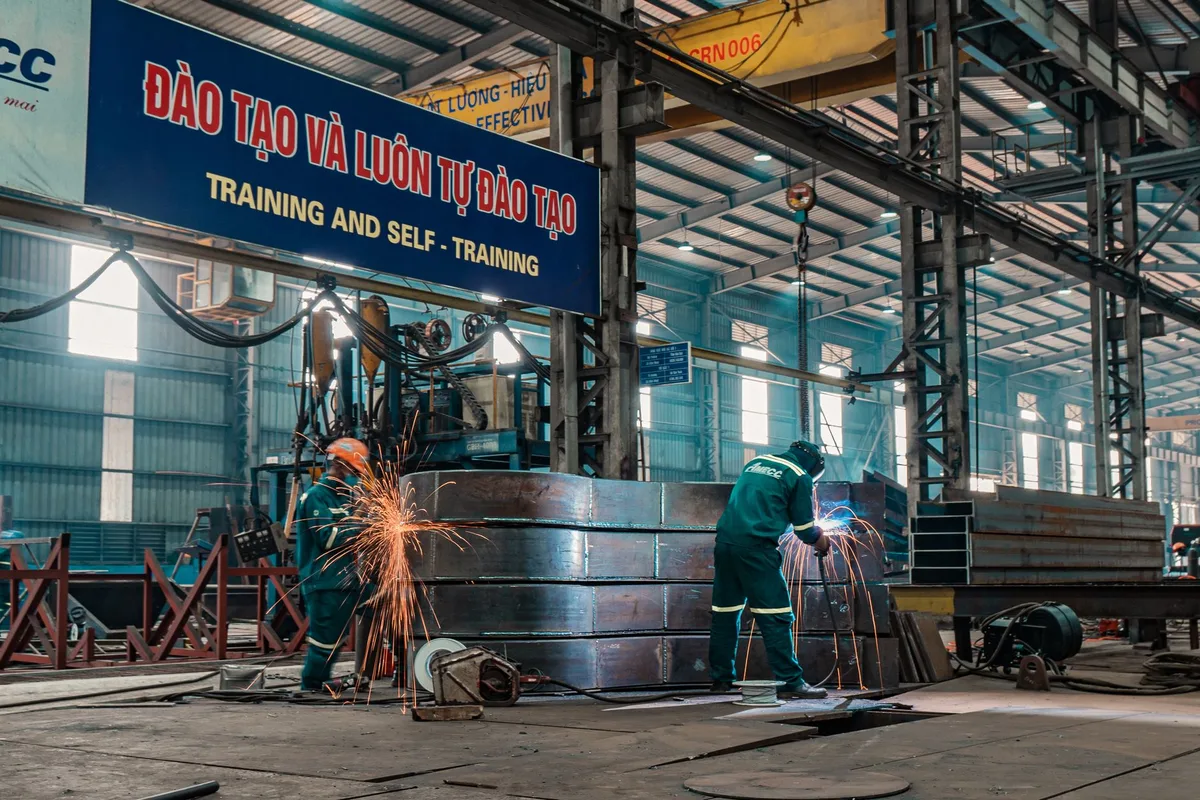
A buyer's guide to Made in Vietnam: what the label means, which products the country manufactures, and how to verify suppliers and origin claims before you order.
Sep 20, 2026
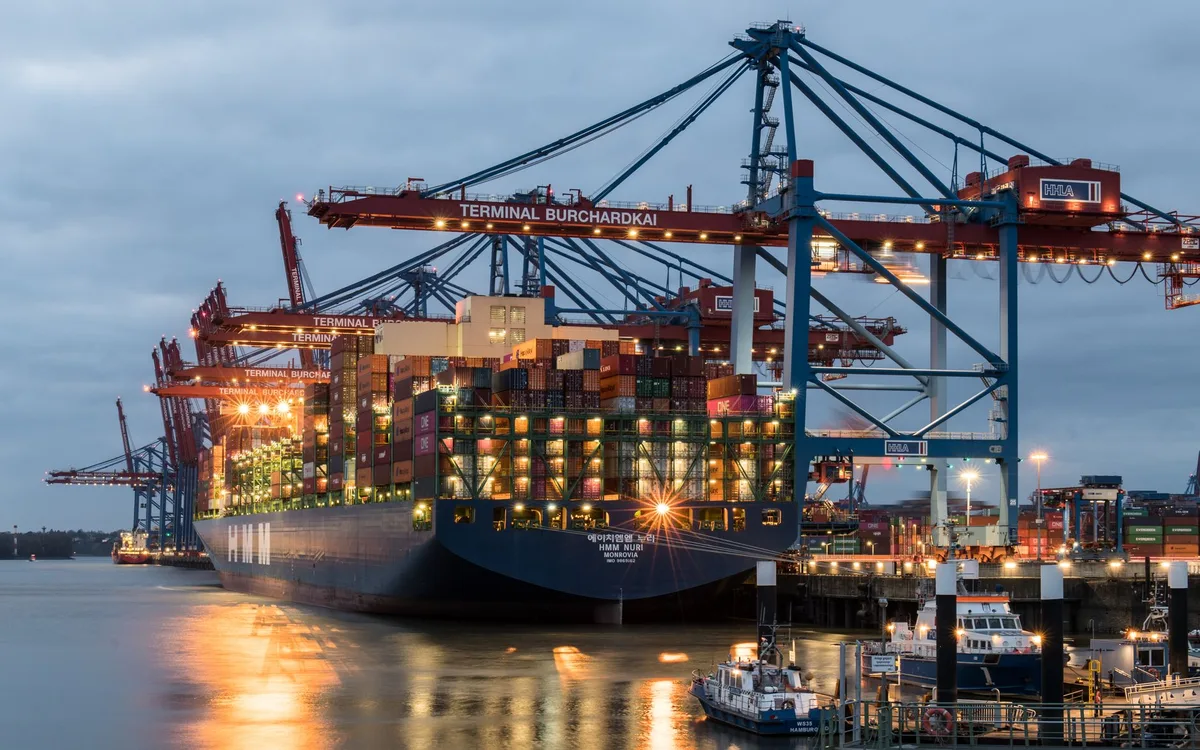
A practical guide to finding, vetting, and ordering from wholesale suppliers anywhere in the world, plus a region-by-region map of where to source what.
Sep 11, 2026