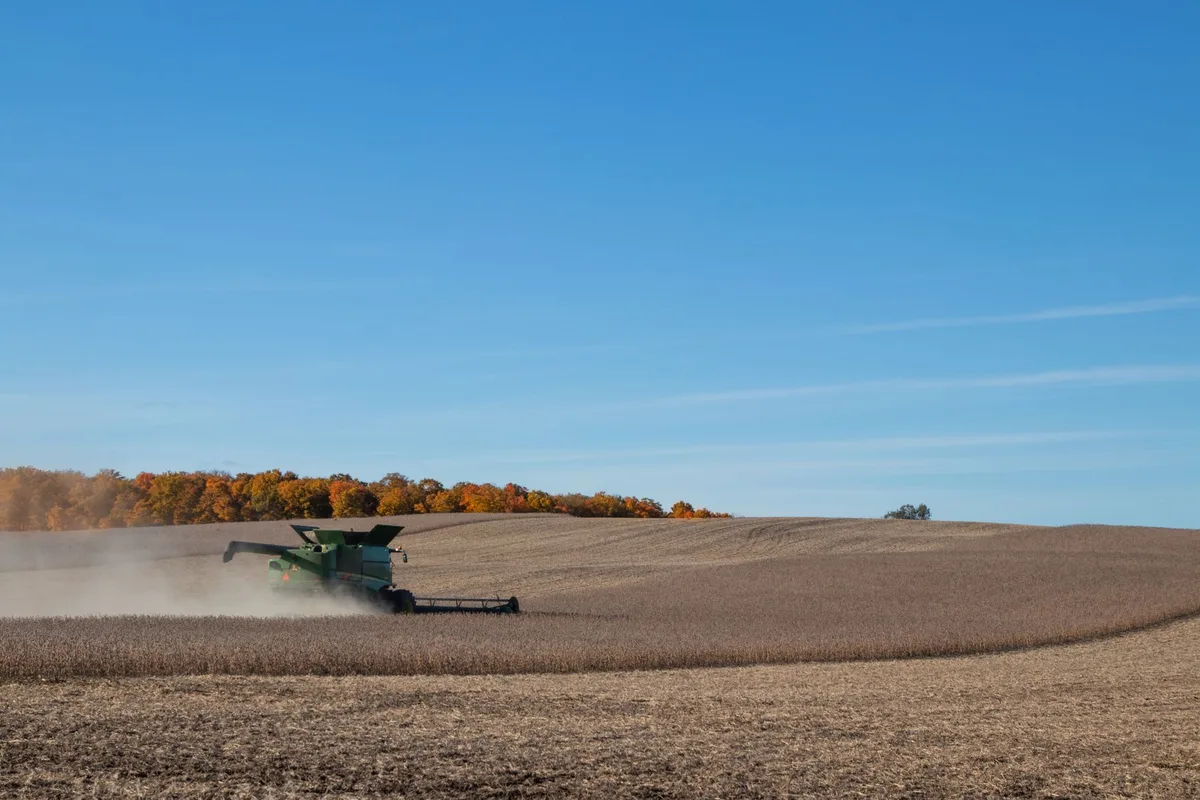
Brazil's Main Export: What It Is and What Buyers Can Source
What is Brazil's main export? A buyer's guide to Brazil's top exports in 2025, why sources rank them differently, who buys them, and how to source Brazilian goods safely.
Sep 26, 2026
Find verified suppliers on Tawaf
Create Free AccountChina is India's largest supplier. Despite geopolitical tensions, trade restrictions, and periodic calls for self-reliance, the numbers tell an unambiguous story: India imports over $100 billion worth of goods from China annually, and that figure continues to grow. Learning how to import from China to India properly — with the right documentation, duty management, and supplier relationships — is a practical business skill that thousands of Indian entrepreneurs need and few have mastered.
India-China bilateral trade exceeded $136 billion in 2025, with India importing approximately $101 billion and exporting roughly $35 billion to China. This makes China India's largest trading partner by import volume. The trade deficit of $65+ billion is driven by India's dependence on Chinese electronics, machinery, chemicals, plastics, and auto components that Indian manufacturing cannot yet produce at comparable cost or scale.
The trade relationship between China and India is massive, complex, and sometimes politically uncomfortable. But from a pure business perspective, the numbers are straightforward.
According to data from the Directorate General of Commercial Intelligence and Statistics (DGCIS), India's top imports from China by value include:
| Product Category | Annual Import Value (est.) | % of Total China Imports | Growth Trend |
|---|---|---|---|
| Electronics & Telecom Equipment | $28-32B | 28-31% | Growing |
| Machinery & Mechanical Appliances | $15-18B | 15-17% | Stable |
| Organic & Inorganic Chemicals | $12-15B | 12-14% | Growing |
| Plastics & Plastic Articles | $6-8B | 6-8% | Growing |
| Iron, Steel & Metal Products | $5-7B | 5-7% | Fluctuating |
| Auto Components & Parts | $4-6B | 4-6% | Growing |
| Pharmaceutical Intermediates (APIs) | $4-5B | 4-5% | Stable |
| Fertilizers | $3-5B | 3-5% | Fluctuating |
| Textiles & Fabrics | $2-3B | 2-3% | Stable |
| Toys, Games & Sports Equipment | $1-2B | 1-2% | Growing |
The "Make in India" initiative has reduced import dependency in some categories — notably mobile phone assembly, which has shifted significantly to domestic production. But for components, raw materials, and specialized machinery, Chinese imports remain essential for Indian manufacturing. Many Indian factories depend on Chinese inputs to produce goods that are then exported globally.
For Indian businesses, the practical question is not whether to import from China — for many product categories, there is simply no viable alternative at comparable cost. The question is how to import efficiently, legally, and profitably.
Before importing from China to India, you need an Importer Exporter Code (IEC) from DGFT, a business registration (PAN, GST registration, company incorporation), a bank account with trade finance capabilities, an understanding of applicable customs duties and regulations for your product category, and a relationship with a customs house agent (CHA) or customs broker to handle clearance procedures.
The regulatory requirements for importing into India are well-defined. Meeting them before your first shipment arrives avoids delays, penalties, and seizures.
Importer Exporter Code (IEC) is the single most important document. Issued by the Directorate General of Foreign Trade (DGFT), the IEC is a 10-digit code that every business needs before engaging in any import or export activity. Application is online through the DGFT portal, and processing typically takes 3-5 business days. The IEC is valid for the lifetime of the business and does not require renewal.
Business registration documents you need include:
GSTIN (GST Identification Number) is critical because imports into India attract IGST (Integrated GST) in addition to basic customs duty. You need a valid GST registration to claim input tax credit on the IGST paid at the time of import.
Bank account with trade finance capabilities means a current account at a bank that handles international trade transactions — foreign currency remittances, letters of credit, and bank guarantees. Most scheduled commercial banks in India offer trade finance services, but branch-level experience varies. Choose a bank branch with an active trade finance desk.
Customs House Agent (CHA) or licensed customs broker handles the physical clearance of your goods at the port of entry. A good CHA manages documentation filing, duty payment, inspections, and release of cargo. They are licensed by the Central Board of Indirect Taxes and Customs (CBIC) and are essential for smooth import operations, especially for first-time importers.
Join Tawaf and connect with verified businesses across 47 countries. No middlemen, no commissions.
Join Tawaf FreeCustoms duties on imports from China to India include Basic Customs Duty (BCD) ranging from 0-150% depending on the product, Social Welfare Surcharge at 10% of BCD, IGST at 5%, 12%, 18%, or 28% on the assessable value plus duty, and in some cases Anti-Dumping Duty or Safeguard Duty on specific Chinese products. The effective duty rate for most commercial goods ranges from 25-70% of CIF value.
Duty calculation is where most first-time importers get confused — and where mistakes are expensive. Understanding the duty structure before you source a product from China determines whether the import is commercially viable.
Basic Customs Duty (BCD) is determined by the HS (Harmonized System) code classification of your product. India's customs tariff schedule assigns specific BCD rates to each HS code. Rates range from 0% on certain raw materials and capital goods to over 100% on luxury items and products where India wants to protect domestic industry. The current customs tariff is published by the Central Board of Indirect Taxes and Customs.
Social Welfare Surcharge (SWS) is levied at 10% on the BCD amount. If your BCD is Rs. 10,000, the SWS adds Rs. 1,000.
IGST (Integrated GST) is applied on the combined value of the assessable value, BCD, and SWS. IGST rates are 5%, 12%, 18%, or 28% depending on the product category. The IGST paid on imports can be claimed as input tax credit if the goods are used for business purposes.
Anti-Dumping Duty (ADD) applies to specific products from specific countries where the Indian government has determined that imports are being sold below fair market value, injuring domestic industry. Several Chinese product categories face ADD, including certain steel products, chemicals, textiles, and ceramics. ADD amounts vary by product and are periodically reviewed.
Here is a worked example for importing electronic components (HS code dependent):
| Duty Component | Rate | Calculation (on CIF Rs. 10,00,000) | Amount |
|---|---|---|---|
| Basic Customs Duty (BCD) | 15% | 15% of Rs. 10,00,000 | Rs. 1,50,000 |
| Social Welfare Surcharge | 10% of BCD | 10% of Rs. 1,50,000 | Rs. 15,000 |
| IGST | 18% | 18% of (10,00,000 + 1,50,000 + 15,000) | Rs. 2,09,700 |
| Total Duty | Rs. 3,74,700 | ||
| Effective Duty Rate | 37.47% |
In this example, a product with a CIF value of Rs. 10 lakh attracts Rs. 3.75 lakh in total duties — a 37.47% effective rate. The IGST component (Rs. 2.10 lakh) can be claimed as input tax credit, making the effective cash cost approximately 16.5% (BCD + SWS only) for businesses registered under GST.
Always calculate the full landed cost — CIF value plus all duties, CHA charges, port handling, transportation, and warehousing — before committing to a purchase order. A product that appears 40% cheaper from China may only be 15-20% cheaper after duties and logistics.
Essential import documents include the Bill of Entry (filed by your CHA with Indian Customs), commercial invoice from the Chinese supplier, packing list, bill of lading or airway bill, certificate of origin (Form E for APTA concessions or standard), insurance certificate, IEC copy, GSTIN documentation, and any product-specific licenses or test certificates required by BIS, FSSAI, or other regulatory bodies.
Documentation errors are the most common cause of import delays at Indian ports. Missing or incorrect paperwork can hold your cargo for days or weeks, incurring demurrage and detention charges that erode your margins.
From the Chinese supplier, you need:
From your side (Indian importer):
Product-specific documents may include:
Goods move from China to India via three primary routes: sea freight (15-25 days, cheapest for bulk), air freight (3-5 days, fastest but most expensive), and rail-sea multimodal routes (emerging option via the China-Central Asia-Iran corridor). Major Chinese export ports are Shenzhen/Yantian, Shanghai/Ningbo, and Guangzhou. Major Indian import ports are Nhava Sheva (Mumbai), Chennai, Mundra, and Kolkata.
Shipping logistics between China and India are well-established, with multiple carriers and routes operating daily. Your choice of shipping method depends on cargo volume, urgency, and product type.
Sea freight is the standard for most B2B imports. Transit times from major Chinese ports to Indian west coast ports (Nhava Sheva, Mundra) range from 15-22 days. East coast ports (Chennai, Kolkata) take 12-18 days from southern Chinese ports.
| Route | Transit Time (sea) | 20ft Container Cost (est.) | 40ft Container Cost (est.) |
|---|---|---|---|
| Shenzhen to Nhava Sheva | 18-22 days | $800-1,500 | $1,200-2,500 |
| Shanghai to Nhava Sheva | 20-25 days | $900-1,600 | $1,400-2,800 |
| Guangzhou to Chennai | 12-16 days | $700-1,300 | $1,100-2,200 |
| Shanghai to Kolkata | 15-20 days | $800-1,400 | $1,200-2,400 |
| Ningbo to Mundra | 18-22 days | $800-1,500 | $1,200-2,500 |
Container costs fluctuate significantly based on season, demand, fuel prices, and carrier capacity. The figures above represent mid-range estimates — actual rates may be higher during peak season (September-November) or during supply chain disruptions.
For full container loads (FCL), you book an entire 20-foot or 40-foot container. This is cost-effective when your cargo fills at least 60-70% of a container. A 20-foot container holds approximately 25-28 cubic meters or 18-20 tonnes (whichever limit is reached first).
For less-than-container loads (LCL), your cargo is consolidated with other shippers' goods in a shared container. LCL is practical for smaller shipments but costs more per cubic meter and takes longer due to consolidation and deconsolidation at each end.
Air freight from China to India takes 3-5 days and costs approximately $3-6 per kilogram. Air freight makes sense for high-value, low-weight products where speed is critical — electronics, pharmaceutical intermediates, and samples. Most air cargo from China to India moves through Delhi (IGI), Mumbai (CSI), Bangalore (KIA), and Chennai airports.
Incoterms matter. The most common terms for China-India trade are:
For most B2B importers, FOB is preferred because it gives you control over the freight arrangement and usually results in lower total logistics costs through your own freight forwarder.
Find reliable Chinese suppliers through B2B platforms like Tawaf and Alibaba, the Canton Fair (China Import and Export Fair held biannually in Guangzhou), industry-specific trade shows in China, trade promotion offices at Chinese consulates, referrals from other Indian importers in your industry, and sourcing agents based in major Chinese manufacturing cities. Verification through factory visits, third-party audits, and test orders is essential before scaling.
Supplier selection is the highest-risk decision in the import process. A wrong supplier choice can result in defective goods, late deliveries, or outright fraud. Verification is not optional.
B2B platforms are typically the starting point. Tawaf's supplier directory lists verified manufacturers across multiple product categories, allowing you to search by product type and capability. Alibaba remains the largest China-focused B2B platform, though it requires careful verification because listing quality varies widely.
The Canton Fair (officially the China Import and Export Fair) is the single best event for Indian importers looking to meet Chinese suppliers. Held twice yearly in Guangzhou (April/May and October/November), it attracts over 25,000 exhibitors across every conceivable product category. A week at the Canton Fair introduces you to more suppliers than months of online searching.
Sourcing agents based in Chinese manufacturing cities (Shenzhen, Guangzhou, Yiwu, Hangzhou) can manage the entire procurement process on your behalf. They find suppliers, negotiate pricing, manage quality control, and coordinate shipping. Agent commissions typically run 3-8% of order value. A good sourcing agent is worth their fee for first-time importers navigating an unfamiliar market.
Verification steps every Indian importer should follow:
Create your buyer profile on Tawaf to connect with verified suppliers and post sourcing requests for your import requirements.
Standard payment methods for importing from China include Telegraphic Transfer (T/T) with split payment terms (30% advance, 70% before shipment), Letters of Credit (L/C) for larger orders providing bank-guaranteed payment security, PayPal or trade assurance for small initial orders, and open account terms for established relationships. Each method carries different risk profiles for buyer and seller — understanding these trade-offs prevents payment disputes.
Payment terms are one of the most negotiated aspects of any China-India trade relationship. The terms you use should reflect the level of trust established with the supplier and the size of the transaction.
Telegraphic Transfer (T/T) is the most common payment method. Standard terms are:
T/T is fast and inexpensive (bank charges of Rs. 500-2,000 per transfer), but it offers limited recourse if the supplier ships defective goods after you have paid the balance. Mitigate this risk by conducting a pre-shipment inspection before releasing the balance payment.
Letters of Credit (L/C) provide the highest security for both parties. The Indian importer's bank guarantees payment upon the supplier presenting specified documents (bill of lading, commercial invoice, packing list, inspection certificate). L/C costs are higher — bank charges of 0.5-2% of L/C value plus courier and amendment fees — but justified for orders exceeding Rs. 10-15 lakh with new suppliers.
Trade Assurance and escrow services offered by platforms like Alibaba and Tawaf provide an intermediate level of protection. Payment is held by the platform and released to the supplier upon confirmed delivery and buyer satisfaction.
| Payment Method | Buyer Risk | Seller Risk | Best For | Cost |
|---|---|---|---|---|
| T/T 30/70 | Medium | Low | Established relationships | Rs. 500-2,000 per transfer |
| T/T 100% advance | Very High | None | Never recommended | Rs. 500-2,000 |
| Letter of Credit | Low | Low | Large orders, new suppliers | 0.5-2% of L/C value |
| Trade Assurance | Low-Medium | Medium | Small-medium platform orders | 0-3% platform fee |
| Open Account | None | High | Long-term, trusted partners | Minimal |
For Indian importers new to China sourcing, the recommended progression is: start with Trade Assurance or L/C for initial orders, move to T/T 30/70 after 3-5 successful transactions, and consider open account terms only for long-standing suppliers with a proven track record.
India has implemented several regulatory measures specifically affecting Chinese imports: mandatory BIS certification for electronics and IT products, increased scrutiny under the Foreign Direct Investment (FDI) review framework, anti-dumping duties on specific Chinese product categories, restrictions on certain apps and digital services, enhanced customs valuation procedures, and periodic import licensing requirements for specific product categories. Staying current on these evolving regulations is essential for compliant importing.
The regulatory environment for China-India trade has tightened significantly since 2020, driven by border tensions and the push for self-reliance under the Atmanirbhar Bharat initiative. Understanding current restrictions prevents costly compliance failures.
BIS compulsory registration has expanded to cover a growing list of product categories imported into India. Electronics, IT equipment, toys, helmets, steel products, and chemicals are among the categories where products must carry BIS certification. For Chinese products, BIS certification requires the manufacturer to apply, undergo factory inspection, and maintain compliance. Importing products that require BIS certification without it results in cargo seizure at the port.
Anti-dumping duties target specific Chinese products where Indian authorities have determined dumping is occurring. Active anti-dumping orders cover products including certain steel items, chemicals (like caustic soda, PVC, and hydrogen peroxide), ceramic tiles, glass fiber, and optical fiber. ADD amounts are product-specific and can significantly increase landed cost. Check the DGTR (Directorate General of Trade Remedies) website for current anti-dumping orders.
Customs valuation scrutiny on Chinese imports has increased. Indian Customs maintains a database of assessed values for commonly imported Chinese products and may question declared values that appear significantly below these benchmarks. Under-declaring invoice values to reduce duty is illegal and results in penalties, cargo seizure, and potential criminal prosecution.
Import licensing applies to certain product categories under India's Foreign Trade Policy. Items on the "restricted" list require an import license from DGFT before importation. Some products formerly freely importable have been moved to the restricted list specifically to manage Chinese imports — including laptops, tablets, and personal computers, which now require import authorization.
The regulatory landscape continues to evolve. Subscribe to CBIC and DGFT notifications, work with an experienced CHA, and maintain a relationship with a trade compliance advisor to stay current.
Total landed cost includes the product purchase price (FOB), international freight, marine insurance, customs duties (BCD + SWS + IGST), port handling and terminal charges, customs broker (CHA) fees, inland transportation from port to warehouse, and any product-specific testing or certification costs. For most product categories, total landed cost adds 35-65% to the FOB price, making accurate cost calculation essential before placing orders.
Landed cost calculation is the make-or-break analysis for any import decision. Getting this wrong — even by a few percentage points — can turn a profitable import into a loss-making exercise.
Here is a comprehensive landed cost calculation for a hypothetical import of electronic components with a FOB Shenzhen price of $10,000:
| Cost Component | Amount (USD) | Amount (INR approx.) | % of FOB |
|---|---|---|---|
| Product cost (FOB) | $10,000 | Rs. 8,35,000 | 100% |
| Sea freight (LCL) | $450 | Rs. 37,575 | 4.5% |
| Marine insurance (0.5% CIF) | $52 | Rs. 4,342 | 0.5% |
| CIF Value | $10,502 | Rs. 8,76,917 | 105% |
| Basic Customs Duty (15%) | $1,575 | Rs. 1,31,538 | 15.8% |
| Social Welfare Surcharge (10% of BCD) | $158 | Rs. 13,154 | 1.6% |
| IGST (18% on CIF+BCD+SWS) | $2,202 | Rs. 1,83,890 | 22% |
| Port handling and terminal charges | $120 | Rs. 10,020 | 1.2% |
| CHA fees | $80 | Rs. 6,680 | 0.8% |
| Inland transport (port to warehouse) | $150 | Rs. 12,525 | 1.5% |
| Total Landed Cost | $14,787 | Rs. 12,34,724 | 147.9% |
In this example, the landed cost is 47.9% above the FOB price. However, the IGST component ($2,202) is claimable as input tax credit for GST-registered businesses, which reduces the effective cash outlay. After ITC, the net additional cost above FOB is approximately 25.9% — still significant but more manageable.
Build a spreadsheet template for your specific product categories with accurate BCD rates, IGST rates, and logistics cost estimates. Update the logistics costs quarterly as freight rates fluctuate. Run this calculation before sending a purchase order, not after the goods are on the water.
The five most expensive mistakes are: paying 100% advance to unverified suppliers (risking total loss), miscalculating customs duty leading to unexpected costs at the port, failing to check BIS and other product-specific certification requirements before shipping, not conducting pre-shipment quality inspections, and choosing the cheapest freight option without understanding transit time impact on inventory carrying costs and cash flow.
Learning from others' expensive mistakes is cheaper than making your own.
Paying 100% upfront is the single riskiest action a first-time importer can take. Stories of Indian importers losing lakhs to fraudulent Chinese suppliers are common in trade forums. Always use split payments (maximum 30% advance), and preferably use L/C or trade assurance for initial orders. No legitimate supplier will refuse reasonable payment terms.
Duty miscalculation catches importers who price their products based on the FOB cost alone. A 15% BCD plus 18% IGST does not equal 33% total duty — the cascading calculation method means effective rates are higher. Always calculate the full duty waterfall using the method shown above before finalizing your selling price.
BIS certification gaps cause cargo to be held at Indian ports with no recourse. If your product requires BIS certification and the Chinese manufacturer has not obtained it, the goods cannot legally enter India. Checking BIS requirements should be your first step — before requesting quotes, before placing orders, before anything else. The BIS website maintains the list of products under compulsory registration.
Skipping pre-shipment inspection saves Rs. 15,000-25,000 in inspection fees but risks receiving an entire container of defective goods. The cost of rejecting a shipment at the Indian port — including return shipping, demurrage, and lost time — far exceeds the cost of an inspection in China before the goods leave.
Cheapest freight is not always cheapest. A shipper offering rates $200 below market may route your container through three transshipment ports, adding 10-15 days to transit time. Those extra days mean your capital is tied up longer, your inventory arrives later, and you may miss sales windows. Evaluate freight options on reliability and transit time alongside price.
Do I need an IEC for every import shipment? No. The IEC is a one-time registration valid for the lifetime of your business. Once you have your IEC, it covers all your import and export transactions. You need to update your IEC details if your business address, partners, or other registered information changes.
Can I import used machinery from China to India? Yes, with conditions. Used capital goods can be imported, but they must be less than 10 years old (for most categories) and accompanied by a Chartered Engineer's certificate attesting to the remaining useful life and residual value. Some used products face higher customs duty rates than new equivalents. Check the specific HS code provisions.
What happens if my goods are held at Indian customs? Goods are held for documentation discrepancies, valuation disputes, product compliance issues (like missing BIS certification), or random inspection selection. Your CHA should communicate with customs to resolve the issue. Demurrage charges (Rs. 1,000-5,000 per container per day) accumulate while goods are held, so resolution speed matters. Having complete, accurate documentation is the best preventive measure.
Is it legal to import from China via a third country to avoid duties? Routing Chinese goods through a third country (like Vietnam, Thailand, or Malaysia) to claim lower preferential duty rates is called transshipment fraud or origin circumvention. Indian Customs actively investigates this practice, and penalties include confiscation of goods plus fines of up to five times the duty evaded. Import goods on their correct country of origin — the risks of circumvention far outweigh any duty savings.
How do I handle quality disputes with Chinese suppliers? Prevention is better than resolution. Use pre-shipment inspections, hold balance payment until quality is verified, and include quality specifications in your purchase contract. If a dispute arises, attempt direct negotiation first. If that fails, many Chinese manufacturers are members of industry associations that provide mediation. For significant disputes, international arbitration (Singapore International Arbitration Centre is commonly used for Asia trade disputes) is an option, though it is expensive and time-consuming.
Get Started
Create your free account and start connecting with verified suppliers and buyers worldwide.
Create Free Account
We help businesses navigate cross-border trade. Our team covers supplier verification, trade compliance, and B2B marketplace strategies to connect verified businesses worldwide.
What is Brazil's main export? A buyer's guide to Brazil's top exports in 2025, why sources rank them differently, who buys them, and how to source Brazilian goods safely.
Sep 26, 2026
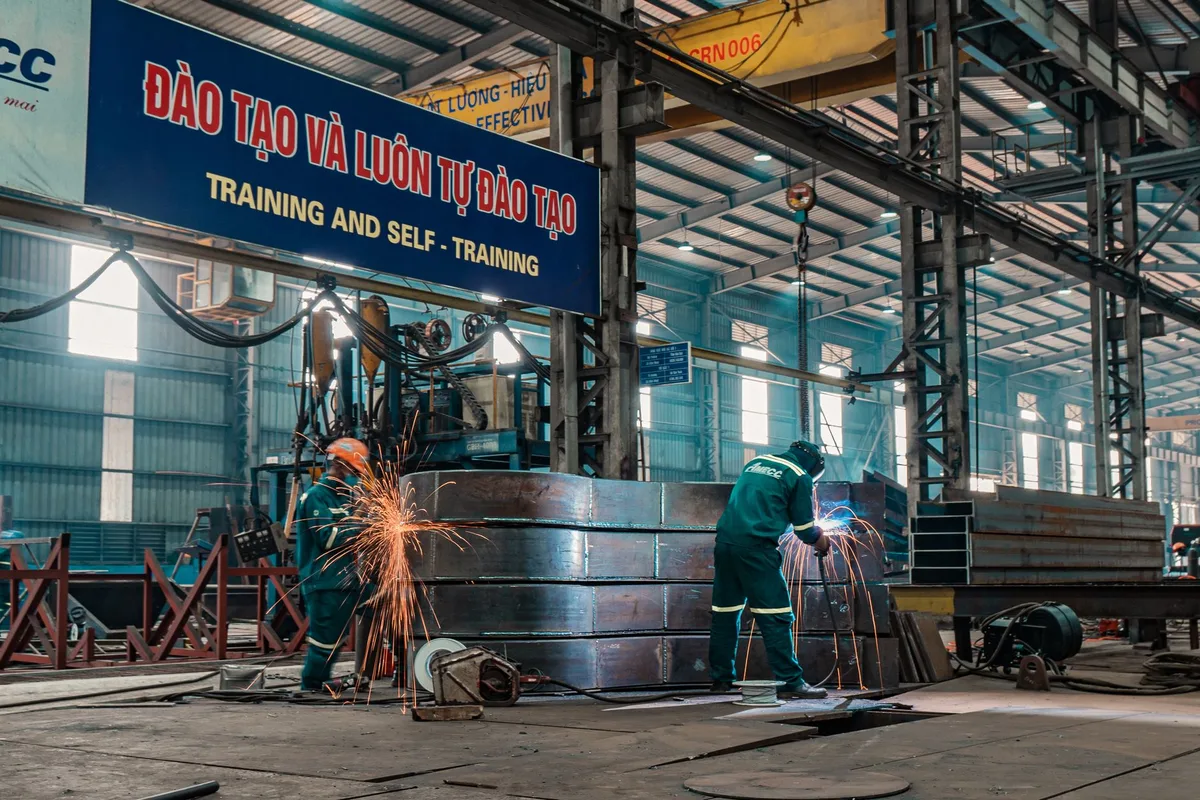
A buyer's guide to Made in Vietnam: what the label means, which products the country manufactures, and how to verify suppliers and origin claims before you order.
Sep 20, 2026
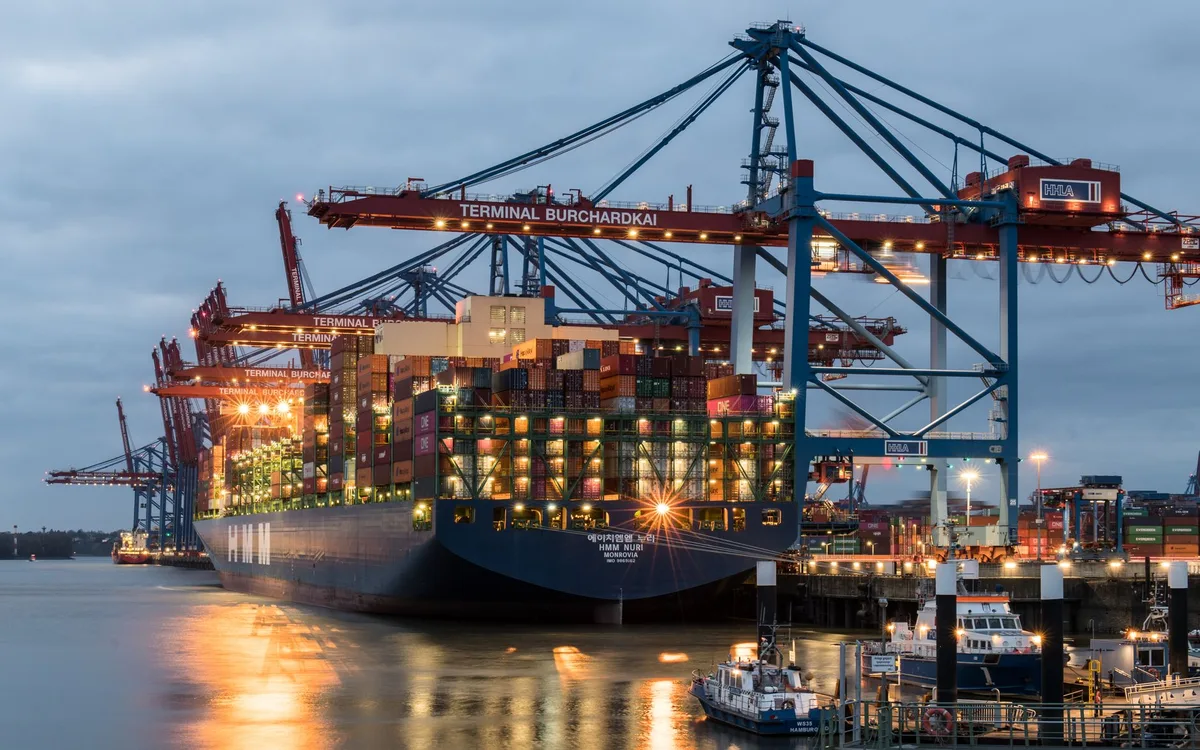
A practical guide to finding, vetting, and ordering from wholesale suppliers anywhere in the world, plus a region-by-region map of where to source what.
Sep 11, 2026