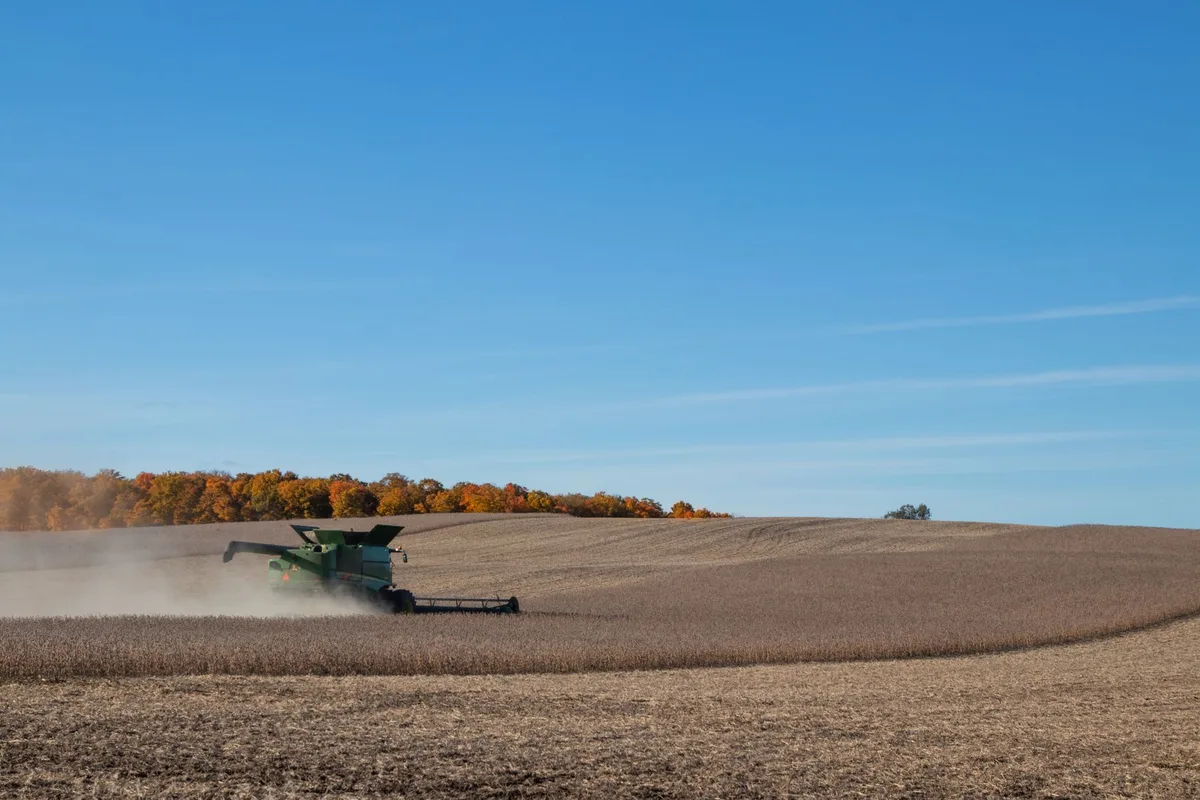
Brazil's Main Export: What It Is and What Buyers Can Source
What is Brazil's main export? A buyer's guide to Brazil's top exports in 2025, why sources rank them differently, who buys them, and how to source Brazilian goods safely.
Sep 26, 2026
Find verified suppliers on Tawaf
Create Free AccountIndia supplies the world's factories.
Wholesalers in India are B2B traders, manufacturers, and export houses that sell goods in bulk across agriculture, manufacturing, textiles, food processing, chemicals, and consumer goods. India's wholesale market is the third largest globally, driven by 63 million MSMEs (micro, small, and medium enterprises) that produce everything from basmati rice and steel tubes to handcrafted textiles and industrial chemicals.
India's wholesale ecosystem operates differently from Western markets. The supply chain is layered. Manufacturers sell to primary wholesalers (often called "stockists" or "C&F agents"), who sell to secondary wholesalers, who sell to retailers. For international B2B buyers, the goal is to cut through these layers and connect directly with manufacturers or primary export houses.
The country's wholesale infrastructure concentrates in specialized market clusters. Mumbai's Crawford Market handles everything from spices to electronics. Delhi's Chandni Chowk has operated as a wholesale hub for 400 years. Surat processes 90% of the world's diamonds and dominates synthetic textile production. These clusters create pricing efficiency — buyers from around the world travel to these hubs because the concentration of suppliers drives competition.
India's merchandise exports reached $437 billion in FY2024-25, according to the Ministry of Commerce and Industry. The top export categories — petroleum products, gems and jewelry, pharmaceuticals, textiles, and agricultural products — represent the strength areas of Indian wholesalers.
Tawaf currently lists 109 verified Indian businesses across 12+ industries. Browse Indian suppliers on Tawaf to connect directly with manufacturers and export houses.
Agriculture dominates India's wholesale landscape with 54 businesses on Tawaf alone, followed by manufacturing (41 businesses), food and beverages (32 businesses), textiles and apparel, chemicals, and consumer goods. India's agricultural exports reached $53 billion in FY2024-25, making it the world's largest exporter of rice, spices, and tea — all sourced through wholesale networks.
Here is a breakdown of India's wholesale strength by industry, with Tawaf supplier data:
| Industry | Tawaf Businesses | Key Products | Major Hubs | Export Value (FY25) |
|---|---|---|---|---|
| Agriculture | 54 | Rice, spices, tea, cotton, sugar | Punjab, West Bengal, Kerala | $53B |
| Manufacturing | 41 | Steel, auto parts, machinery, plastics | Maharashtra, Gujarat, Tamil Nadu | $98B |
| Food & Beverages | 32 | Processed foods, meat, dairy, snacks | Gujarat, Maharashtra, Uttar Pradesh | $24B |
| Textiles & Apparel | 28+ | Cotton fabric, silk, garments, yarn | Surat, Tirupur, Ludhiana | $36B |
| Chemicals | 15+ | Dyes, pharma intermediates, agrochemicals | Gujarat, Maharashtra | $29B |
| Gems & Jewelry | 10+ | Diamonds, gold jewelry, silver | Surat, Jaipur, Mumbai | $39B |
Source: Export data from DGCI&S, Ministry of Commerce.
India is the world's largest producer of milk, second-largest producer of fruits and vegetables, and the largest exporter of rice. Agricultural wholesalers operate through a network of APMC (Agricultural Produce Market Committee) mandis — regulated wholesale markets — and increasingly through direct farmer-to-exporter channels.
On Tawaf, PADHAN AGRO specializes in rice exports, offering basmati and non-basmati varieties for international B2B buyers. Rice alone accounts for $10+ billion in annual Indian exports, with demand concentrated in the Middle East, Africa, and Southeast Asia.
Indian manufacturing wholesalers cover steel products, automotive components, industrial machinery, packaging materials, and consumer durables. Alpha tubes on Tawaf supplies steel tubes and structural steel products — representative of India's $120 billion steel industry.
Manufacturing hubs are geographically specialized. Pune and Chennai lead in automotive. Gujarat dominates chemicals and pharmaceuticals. Ludhiana produces bicycles and hand tools. Coimbatore manufactures pumps and motors.
India's processed food export sector is growing at 15% annually. KAHF FOODS on Tawaf provides halal-certified meat products for Middle Eastern and Southeast Asian markets. The halal food export segment from India is worth $7 billion and growing, driven by demand from GCC countries.
For a detailed look at rice sourcing from India, read our guide on rice exporters in India.
Join Tawaf and connect with verified businesses across 47 countries. No middlemen, no commissions.
Join Tawaf FreeIndia's wholesale trade concentrates in Mumbai (textiles, spices, electronics), Delhi-NCR (garments, auto parts, electronics), Surat (diamonds, synthetic textiles), Tirupur (knitwear and cotton garments), Chennai (leather, auto components), Ludhiana (hosiery, hand tools), and Kolkata (jute, tea). Each hub has developed specialized infrastructure, logistics networks, and pricing dynamics that serve both domestic and export markets.
Understanding the geography of Indian wholesale helps you identify the right sourcing base for your products:
Mumbai, Maharashtra India's commercial capital hosts multiple wholesale clusters. The Bhuleshwar market handles textiles. Crawford Market covers spices and dry fruits. The JNPT port in Navi Mumbai is the country's largest container port, handling 50%+ of India's containerized cargo. For exporters, Mumbai's proximity to port infrastructure makes it the default base.
Delhi-NCR (Delhi, Noida, Gurugram) The Karol Bagh and Chandni Chowk markets have been wholesale centers for centuries. Delhi dominates garment wholesale (Gandhinagar area), electronics (Nehru Place), and auto parts (Kashmere Gate). The region also hosts major food processing zones.
Surat, Gujarat Two world-class industries operate from Surat: diamonds and synthetic textiles. Surat processes 90% of the world's diamonds and produces 40% of India's total man-made fabric. The city has 65,000+ textile power looms and 500+ diamond polishing units.
Tirupur, Tamil Nadu Known as the "T-shirt capital of the world," Tirupur produces $5 billion worth of knitwear annually. Over 6,000 knitwear manufacturing and export units operate here. If you are sourcing cotton garments, Tirupur is the city to know.
Chennai, Tamil Nadu India's fourth-largest city leads in leather goods manufacturing and automotive components. The Ambattur Industrial Estate and Manali Industrial Area host hundreds of manufacturers serving international OEMs.
Verify Indian wholesalers by checking their GST registration number on the government portal, confirming Import Export Code (IEC) with DGFT, requesting MSME/Udyam registration certificates, checking their company registration on the MCA portal, reviewing their export history through customs databases, and using B2B platforms like Tawaf that require business verification before listing suppliers.
Verification is non-negotiable when sourcing from India. The market has millions of businesses, and not all operate at the same quality and reliability standard. Here is your verification checklist:
1. GST Registration Check Every legitimate Indian business above the threshold limit has a GST Identification Number (GSTIN). Verify it at gst.gov.in. The registration shows the business name, address, date of registration, and nature of business activities.
2. Import Export Code (IEC) Any Indian business involved in international trade must hold an IEC issued by the Directorate General of Foreign Trade (DGFT). Verify the IEC at the DGFT website. No IEC means the company cannot legally export.
3. Company Registration (MCA) For private limited companies, check registration on the Ministry of Corporate Affairs portal. This confirms incorporation date, authorized capital, director names, and filing compliance.
4. MSME/Udyam Registration Most Indian wholesalers qualify as MSMEs. The Udyam registration certificate confirms the business size classification and manufacturing/service activity codes.
5. Bank References and Trade History Request a bank reference letter. Ask for references from existing international clients. Check if the company has participated in trade shows like the India International Trade Fair, IITF, or industry-specific exhibitions.
6. Use Verified Platforms Tawaf verifies business registrations before listing suppliers. This pre-screening eliminates a significant portion of the due diligence burden. On Tawaf, suppliers like EramR Global (handicrafts and home decor exports) are verified and ready for direct B2B engagement.
Ready to source from Indian wholesalers? Create your free Tawaf account to browse 109 verified Indian businesses, send inquiries, and connect directly with manufacturers and export houses across 12+ industries.
Indian wholesalers typically set minimum order quantities between $500 and $5,000 for export orders, with MOQs varying by product — 1 MT for agricultural commodities, 500-2,000 pieces for garments, and 1-5 MT for chemicals. Payment terms usually start with 100% advance or letter of credit for new buyers, moving to 30-60 day terms after establishing a trading relationship with 3-5 successful orders.
Understanding Indian trade terms helps you negotiate effectively:
| Product Category | Typical MOQ | Standard Payment Terms | Shipping Method |
|---|---|---|---|
| Rice and grains | 1-25 MT | LC at sight, 30% advance | Sea (20ft/40ft container) |
| Spices | 500 kg–5 MT | LC, 50% advance | Sea or air |
| Textiles/garments | 500–5,000 pcs | 30% advance, 70% before shipment | Sea |
| Steel products | 5–25 MT | LC at sight | Sea |
| Handicrafts | $1,000–$5,000 order value | 50% advance, 50% before shipment | Air or sea |
| Chemicals | 1–20 MT | LC at sight | Sea |
| Meat/food products | 1–5 MT | LC at sight | Reefer container |
Letter of Credit (LC) is the most common payment instrument for India exports. Indian banks are experienced with LC documentation, and most exporters prefer this method because it guarantees payment upon document compliance. For smaller orders, wire transfer with a split payment structure (advance + balance) is standard.
Incoterms: Indian exporters commonly quote FOB (Free on Board) Indian port prices. CIF (Cost, Insurance, and Freight) quotes are available but less common because freight costs fluctuate. For new buyers, FOB pricing with your own freight forwarder gives you more control over logistics costs.
India ships primarily through its western ports (JNPT Mumbai, Mundra, Pipavav) for Middle East, Africa, and Europe-bound cargo, and eastern ports (Chennai, Vizag, Kolkata) for Southeast Asia and East Asia. Standard ocean freight from India to Dubai takes 5-7 days, to Europe 18-25 days, and to the US East Coast 25-30 days. Air freight is used for high-value, low-volume products and perishables.
Key logistics facts for sourcing from India:
Major export ports:
Freight timelines:
Documentation required for Indian exports:
Customs and duties: Indian export duties are zero or minimal for most products (India incentivizes exports through schemes like RoDTEP — Remission of Duties and Taxes on Exported Products). Import duties at your end depend on your country's tariff schedule and any trade agreements with India.
Tawaf hosts 109 verified Indian businesses spanning agriculture (PADHAN AGRO for rice), manufacturing (Alpha tubes for steel), food and beverages (KAHF FOODS for halal meat), handicrafts (EramR Global for home decor), and more across 12+ industries. These suppliers have completed business verification and maintain active product listings — ready for direct B2B inquiries from international buyers.
Here is a sample of verified Indian suppliers on Tawaf:
| Supplier | Industry | Products | Location |
|---|---|---|---|
| PADHAN AGRO | Agriculture | Basmati rice, non-basmati rice | Odisha |
| Alpha tubes | Manufacturing | Steel tubes, structural steel | Gujarat |
| KAHF FOODS | Food & Beverages | Halal-certified meat products | Maharashtra |
| EramR Global | Handicrafts | Home decor, artisan products | Uttar Pradesh |
These represent a fraction of the 109 Indian businesses on the platform. Each supplier has undergone verification, and you can send inquiries directly through Tawaf without intermediaries.
The concentration of Indian suppliers on Tawaf reflects India's broader export strength: agriculture leads (54 businesses), followed by manufacturing (41) and food and beverages (32). This distribution aligns with India's top export categories globally.
To explore the full Indian supplier base, visit Indian suppliers on Tawaf. For a broader view of suppliers by geography, browse the suppliers by country hub.
Common challenges include quality inconsistency between sample and bulk orders, communication delays due to time zone differences, shipping delays during monsoon season (June-September) and festival periods (Diwali in October-November), complex GST and customs documentation, and the need for third-party quality inspection — especially on first orders. These challenges are manageable with proper planning and clear contractual terms.
Being aware of potential friction points helps you plan around them:
Quality variance. The gap between sample quality and production-run quality is the most frequently reported issue in India sourcing. Mitigate this by specifying quality parameters in your purchase order, including acceptable defect rates, and hiring a third-party inspection company (SGS, Bureau Veritas, or local Indian inspectors) to check production before shipment.
Communication styles. Indian business culture tends toward relationship-building before transactional dealings. First meetings may feel slow compared to Western directness. Be patient during the initial phase — once a relationship is established, Indian suppliers tend to be responsive and accommodating. WhatsApp is the dominant business communication tool in India, even for B2B.
Seasonal disruptions. The monsoon season (June-September) can affect agricultural product availability and port operations. Festival seasons — particularly Diwali (October-November) — slow down manufacturing and logistics for 1-2 weeks. Plan your orders around these periods.
Documentation complexity. India's export documentation requirements are thorough. Ensure your supplier handles GST compliance, provides proper commercial invoices, and coordinates with their customs house agent (CHA) for smooth clearance. Incomplete documentation is the primary cause of shipping delays.
Currency and banking. The Indian Rupee (INR) fluctuates. Most international trades are invoiced in USD, but some domestic wholesalers may initially quote in INR. Clarify currency at the quotation stage. International wire transfers to Indian banks typically take 2-3 business days.
Start by identifying your target product category, researching Indian wholesale hubs for that category, connecting with 5-10 verified suppliers on platforms like Tawaf, requesting samples and price quotes, verifying supplier credentials through GST and IEC checks, placing a trial order with third-party inspection, and scaling orders based on first-shipment results. Budget 8-12 weeks from first inquiry to first delivery.
A practical timeline for your first India sourcing project:
Weeks 1-2: Product and market research. Identify what you want to source. Research which Indian region and hub specializes in that product. Check import duties and regulatory requirements in your country.
Weeks 3-4: Supplier identification. Browse Indian suppliers on Tawaf. Send inquiries to 5-10 suppliers. Request product catalogs, price lists, MOQs, and sample availability.
Weeks 5-6: Sample evaluation. Receive and evaluate samples. Compare quality, pricing, and terms across suppliers. Shortlist 2-3 suppliers.
Weeks 7-8: Trial order. Place your first order with the top supplier. Arrange third-party inspection. Coordinate shipping and documentation.
Weeks 9-12: Shipping and delivery. Ocean freight transit (5-30 days depending on destination). Customs clearance. Receive and inspect goods.
Ongoing: Build the relationship. Provide feedback. Increase order volumes for proven suppliers. Negotiate improved terms based on trade history.
For a broader perspective on India's manufacturing sector, read our guide on manufacturing companies in India.
Most Indian export wholesalers accept minimum orders starting at $500-$2,000 for sample-level quantities. Standard bulk export orders typically start at $5,000-$10,000. Agricultural commodities require minimum quantities of 1 MT (metric ton) for grains and 500 kg for spices. Textile orders usually start at 500 pieces for garments. Some manufacturers on Tawaf accept smaller trial orders to establish new trade relationships.
Hire a third-party inspection company to check goods before shipment. SGS, Bureau Veritas, and TUV operate extensively in India. Alternatively, use local Indian inspection agencies that charge $200-$500 per inspection. Specify your quality standards in the purchase order — acceptable defect rate, dimensional tolerances, color matching requirements, and packaging standards. Request pre-production samples for approval before bulk manufacturing begins.
Advance payment carries risk with any new supplier globally. For first orders with Indian wholesalers, use a Letter of Credit (LC at sight) for maximum protection — the bank only releases payment when the supplier submits compliant shipping documents. For smaller orders, a 30% advance with 70% against copy of bill of lading provides a reasonable balance. After 3-5 successful orders, you can negotiate more favorable terms like 30-day post-shipment credit.
Gujarat leads Indian exports with approximately $100 billion annually, driven by chemicals, textiles, gems, and petroleum products. Maharashtra follows with $85 billion, led by engineering goods, pharmaceuticals, and processed foods. Tamil Nadu exports $55 billion in automobiles, leather, and textiles. Karnataka contributes $30 billion in IT services, coffee, and electronics. Punjab and Haryana lead in agricultural exports including rice, wheat, and dairy products.
Yes, many Indian manufacturers offer private labeling and OEM (Original Equipment Manufacturing) services. This is particularly common in textiles and garments (Tirupur specializes in private label knitwear), cosmetics and personal care, food products, and consumer goods. MOQs for private label orders are typically 2-5x higher than for standard products. Lead times extend by 4-8 weeks to accommodate custom packaging and labeling. Discuss private label requirements early in supplier conversations.
Get Started
Create your free account and start connecting with verified suppliers and buyers worldwide.
Create Free Account
We help businesses navigate cross-border trade. Our team covers supplier verification, trade compliance, and B2B marketplace strategies to connect verified businesses worldwide.
What is Brazil's main export? A buyer's guide to Brazil's top exports in 2025, why sources rank them differently, who buys them, and how to source Brazilian goods safely.
Sep 26, 2026
A buyer's guide to Made in Vietnam: what the label means, which products the country manufactures, and how to verify suppliers and origin claims before you order.
Sep 20, 2026
A practical guide to finding, vetting, and ordering from wholesale suppliers anywhere in the world, plus a region-by-region map of where to source what.
Sep 11, 2026