
Product Wholesalers: Find Verified B2B Suppliers by Category
A directory guide to product wholesalers by category: beauty, fashion, food, jewelry, and craft. Compare sourcing paths and connect with verified suppliers.
Sep 14, 2026
Find verified suppliers on Tawaf
Create Free AccountYour product survives shipping or it doesn't.
The difference usually comes down to one supplier: the corrugated box maker who builds the container your product travels in. Pick the wrong one and you eat return costs, damaged-goods claims, and bad reviews. Pick the right one and shipping damage stops being a line item you think about.
This guide covers what a corrugated box maker actually does, how the board itself is built, what drives the price per box, and the exact checklist to run before you commit to a supplier.
A corrugated box maker sells boxes, not just cardboard.
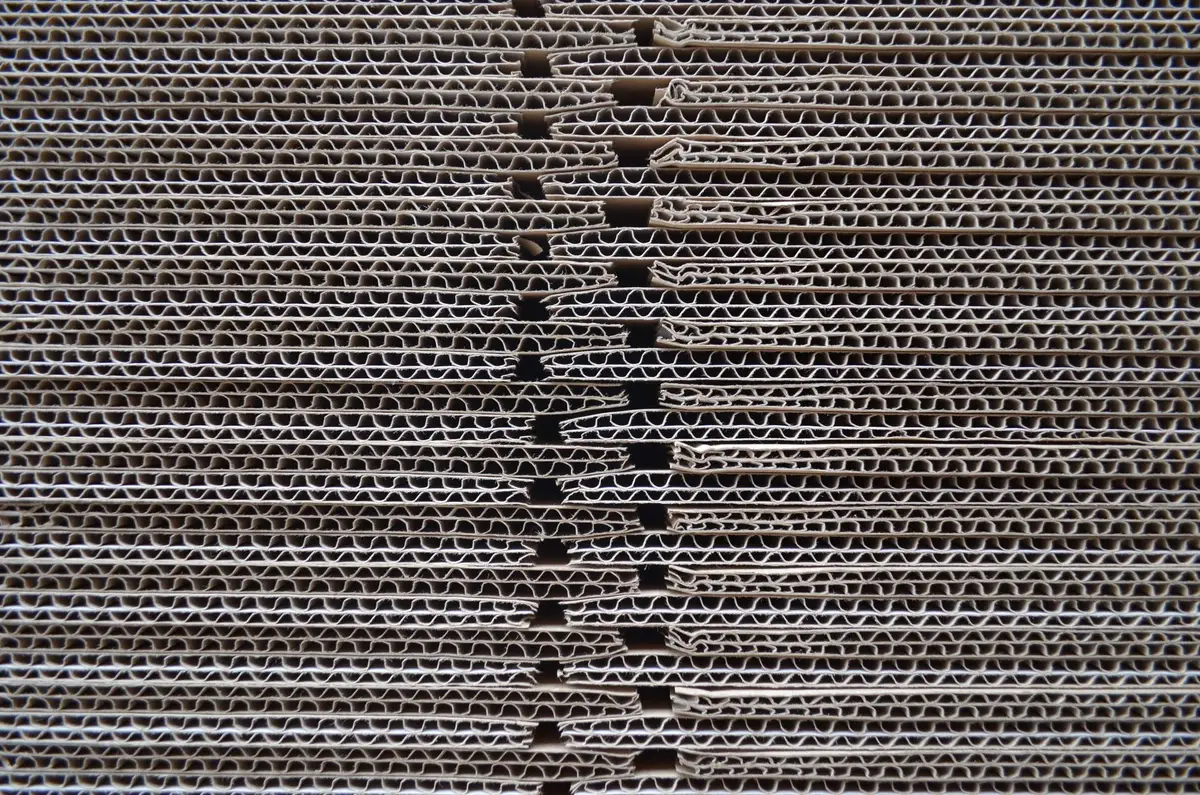
A corrugated box maker is a manufacturer that converts flat paperboard into corrugated boxes by bonding a wavy fluted layer (the "medium") between one or two flat sheets (the "liners"), then cutting, printing, and folding the result into finished shipping or retail boxes. The fluting is what gives corrugated board its crush resistance and cushioning, which is why it replaced solid fiberboard as the dominant shipping material for most industries.
Not every packaging business does this in-house. Some are converters who buy pre-made corrugated sheets from a mill and cut, print, and glue them into finished boxes. Others are integrated manufacturers who run the full process from raw paper to finished carton. For most buyers, the distinction matters less than what the supplier can actually deliver: consistent board strength, accurate sizing, and print quality that matches your artwork.
According to the Fibre Box Association, roughly 90 percent of corrugated packaging in the US is recovered and recycled back into new boxes, which is part of why it remains the default choice for e-commerce and business shipping over plastic or foam alternatives.
The process is more mechanical than most buyers expect.
Corrugated boxes are made by feeding a roll of paper through a corrugating machine that heats and shapes it into a wavy flute pattern, gluing flat liner sheets to one or both sides, then cutting, scoring, printing, and folding the resulting board into the finished box shape on a die-cutting or flexo-folder-gluer line. A single production run can move from flat paper roll to stacked, folded boxes in minutes once the machine is set up.
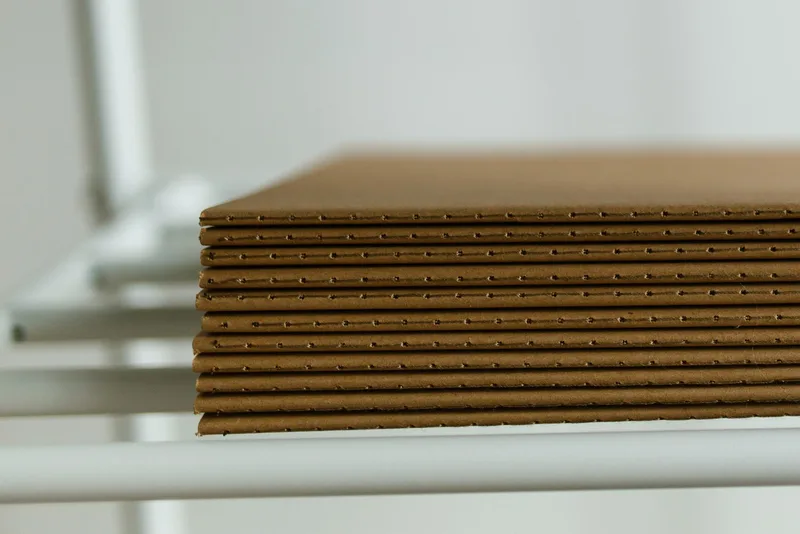
The main production stages:
Buyers ordering standard box sizes skip most of the die-making step, since suppliers keep common dimensions on file. Custom sizes require a new die, which is the main reason custom boxes cost more and take longer to produce than stock sizes.
Join Tawaf and connect with verified businesses across 47 countries. No middlemen, no commissions.
Join Tawaf FreeBoard type is the single biggest factor in how much protection a box gives your product.
Corrugated board comes in single wall (one fluted layer, two liners), double wall (two fluted layers, three liners), and triple wall (three fluted layers, four liners), with flute size (A, B, C, E, or F) determining cushioning and stacking strength within each wall type. Single wall covers most e-commerce and retail shipping; double and triple wall are reserved for heavy, fragile, or export-grade freight.
| Flute Type | Flutes per Foot | Thickness | Best For |
|---|---|---|---|
| A-flute | 33-38 | ~4.8mm | Heavy cushioning, fragile goods, export crates |
| B-flute | 47-53 | ~3.2mm | Retail packaging, cans, flat-pack goods |
| C-flute | 39-43 | ~4.0mm | General shipping boxes, most common e-commerce choice |
| E-flute | 88-96 | ~1.6mm | Retail display boxes, printed consumer packaging |
| F-flute | 125-135 | ~0.8mm | Small premium boxes, cosmetics, electronics accessories |
Wall count then stacks on top of flute choice. A single-wall C-flute box handles most parcel shipping. A double-wall box (often B-flute plus C-flute combined) is the standard for heavier items or long-haul export freight where boxes get stacked several pallets high. Triple wall is reserved for industrial equipment, appliances, and other loads where crush resistance matters more than cost per unit.
Price depends more on volume and complexity than most buyers expect.
Standard single-wall corrugated boxes typically cost $0.30-$1.50 per unit at retail-adjacent volumes, dropping to $0.15-$0.60 at volumes above 5,000 units, with custom printing, double-wall construction, and non-standard sizes adding 20-80% over stock pricing. Freight and minimum order quantities usually matter more to total cost than the per-box price itself.
| Box Type | Price Range (per unit) | Typical MOQ | Key Cost Drivers |
|---|---|---|---|
| Stock size, unprinted, single wall | $0.15 - $0.50 | 100-500 | Size, wall count, board grade |
| Stock size, single-color print | $0.25 - $0.70 | 500-1,000 | Print colors, coverage area |
| Custom size, full-color print | $0.50 - $1.50 | 1,000-5,000 | New die cost, print complexity, coating |
| Double wall, custom | $0.80 - $2.50 | 500-2,000 | Wall count, size, structural testing |
| Export-grade triple wall | $2.00 - $6.00+ | 100-500 | Wall count, load rating, moisture barrier |
Freight adds up fast on corrugated orders because boxes ship flat but take up real volume. A pallet of flat-packed boxes can weigh under 100kg but still eat significant container space, so buyers sourcing internationally should ask suppliers for cost-per-cubic-meter, not just cost per unit, before comparing quotes.
Sourcing corrugated boxes and comparing quotes across suppliers? Create a free Tawaf account to browse verified box manufacturers, post a "Looking For" request with your specs, and get quotes directly from suppliers who match. No trade show fees, no cold outreach.
Most box-sourcing problems trace back to a step buyers skip during vetting.
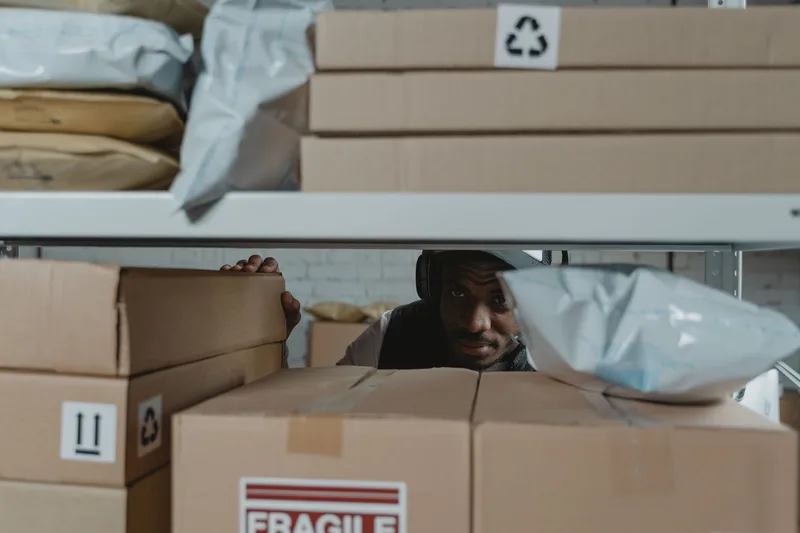
Vet a corrugated box maker on five factors: verified business registration, board strength testing (ECT or burst test results) matched to your product weight, sample production before bulk commitment, a written defect and reorder policy, and production capacity that fits your order timeline. Skipping the sample step is the most common reason buyers discover a box problem only after a full order has shipped.
The right choice depends on order volume more than brand preference.
Stock corrugated boxes cost less, ship faster (often 1-2 weeks), and require no new tooling, while custom boxes need a new die (adding 1-3 weeks and a one-time tooling fee) but let you match exact product dimensions and add full branding. Most businesses start with stock boxes and move to custom once order volume justifies the tooling investment.
Stock boxes make sense for early-stage sellers testing a product line, for internal or business-to-business shipments where branding doesn't matter, and for anyone who needs boxes within days rather than weeks. Custom boxes make sense once unboxing experience affects your conversion rate or return rate, once a stock size wastes too much void-fill space, or once order volume is consistently above the level where tooling cost per unit becomes negligible.
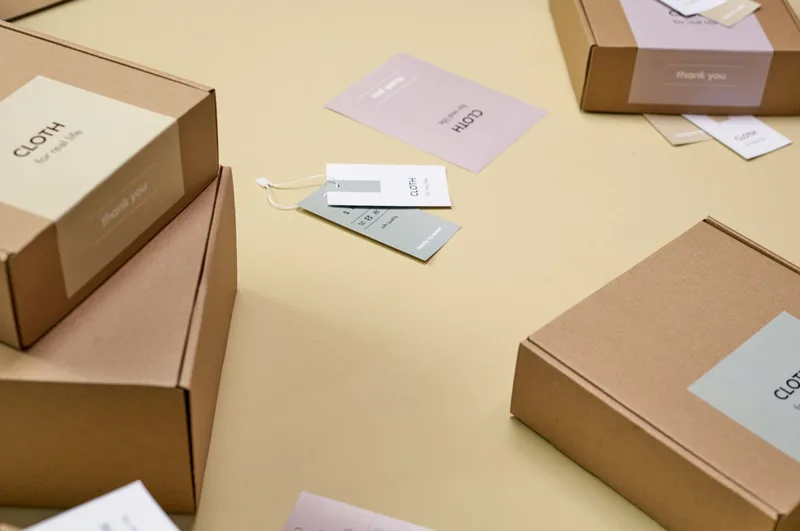
A middle option many buyers miss: stock-size boxes with a single-color custom print. This keeps lead time close to stock speed while adding basic branding, and it's often the best first step before committing to a fully custom die.
Certification requirements depend heavily on your end market and product category.
Relevant corrugated box certifications include FSC chain-of-custody certification for sustainably sourced fiber and ISO 9001 for manufacturing quality management. Corrugated and paper-based packaging itself is not subject to ISPM-15, the international standard covering raw wood packaging material; that requirement only applies to any solid wood pallets or crates shipped alongside your boxes. Food-contact applications add FDA or regional food-safety requirements on top of standard packaging certifications.
FSC certification confirms the paper fiber in your boxes comes from responsibly managed forests, which matters increasingly for buyers selling into markets with sustainability-conscious retail partners or regulatory reporting requirements. ISO 9001 doesn't certify the product itself, but confirms the manufacturer runs a documented quality management system, which correlates with fewer batch-to-batch inconsistencies. Buyers often assume corrugated boxes need ISPM-15 heat-treatment marking like wood pallets do. They don't: ISPM-15 applies only to raw wood packaging material, and corrugated board is explicitly outside its scope. If your shipment also uses wood pallets or crates as dunnage, confirm those specific wood components carry the ISPM-15 stamp, since customs authorities in most countries will hold or reject non-compliant wood packaging at the border.
Most sourcing mistakes are avoidable and repeat across buyers.
The most common corrugated box sourcing mistakes are ordering by flute letter alone without checking ECT ratings, skipping the physical sample-and-drop-test step, underestimating lead time for custom dies, and single-sourcing a critical box size with no backup supplier qualified. Each of these shows up after the order ships, when the fix is far more expensive than the original mistake.
A corrugated box maker is a manufacturer that produces shipping and retail boxes by bonding a fluted paper medium between flat liner sheets, then cutting, printing, and folding the board into finished boxes. Manufacturers range from small regional converters to large integrated mills producing their own raw paperboard.
Verify the supplier's business registration, request ECT or burst test data for the board grade you need, and order physical samples before committing to a bulk order. Using a B2B marketplace that requires business verification at registration reduces the risk of dealing with an unverifiable factory.
Single wall board has one fluted layer between two liners and handles most standard shipping needs. Double wall board has two fluted layers and three liners, adding significant crush resistance for heavier items, export freight, or long-distance shipping where boxes get stacked under load for extended periods.
Stock-size boxes typically ship within 1-2 weeks. Custom sizes require new die tooling, which usually adds 1-3 weeks to production time, for a total of 2-5 weeks from order to delivery. Reorders of an existing custom size are faster since the die already exists.
Yes, though per-unit cost runs higher at low volumes. Many manufacturers offer short-run orders starting around 100-500 units for stock sizes, with custom sizes typically requiring 1,000+ units to justify tooling cost. Digital printing options have lowered minimums for printed short runs at some suppliers.
Get Started
Create your free account and start connecting with verified suppliers and buyers worldwide.
Create Free Account
We help businesses navigate cross-border trade. Our team covers supplier verification, trade compliance, and B2B marketplace strategies to connect verified businesses worldwide.
A directory guide to product wholesalers by category: beauty, fashion, food, jewelry, and craft. Compare sourcing paths and connect with verified suppliers.
Sep 14, 2026

Medical equipment is a massive market. The global medical device industry exceeded $595 billion in 2025 and is projected to reach $750 billion by 2030, driven by aging populations, expanding healthcare access in emerging markets, and technological innovation. For B2B buyers --- hospital procurement
May 18, 2026

Organic is no longer a niche. The global organic products market has crossed $220 billion in annual sales and continues to grow at 8-12% year-over-year across most major economies. If you are a buyer, distributor, or brand owner searching for organic products exporters, you are entering a market wit
May 18, 2026