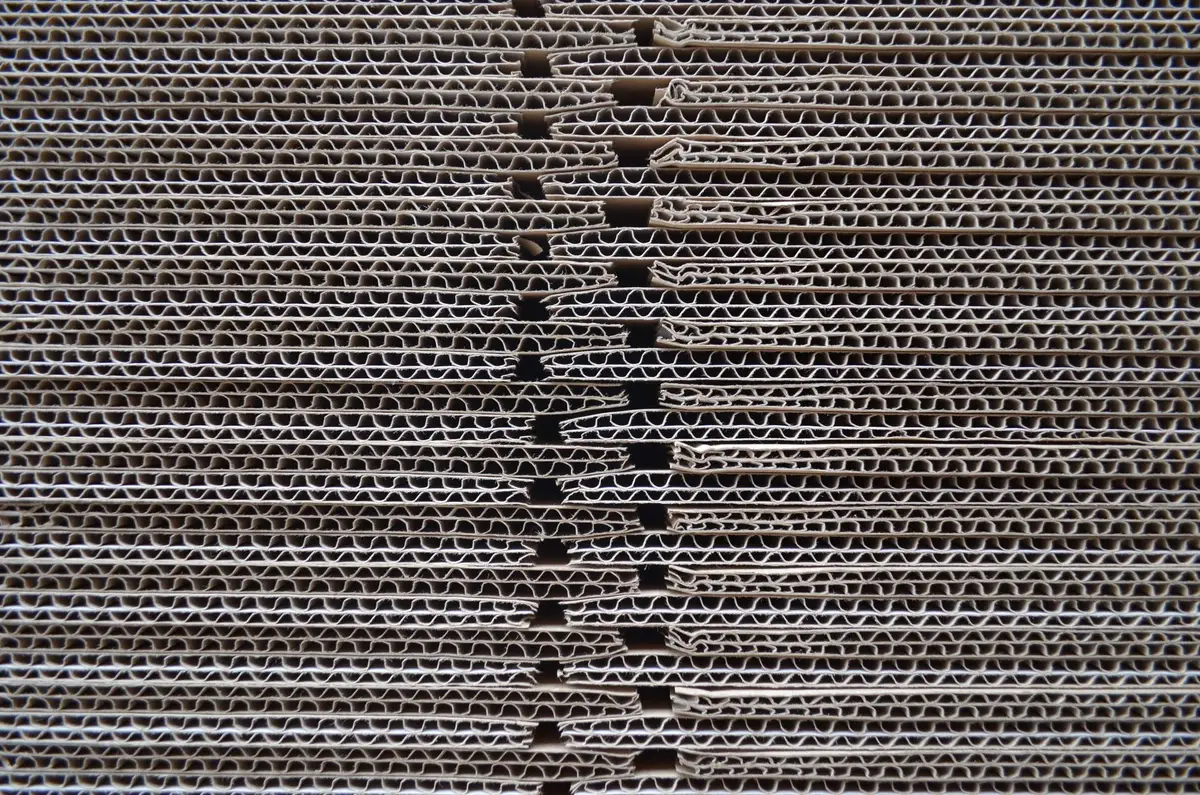
Corrugated Box Maker: How to Find and Vet the Right Supplier
A sourcing guide to corrugated box makers: how boxes are made, which flute type fits your product, pricing ranges, and how to verify a supplier before ordering.
Sep 23, 2026
Find verified suppliers on Tawaf
Create Free AccountIndia builds serious industrial equipment. Among the country's most competitive manufacturing sectors is process equipment — and air cooled heat exchangers (ACHEs) represent one of the highest-value product categories within it. Indian ACHE manufacturers now supply refineries, petrochemical plants, power stations, and gas processing facilities across the Middle East, Africa, Southeast Asia, and even Europe.
This guide covers the major Indian ACHE manufacturers, explains the different types and applications, breaks down pricing and quality standards, and provides a practical sourcing roadmap for international buyers.
An air cooled heat exchanger (ACHE, also called a fin-fan cooler or air-fin cooler) is an industrial device that uses ambient air blown across finned tubes to cool or condense process fluids — replacing the need for cooling water in refineries, chemical plants, power stations, and gas processing facilities where water is scarce or expensive.
The basic principle is straightforward. Hot process fluid (oil, gas, chemical, steam) flows through tubes. Aluminum or copper fins are attached to the outside of these tubes, dramatically increasing the surface area. Large fans (typically 4 to 14 feet in diameter) blow ambient air across the finned tubes, transferring heat from the process fluid to the air.
ACHEs are used when:
The main components of an ACHE are:
| Component | Material | Function |
|---|---|---|
| Tube bundle | Carbon steel, stainless steel, or alloy tubes with aluminum fins | Heat transfer surface |
| Headers/Plugs | Carbon steel or alloy, forged or fabricated | Contain process fluid, allow maintenance |
| Fans | Aluminum, FRP (fiber-reinforced plastic) | Move air across tubes |
| Fan drive system | Electric motor + gearbox or belt drive | Power the fans |
| Structure/Frame | Structural steel (hot-dip galvanized or painted) | Support the bundle and fans |
| Plenum | Sheet metal or FRP | Direct airflow across tube bundle |
| Louvers (optional) | Aluminum or galvanized steel | Control airflow for temperature regulation |
An ACHE is a significant capital equipment purchase. A single unit for a medium-sized refinery application can cost USD 50,000 to USD 500,000, and large projects may require dozens of units.
India's leading ACHE manufacturers include Kelvion (India), Alfa Laval (India), Brembana & Rolle (Thyssenkrupp), Shiv Om Brass Industries, Wesman Engineering, Pune-based Saraf Engineering, Aeron Composite, and specialized fabricators like Bharat Heavy Electricals Limited (BHEL) for power sector applications. These companies collectively export to 50+ countries.
| Manufacturer | Location | Capacity (Units/yr) | Specialization | Key Certifications |
|---|---|---|---|---|
| Kelvion India (GEA) | Pune | 500+ | All types, refinery/petrochemical | ASME U, R stamps, PED |
| Alfa Laval India | Pune | 300+ | Compact ACHE, pharma, food | ASME, TEMA, PED |
| Brembana & Rolle India | Mumbai | 200+ | Heavy-duty refinery ACHE | ASME U, TEMA C/R/B |
| BHEL (Heat Exchanger Div.) | Trichy | 150+ | Power sector, large-scale | ASME, IS, IBR |
| Wesman Engineering | Kolkata | 100+ | Refinery, chemical, fertilizer | ASME, TEMA |
| Saraf Engineering | Pune | 80+ | Custom ACHE, petrochemical | ASME U, PED, GOST |
| Aeron Composite | Ahmedabad | 120+ | FRP fans, composite components | AMCA, ISO 9001 |
| Shiv Om Brass | Jamnagar | 60+ | Fin tubes, copper-brass ACHE | ISO 9001, IBR |
| Apex Equipment | Mumbai | 50+ | Offshore/marine ACHE | ASME, DNV, Lloyd's |
| GEI Industrial Systems | Noida | 100+ | Air-fin coolers, radiators | ASME, API 661 |
Kelvion India (formerly GEA Heat Exchangers) is the market leader, operating a large manufacturing facility in Pune with capacity to produce over 500 units annually. Their client list includes ADNOC, Saudi Aramco, Reliance Industries, ONGC, and IOC.
BHEL dominates the power sector segment, manufacturing large ACHEs for thermal power stations and nuclear power plants. Their Trichy facility is one of India's largest heat exchanger manufacturing plants.
For international buyers, particularly in the Gulf region and Saudi Arabia, Indian ACHE manufacturers offer a compelling combination of ASME-certified quality, competitive pricing, and geographic proximity.
Join Tawaf and connect with verified businesses across 47 countries. No middlemen, no commissions.
Join Tawaf FreeIndian manufacturers produce all major ACHE configurations: forced draft (fans below the bundle), induced draft (fans above the bundle), natural draft (no mechanical fans), dry cooling towers, air-cooled condensers (ACCs), and specialty designs for high-pressure, corrosive, and offshore applications.
| Type | Configuration | Applications | Typical Cost (USD) |
|---|---|---|---|
| Forced Draft ACHE | Fans below bundle, pushing air up | General refinery service, petrochemicals | 30,000 – 300,000 |
| Induced Draft ACHE | Fans above bundle, pulling air through | Higher efficiency, better air distribution | 40,000 – 400,000 |
| Natural Draft ACHE | No fans, relies on thermal buoyancy | Low-temperature cooling, backup systems | 20,000 – 100,000 |
| Air-Cooled Condenser (ACC) | Large-scale, multi-bay | Power plant steam condensing | 500,000 – 5,000,000 |
| Dry Cooling Tower | Modular, large-scale | Power plants, data centers | 1,000,000 – 10,000,000 |
| Vacuum ACHE | Induced draft, large surface area | Distillation column overhead condensing | 50,000 – 500,000 |
| Offshore/Marine ACHE | Compact, vibration-resistant | FPSO, platforms, marine vessels | 100,000 – 1,000,000 |
Forced draft is the most common configuration, accounting for approximately 60% of all ACHEs manufactured in India. It is simpler to maintain (fans are at ground level) and less expensive than induced draft.
Induced draft offers better thermal performance because the hot air exits upward through the fan, reducing recirculation. It is preferred for applications where the process fluid is close to ambient temperature and maximum cooling efficiency is needed.
Air-cooled condensers are the highest-value ACHE products, used primarily in power plants to condense steam without water cooling. India's ACC manufacturing capability has grown significantly, with BHEL and Kelvion both building units for power plants across India, the Middle East, and Africa.
The primary design standard is API 661 (Air-Cooled Heat Exchangers for General Refinery Service), supplemented by ASME Section VIII (pressure vessel code for headers), TEMA (Tubular Exchanger Manufacturers Association standards for mechanical design), and PED 2014/68/EU for equipment destined for European markets.
| Standard | Scope | Required For |
|---|---|---|
| API 661 | Overall ACHE design, materials, testing | Refinery and petrochemical projects worldwide |
| ASME Section VIII Div. 1 | Pressure-containing components (headers) | All pressure vessel jurisdictions |
| ASME Section VIII Div. 2 | Alternative rules for higher design stresses | High-pressure or weight-critical applications |
| TEMA Class C/R/B | Mechanical design, tolerances, materials | General (C), Refinery (R), Chemical (B) |
| PED 2014/68/EU | Pressure Equipment Directive | Equipment sold in the EU |
| GOST R | Russian/CIS standards | Equipment for Russian market |
| IBR (Indian Boiler Regulations) | Boiler and pressure vessel registration | Equipment used in India |
| NACE MR0175 | Sour gas service materials | H2S-containing process fluids |
| AMCA 210 | Fan performance testing | Fan specification and verification |
API 661 is the most important standard for international buyers. It covers:
Indian manufacturers with ASME U stamps (authorization to manufacture pressure vessels per ASME code) are qualified to build ACHEs for virtually any international project. Most of the companies listed in the manufacturer table above hold ASME U stamps and are regularly audited by international clients' inspectors.
Indian ACHEs are typically 25-40% cheaper than European equivalents (Italian, German) and 10-20% cheaper than Chinese alternatives for equivalent API 661-compliant equipment. The cost advantage comes from lower labor rates, competitive raw material sourcing, and India's established fabrication infrastructure.
| Origin | Typical Price Range (USD, per unit, medium refinery ACHE) | Quality Level | Lead Time |
|---|---|---|---|
| India | 40,000 – 200,000 | High (API 661, ASME) | 16-24 weeks |
| China | 50,000 – 240,000 | High (API 661, ASME) | 14-20 weeks |
| Italy | 70,000 – 350,000 | Premium | 20-28 weeks |
| Germany | 80,000 – 400,000 | Premium | 22-30 weeks |
| South Korea | 55,000 – 250,000 | High | 16-22 weeks |
| USA | 90,000 – 450,000 | Premium | 24-32 weeks |
The price gap is most significant for standard forced-draft ACHEs in carbon steel construction. For specialized applications (titanium tubes, high-alloy headers, offshore-rated designs), the gap narrows because material costs — which are globally traded — dominate the total cost.
Cost breakdown for a typical ACHE:
| Component | Share of Total Cost |
|---|---|
| Tube bundle (tubes + fins) | 35-45% |
| Headers and plugs | 15-20% |
| Fans and drives | 12-18% |
| Structure/frame | 10-15% |
| Engineering and design | 5-8% |
| Inspection and testing | 3-5% |
| Packing and freight | 3-5% |
Sourcing industrial equipment from India? Register on Tawaf to connect with verified process equipment manufacturers, request quotes, and manage your procurement pipeline for ACHEs, pressure vessels, and other capital equipment.
ACHEs are used across oil and gas refining (the largest market at 40% of global demand), petrochemicals (20%), power generation (15%), gas processing and LNG (10%), and diverse industries including fertilizers, mining, food processing, and data center cooling (15% combined).
| Industry | Typical ACHE Applications | Volume of ACHEs Used |
|---|---|---|
| Oil Refining | Crude unit condensers, product coolers, overhead condensers | Very high |
| Petrochemicals | Cracker effluent coolers, polymer coolers, reactor effluent | High |
| Natural Gas / LNG | Gas compressor aftercoolers, export gas coolers | High |
| Power Generation | Steam condensers (ACC), lube oil coolers, generator cooling | High |
| Fertilizers | Ammonia condensers, urea process coolers | Medium |
| Mining & Metals | Smelter cooling, mine ventilation, transformer cooling | Medium |
| Pharmaceuticals | Solvent recovery condensers, reactor cooling | Low-Medium |
| Food & Beverage | Process coolers, refrigerant condensers | Low |
| Data Centers | Dry coolers for IT equipment cooling | Growing rapidly |
The Middle East is one of the most important ACHE markets globally because water scarcity makes air cooling the default choice for industrial facilities. Refineries and petrochemical plants in Saudi Arabia, Qatar, UAE, Kuwait, and Oman use ACHEs extensively. Indian manufacturers have a strong track record in this region, with companies like Kelvion India and Saraf Engineering holding active vendor registrations with Saudi Aramco, ADNOC, QatarEnergy, and KOC.
For Gulf-based EPC contractors sourcing equipment for regional projects, Indian ACHE manufacturers offer the right combination of certification, quality, cost, and delivery capability. Browse industrial equipment suppliers on Tawaf to find pre-qualified manufacturers.
The procurement process for an ACHE typically follows seven steps: issue an inquiry with technical specifications, receive technical and commercial proposals, conduct technical bid evaluation, place a purchase order, review manufacturer engineering drawings, conduct in-process and final inspections, and arrange shipment — spanning 20 to 30 weeks from inquiry to delivery.
Step 1: Prepare the inquiry package. This should include:
Step 2: Send to qualified manufacturers. Issue the inquiry to 3-5 manufacturers. For Indian suppliers, verify ASME U stamp validity and check their track record with similar equipment.
Step 3: Receive and evaluate proposals. Manufacturers typically respond within 2-3 weeks with technical proposals (thermal design, mechanical design, material selections) and commercial offers.
Step 4: Place purchase order. After technical and commercial evaluation, issue a PO with clear terms including delivery date, inspection requirements, documentation deliverables, and payment milestones.
Step 5: Engineering review. The manufacturer submits detailed engineering drawings (bundle layout, header details, structural design) for buyer approval. This stage typically takes 3-4 weeks.
Step 6: Manufacturing and inspection. Fabrication takes 12-16 weeks. Key inspection hold points include:
Step 7: Shipping. ACHEs are typically shipped as breakbulk cargo (on flat-rack containers or as over-dimensional cargo) rather than in standard containers, because tube bundles can be 6 to 14 meters long.
The main challenges are managing engineering coordination across time zones, ensuring consistent welding quality (particularly for high-alloy materials), handling oversized cargo logistics, navigating Indian holiday schedules that can cause 2-3 week delays, and verifying that subcontracted components (fans, motors) meet the same quality standards as the main equipment.
Welding quality is the most critical technical concern. ACHE headers are pressure vessels, and the tube-to-tubesheet joints (whether expanded, welded, or both) must be defect-free. Insist on qualified welding procedures (WPS/PQR per ASME Section IX), welder qualification records, and radiographic/ultrasonic testing of critical joints.
Fan quality varies. Some Indian ACHE manufacturers build their own fans; others subcontract to fan manufacturers. Verify that the fan manufacturer has AMCA certification and that the fan is performance-tested before installation.
Oversized shipment logistics require specialized freight forwarders experienced with project cargo. A single ACHE tube bundle can weigh 10 to 40 tonnes and measure 12+ meters in length. This requires flat-rack containers, breakbulk shipping, or specialized road transport to port.
Communication and documentation require attention. Indian manufacturers generally produce good engineering documentation, but project-specific requirements (NACE compliance certificates, PED conformity declarations, specific documentation formats) should be clearly specified in the purchase order to avoid rework.
For buyers who want to streamline the qualification process, Tawaf's supplier directory lists pre-verified industrial equipment manufacturers with their certifications and track records visible upfront.
India's ACHE manufacturing sector is projected to grow at 8-10% annually through 2030, driven by refinery expansions in the Middle East and Africa, India's own industrial growth, increasing adoption of dry cooling in water-stressed regions, and the growing data center cooling market.
Key growth drivers:
Middle East mega-projects. Saudi Arabia's refinery and petrochemical expansions (SATORP, Jafurah gas, NEOM industrial zone) require thousands of ACHEs. Indian manufacturers are well-positioned as qualified vendors.
India's own refinery expansion. Indian refiners (Reliance, IOC, BPCL, HPCL) are expanding capacity, creating domestic demand that also keeps manufacturers' skills sharp.
Africa's industrialization. New refineries in Nigeria (Dangote), Uganda, and Mozambique LNG projects are sourcing ACHEs from India due to cost competitiveness and proven quality.
Data centers. The global data center boom requires massive cooling capacity. Dry coolers (a type of ACHE) are increasingly preferred over water-cooled systems, and Indian manufacturers are beginning to tap this market.
Renewable energy. Concentrated solar power (CSP) plants and geothermal facilities use ACHEs for heat rejection, creating new application areas.
Standard warranty is 12 to 18 months from date of commissioning or 18 to 24 months from date of shipment, whichever comes first. The warranty typically covers defects in materials and workmanship but excludes normal wear items (fan belts, bearings) and damage from improper operation. Extended warranties are negotiable for repeat customers or large orders.
Yes. Several Indian manufacturers specialize in replacement tube bundles and spare parts for ACHEs originally built by European or American manufacturers. If you have a Kelvion, GEA, Smithco, or Hudson ACHE that needs a new tube bundle, Indian fabricators can reverse-engineer and build the replacement at 40-60% of the OEM price. Request the original equipment drawings or provide detailed measurements for accurate quoting.
Check for: (1) valid ASME U and R stamps (verifiable on the ASME website), (2) API 661 compliance capability, (3) reference list of similar equipment supplied to comparable facilities, (4) active vendor registration with major EPCs or end users in your region, and (5) ISO 9001:2015 and ISO 3834 (welding quality management) certifications. Request a factory audit if the order value exceeds USD 200,000. Third-party inspection agencies like TUV, Bureau Veritas, or Lloyd's can conduct audits on your behalf.
Standard forced-draft ACHE in carbon steel construction: 16 to 20 weeks from purchase order to ready-for-shipment. Complex units (high-alloy materials, induced draft, large surface area): 20 to 28 weeks. Air-cooled condensers for power plants: 30 to 40 weeks. These timelines assume approved engineering drawings and no delays in material procurement.
Absolutely, and it is recommended for first-time buyers placing orders above USD 100,000. Pune is the primary hub (Kelvion, Alfa Laval, Brembana & Rolle, Saraf Engineering are all within 50 km of each other), making it possible to visit 3-4 manufacturers in a single trip. Mumbai and Kolkata have additional facilities. The best time to visit is October through February when the weather is comfortable.
Get Started
Create your free account and start connecting with verified suppliers and buyers worldwide.
Create Free Account
We help businesses navigate cross-border trade. Our team covers supplier verification, trade compliance, and B2B marketplace strategies to connect verified businesses worldwide.
A sourcing guide to corrugated box makers: how boxes are made, which flute type fits your product, pricing ranges, and how to verify a supplier before ordering.
Sep 23, 2026

A directory guide to product wholesalers by category: beauty, fashion, food, jewelry, and craft. Compare sourcing paths and connect with verified suppliers.
Sep 14, 2026
Organic is no longer a niche. The global organic products market has crossed $220 billion in annual sales and continues to grow at 8-12% year-over-year across most major economies. If you are a buyer, distributor, or brand owner searching for organic products exporters, you are entering a market wit
May 18, 2026