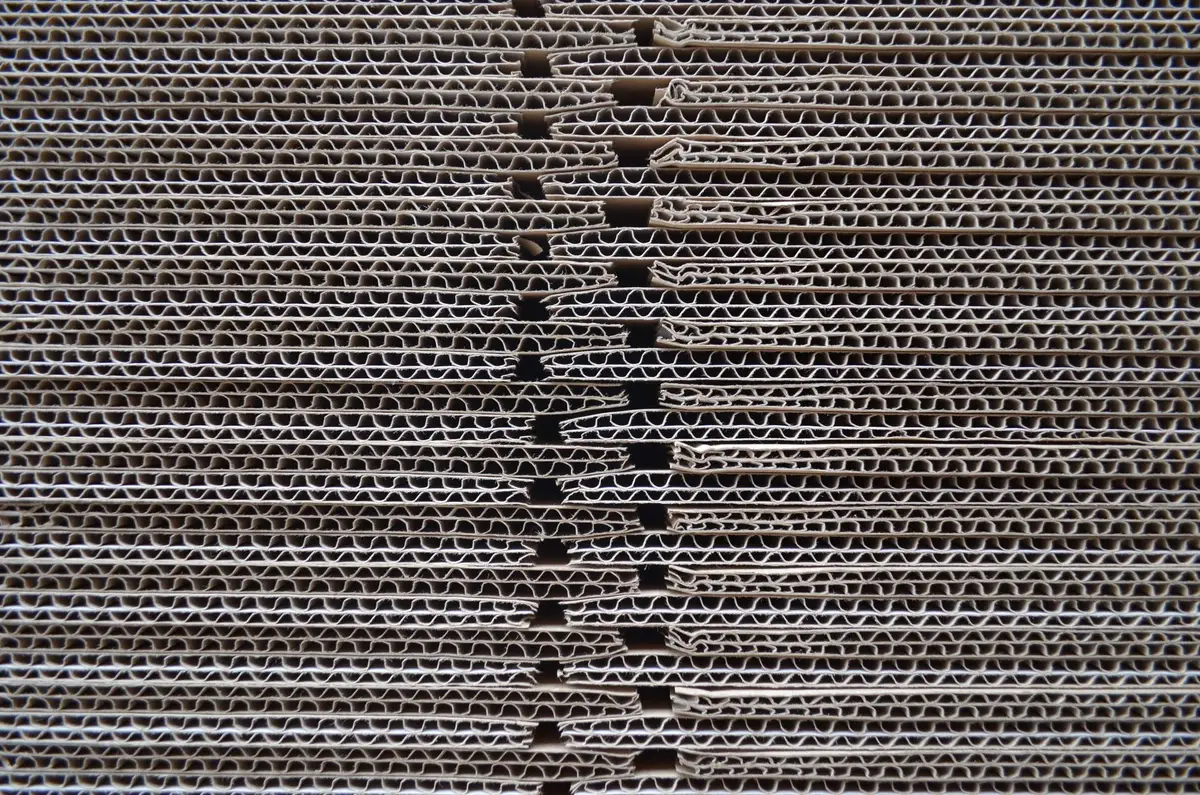
Corrugated Box Maker: How to Find and Vet the Right Supplier
A sourcing guide to corrugated box makers: how boxes are made, which flute type fits your product, pricing ranges, and how to verify a supplier before ordering.
Sep 23, 2026
Find verified suppliers on Tawaf
Create Free AccountIndia's elevator market is surging upward. Valued at approximately $2.5 billion and growing at 7-9% annually, the Indian lift manufacturing industry serves both a massive domestic market driven by rapid urbanization and an expanding export footprint. Whether you are a builder, property developer, hospital administrator, or procurement manager looking for lift manufacturers in India, this guide covers everything from manufacturer comparisons to pricing, technology, and compliance.
India installs over 80,000 new elevators every year, making it one of the fastest-growing elevator markets in the world. This demand has attracted every major global elevator company while simultaneously nurturing a strong base of Indian manufacturers who offer competitive alternatives. The result is a market with options for every budget and application.
Lift manufacturers in India are companies that design, produce, install, and maintain elevator systems for residential, commercial, industrial, and specialized applications, ranging from global multinationals with Indian operations to homegrown companies with decades of domestic expertise.
The Indian elevator industry is a mix of three distinct categories. First, global majors like KONE, Otis, Schindler, and ThyssenKrupp operate manufacturing plants and extensive service networks across India. Second, large Indian companies like Johnson Lifts, Sigma Elevators, and Escon Elevators have built substantial national businesses with significant R&D capabilities. Third, regional manufacturers serve specific geographic markets with more affordable products for low-rise residential buildings.
The market has matured considerably. Indian manufacturers now produce machine-room-less (MRL) elevators, high-speed systems, and home lifts that rival international brands in technology and finish quality. The gap between Indian and global brands has narrowed significantly in the mid-market segment, while a clear differentiation remains in ultra-high-speed and specialty applications.
According to Statista, India's elevator and escalator market is projected to reach $3.8 billion by 2030, driven by smart city projects, metro station construction, and a residential building boom in tier 2 and tier 3 cities.
The leading lift manufacturers in India include global players KONE, Otis, Schindler, ThyssenKrupp, and Mitsubishi, alongside major Indian manufacturers Johnson Lifts, Sigma Elevators, Escon Elevators, and Express Lifts, each with distinct strengths in different market segments.
Here is a detailed comparison of the major players:
| Manufacturer | Origin | Specialization | Speed Range | Key Strength | Price Segment |
|---|---|---|---|---|---|
| KONE | Finland | MRL, eco-efficient | Up to 10 m/s | Technology leadership, green solutions | Premium |
| Otis | USA | All types, modernization | Up to 10 m/s | Largest global service network | Premium |
| Schindler | Switzerland | Transit management, high-rise | Up to 10 m/s | PORT technology, smart buildings | Premium |
| ThyssenKrupp | Germany | MULTI, high-speed | Up to 10 m/s | Innovation, TWIN technology | Premium |
| Mitsubishi | Japan | High-speed, commercial | Up to 12 m/s | Reliability, super-high-speed | Premium |
| Johnson Lifts | India | Residential, commercial | Up to 4 m/s | Largest Indian manufacturer, value | Mid-range |
| Sigma Elevators | India | Commercial, residential | Up to 3 m/s | Competitive pricing, pan-India presence | Budget-Mid |
| Escon Elevators | India | Home lifts, commercial | Up to 3 m/s | Custom solutions, strong in North India | Budget-Mid |
| Express Lifts | India | Industrial, goods | Up to 2 m/s | Heavy-duty applications | Budget |
| Omega Elevators | India | Residential, home lifts | Up to 2.5 m/s | Designer cabins, home market focus | Mid-range |
KONE India operates a manufacturing facility in Chennai and has been present in India since 1984. They are known for their eco-efficient products and have a strong presence in commercial and premium residential projects. Their KONE MonoSpace series is one of the most popular MRL elevators in the Indian market.
Otis India is one of the oldest elevator companies in the country, with operations dating back over 130 years. Their Gen2 platform is widely installed across commercial buildings, and their service network is one of the most extensive in India.
Schindler India has a manufacturing plant in Pune and focuses on both new installations and modernization. Their PORT technology for destination dispatch is popular in large commercial buildings with high traffic.
Johnson Lifts (not affiliated with Johnson & Johnson or SC Johnson) is the largest Indian-origin elevator company, headquartered in Chennai. They offer a wide range of products from basic residential lifts to commercial systems, with pricing significantly below global brands. They have installed over 100,000 elevators across India and export to several countries.
Sigma Elevators, based in Hyderabad, has built a strong reputation for value-for-money commercial and residential elevators with a pan-India service network.
Join Tawaf and connect with verified businesses across 47 countries. No middlemen, no commissions.
Join Tawaf FreeIndian manufacturers produce passenger elevators, goods/freight lifts, hospital lifts, home lifts, panoramic/glass elevators, dumbwaiters, car lifts, capsule lifts, and hydraulic lifts, with machine-room-less (MRL) traction systems being the dominant technology for new installations.
| Lift Type | Application | Capacity Range | Speed Range | Key Feature |
|---|---|---|---|---|
| Passenger (MRL) | Commercial, residential | 6-26 persons | 1.0-4.0 m/s | No machine room, energy efficient |
| Passenger (MR) | High-rise, heavy traffic | 8-30 persons | 2.5-10 m/s | Higher speeds, geared/gearless |
| Goods/Freight | Warehouses, factories | 1-10 tons | 0.25-1.0 m/s | Heavy-duty, wide doors |
| Hospital/Bed | Hospitals, care facilities | 16-26 persons | 1.0-2.5 m/s | Deep cabin, smooth ride, stretcher access |
| Home Lift | Residential villas, bungalows | 2-6 persons | 0.15-0.5 m/s | Compact, minimal pit, aesthetic |
| Panoramic/Glass | Malls, hotels, showrooms | 6-20 persons | 1.0-2.5 m/s | Glass cabin, architectural feature |
| Dumbwaiter | Restaurants, hotels, kitchens | 50-300 kg | 0.25-0.5 m/s | Food/material transport |
| Car Lift/Vehicle | Parking, showrooms | 2-5 tons | 0.15-0.25 m/s | Large platform, heavy capacity |
| Capsule Lift | Hotels, commercial buildings | 6-16 persons | 1.0-2.0 m/s | Semicircular glass cabin |
MRL (Machine-Room-Less) traction elevators dominate new installations. They eliminate the need for a dedicated machine room above the shaft, saving construction costs and space. Most manufacturers now offer MRL as their standard product for buildings up to 30 floors.
For buildings above 30 floors, gearless traction systems with machine rooms are still preferred due to the higher speeds required. India's tallest buildings use systems from KONE, Otis, or Schindler capable of speeds up to 10 m/s.
Hydraulic lifts, once common for low-rise applications, are declining in popularity due to higher energy consumption and environmental concerns (hydraulic oil). However, they remain relevant for specific applications like car lifts and goods elevators where smooth, heavy-load lifting is required.
Elevator prices in India range from INR 3-5 lakh ($3,500-6,000) for basic home lifts to INR 50-80+ lakh ($60,000-100,000+) for premium commercial systems, with Indian brands typically 30-50% cheaper than global manufacturers for comparable specifications.
Pricing depends on capacity, speed, number of floors, cabin finish, and brand:
| Category | Indian Brand Price (INR) | Global Brand Price (INR) | USD Equivalent (Indian) |
|---|---|---|---|
| Home Lift (2-3 floors) | 3-6 lakh | 6-12 lakh | $3,500-7,000 |
| Residential (6-person, 5 floors) | 5-8 lakh | 10-16 lakh | $6,000-9,500 |
| Residential (8-person, 10 floors) | 8-14 lakh | 15-25 lakh | $9,500-16,500 |
| Commercial (13-person, 10 floors) | 12-20 lakh | 22-35 lakh | $14,000-24,000 |
| Commercial (20-person, 15 floors) | 18-30 lakh | 30-50 lakh | $21,500-36,000 |
| Hospital (stretcher, 10 floors) | 15-25 lakh | 25-40 lakh | $18,000-30,000 |
| Goods Lift (2-ton, 5 floors) | 8-15 lakh | 15-25 lakh | $9,500-18,000 |
| Panoramic (10 floors) | 15-28 lakh | 30-55 lakh | $18,000-33,000 |
These prices are approximate and include basic installation. They exclude civil work (shaft construction, pit, and machine room), which typically adds 20-40% to the elevator cost. Annual maintenance contracts (AMC) cost an additional 5-10% of the elevator value per year.
The price gap between Indian and global brands is narrowing as Indian manufacturers adopt better technology and components. However, global brands justify their premium through superior ride quality, longer component life, better energy efficiency, and stronger resale value for the building.
Selection should be based on building type and traffic analysis, required speed and capacity, budget (total cost of ownership including maintenance), brand service network in your city, safety certifications, and long-term maintenance considerations rather than just the initial purchase price.
Choosing an elevator is a 15-25 year decision. The elevator you install today will need maintenance, spare parts, and eventually modernization for decades. Here is a structured approach:
1. Traffic analysis: For commercial buildings, conduct a traffic analysis to determine the number of elevators needed, their speed, and capacity. Most major manufacturers offer free traffic analysis as part of their sales process.
2. Total cost of ownership (TCO): The purchase price is only 40-50% of the total cost over the elevator's lifetime. Maintenance, energy consumption, and eventual modernization make up the rest. A cheaper elevator that consumes 30% more energy and requires more frequent repairs may cost more over 20 years.
3. Service network: This is crucial. An elevator requires regular maintenance (quarterly at minimum). Choose a manufacturer with a strong service presence in your city. A great elevator from a company with no local service team is a recipe for downtime.
4. Safety compliance: Verify that the manufacturer complies with IS 14665 (Indian Standard for elevators) and relevant national building codes. For high-rise buildings, additional safety features like seismic sensors, fire recall, and battery backup are essential.
5. References: Visit buildings where the manufacturer has installed similar elevators. Ride the elevators. Talk to the building management about reliability, service response time, and any issues they have experienced.
Browse verified lift and elevator suppliers on Tawaf to compare manufacturers, read reviews, and request quotes.
Need help finding the right elevator manufacturer? Create your Tawaf account and post your project requirements. Verified manufacturers will provide competitive quotes tailored to your building specifications.
Elevators in India must comply with IS 14665 (Bureau of Indian Standards), the National Building Code (NBC 2016), and state-specific lift rules. Imported components must meet EN 81 (European) or ASME A17.1 (American) standards. Third-party inspection by a competent person is mandatory.
Safety regulation for elevators in India operates at multiple levels:
Key safety features that should be non-negotiable:
| Safety Feature | Purpose | Standard Requirement |
|---|---|---|
| Overspeed governor | Stops elevator if speed exceeds safe limits | IS 14665 mandatory |
| Safety gear | Mechanically stops car in free-fall | IS 14665 mandatory |
| Door interlock | Prevents operation with doors open | IS 14665 mandatory |
| Buffer/bumper | Absorbs impact at terminal floors | IS 14665 mandatory |
| Emergency communication | Phone/intercom in car | IS 14665 mandatory |
| Automatic rescue device | Moves car to nearest floor during power failure | Recommended |
| Seismic sensor | Detects earthquake and parks elevator | High-rise recommended |
| Fire recall | Returns elevator to ground floor on fire alarm | NBC 2016 requirement |
| CCTV | Security monitoring inside car | Increasingly standard |
Elevator modernization involves upgrading older systems with new controllers, drives, doors, safety features, and cabin interiors, typically at 40-60% of new elevator cost, and is recommended for elevators older than 15-20 years to improve safety, efficiency, and ride quality.
India has an installed base of over 800,000 elevators, many of which are aging. Modernization is a growing segment. Key reasons to modernize include:
All major manufacturers and several specialized companies offer modernization services. The process typically takes 2-4 weeks per elevator and can be done while the building is occupied (though the elevator being modernized will be out of service during the work).
Indian elevator manufacturers export to over 40 countries, primarily in the Middle East, Africa, Southeast Asia, and South Asia, with competitive pricing and growing brand recognition making Indian elevators an attractive alternative to Chinese and European products in emerging markets.
India's elevator exports are growing as manufacturers build quality reputations in international markets. Key export destinations include:
Indian manufacturers offer several advantages for export markets. Pricing is competitive with Chinese manufacturers while quality perception is often stronger. English-language documentation and communication is a significant advantage over Chinese competitors. And India's growing manufacturing base means production capacity is available for export orders.
For international buyers looking to source elevators from India, the process is similar to any B2B purchase. Identify manufacturers through our B2B marketplace, request technical proposals and pricing, conduct due diligence, and negotiate terms. Most Indian elevator manufacturers have dedicated export departments that handle international documentation, shipping, and installation support.
IoT-connected predictive maintenance, destination dispatch systems, regenerative drives, machine-room-less designs, cloud-based monitoring, and touchless call systems are the key technologies transforming India's elevator industry.
Technology is advancing rapidly:
These technologies are available from both global and leading Indian manufacturers, though the sophistication of implementation varies. For premium projects, global brands still lead in technology integration.
Installation time depends on the type and number of floors. A standard residential elevator for a 5-floor building takes 4-6 weeks for installation after the shaft and civil work are complete. Commercial elevators for 10-15 floors take 8-12 weeks. High-rise installations can take 3-6 months. The civil work (shaft construction, pit excavation, machine room) is separate and typically takes 4-8 weeks before elevator installation can begin.
AMC (Annual Maintenance Contract) costs range from INR 30,000-60,000 ($350-700) per year for basic residential elevators from Indian brands to INR 1,50,000-3,00,000 ($1,800-3,600) for commercial elevators from global brands. Comprehensive AMC (which includes spare parts) costs 30-50% more than basic AMC (which covers only labor and consumables). Most manufacturers offer multiple AMC tiers.
Most Indian manufacturers focus on buildings up to 15-20 floors. For high-rise applications above 30 floors, global manufacturers like KONE, Otis, Schindler, ThyssenKrupp, and Mitsubishi are the recommended choice. They have the technology for high-speed, high-rise systems that Indian manufacturers have not yet matched. Johnson Lifts and a few other Indian companies are developing higher-speed systems but are not yet competitive in the super-high-rise segment.
Yes, but it requires structural assessment and may involve significant civil work. Options include building an external shaft (most common for retrofits), using an existing stairwell void, or installing a compact home lift that requires minimal pit depth and headroom. Several manufacturers specialize in retrofit installations. Costs are typically 20-40% higher than new construction installations due to the structural modifications required.
Standard warranties range from 1-3 years for Indian manufacturers and 2-5 years for global brands. Warranties typically cover the complete system including mechanical, electrical, and electronic components. Wear items (ropes, shoes, contacts) are usually excluded after the first year. Extended warranty packages are available from most manufacturers at additional cost. Always read the warranty terms carefully and understand what is excluded.
Get Started
Create your free account and start connecting with verified suppliers and buyers worldwide.
Create Free Account
We help businesses navigate cross-border trade. Our team covers supplier verification, trade compliance, and B2B marketplace strategies to connect verified businesses worldwide.
A sourcing guide to corrugated box makers: how boxes are made, which flute type fits your product, pricing ranges, and how to verify a supplier before ordering.
Sep 23, 2026

A directory guide to product wholesalers by category: beauty, fashion, food, jewelry, and craft. Compare sourcing paths and connect with verified suppliers.
Sep 14, 2026

Organic is no longer a niche. The global organic products market has crossed $220 billion in annual sales and continues to grow at 8-12% year-over-year across most major economies. If you are a buyer, distributor, or brand owner searching for organic products exporters, you are entering a market wit
May 18, 2026