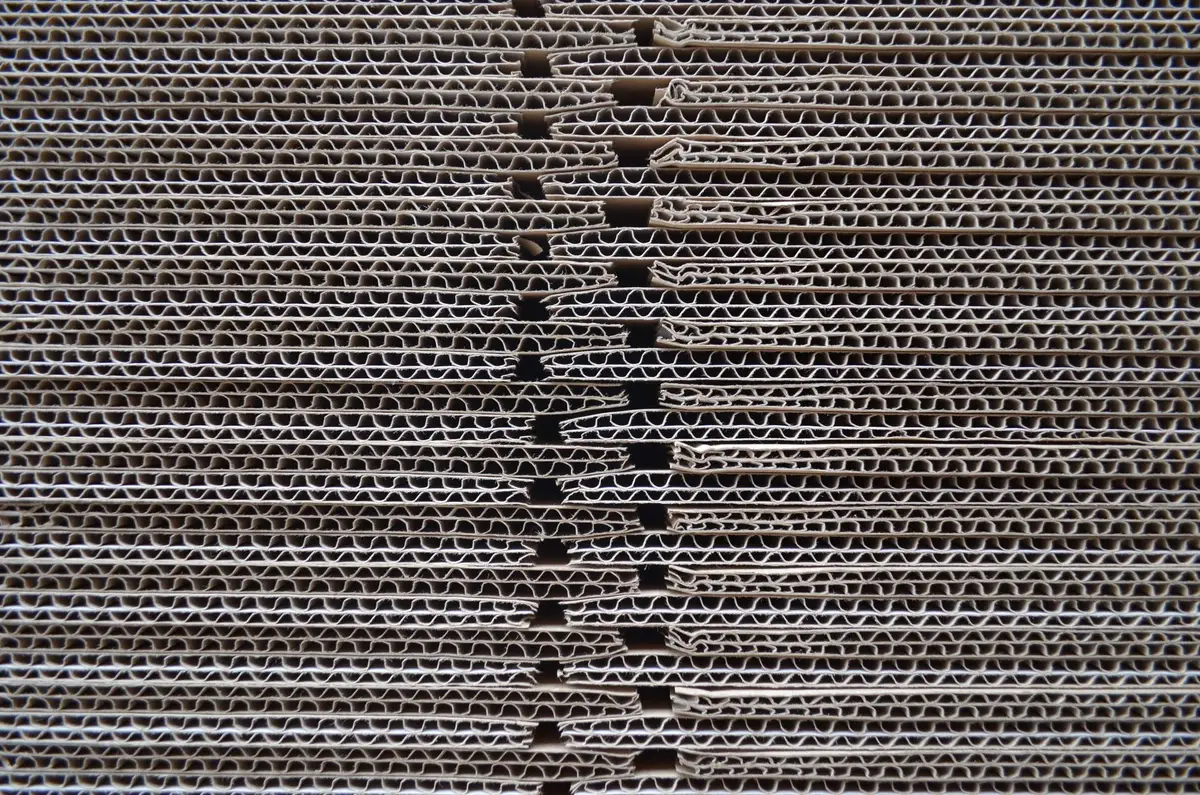
Corrugated Box Maker: How to Find and Vet the Right Supplier
A sourcing guide to corrugated box makers: how boxes are made, which flute type fits your product, pricing ranges, and how to verify a supplier before ordering.
Sep 23, 2026
Find verified suppliers on Tawaf
Create Free AccountIndia is the third-largest plastics consumer globally. Behind that consumption sits a manufacturing base of over 50,000 plastic processing units, most of which rely on injection moulding as their primary technology. Indian injection moulding machine manufacturers supply not only this massive domestic market but also export to over 80 countries.
This guide covers everything a B2B buyer needs to know about sourcing injection moulding machines from India: machine types, tonnage considerations, manufacturer selection criteria, pricing benchmarks, and after-sales realities.
An injection moulding machine manufacturer is a company that designs, builds, and supplies machines that melt plastic granules and inject them into moulds under high pressure to produce plastic parts, with Indian manufacturers covering the full range from 30-tonne micro-moulding machines to 6,000-tonne large-part machines.
Injection moulding is the most common plastic manufacturing process in the world. It produces everything from bottle caps and mobile phone cases to automotive bumpers and industrial containers. The process involves heating plastic pellets until they melt, then injecting the molten material into a steel mould cavity at high pressure. Once the plastic cools and solidifies, the mould opens and the part is ejected.
India's injection moulding machine industry is concentrated primarily in Gujarat, with Ahmedabad as the undisputed capital. The Gujarat cluster alone accounts for over 70 percent of India's total production. Additional manufacturing centres exist in Pune, Chennai, and the NCR region.
The sector has matured significantly over the past two decades. Where Indian manufacturers once produced only basic hydraulic machines, they now offer servo-hydraulic, all-electric, and hybrid machines with sophisticated controls, robotic integration, and Industry 4.0 connectivity.
Indian manufacturers produce hydraulic, servo-hydraulic, all-electric, and hybrid injection moulding machines, along with specialised variants including multi-component, vertical, insert moulding, and PET preform machines.
Here is a detailed breakdown:
| Machine Type | Clamping Force Range | Energy Efficiency | Price Range (USD) | Best For |
|---|---|---|---|---|
| Hydraulic (toggle) | 30-6,000 tonnes | Baseline | 8,000-300,000 | General purpose, cost-sensitive |
| Servo-hydraulic | 50-4,000 tonnes | 30-50% better than hydraulic | 12,000-400,000 | High-volume production |
| All-electric | 30-850 tonnes | 50-70% better than hydraulic | 25,000-500,000 | Precision parts, clean rooms |
| Hybrid | 80-2,000 tonnes | 40-60% better than hydraulic | 18,000-350,000 | Balance of precision and force |
| Vertical | 15-300 tonnes | Similar to hydraulic | 6,000-80,000 | Insert moulding, over-moulding |
| Multi-component | 80-1,500 tonnes | Varies | 40,000-600,000 | Two-colour/material parts |
| PET preform | 200-500 tonnes | Optimised for PET | 30,000-250,000 | Bottle preforms |
The shift from traditional hydraulic to servo-hydraulic machines has been the biggest trend in Indian injection moulding manufacturing over the past five years. Servo-hydraulic machines use variable-speed pump motors that consume energy only when needed, reducing electricity costs by 30-50 percent. For markets where electricity is expensive or unreliable, this makes a significant difference.
All-electric machines are still a relatively new category for Indian manufacturers, with only a handful producing them domestically. Most all-electric machines sold in India are imported from Japan (Fanuc, JSW) or manufactured under license.
Join Tawaf and connect with verified businesses across 47 countries. No middlemen, no commissions.
Join Tawaf FreeGujarat's Ahmedabad-Rajkot-Vadodara triangle produces over 70 percent of India's injection moulding machines, with additional clusters in Pune (Maharashtra), Chennai (Tamil Nadu), and Faridabad (Haryana).
The Gujarat dominance is overwhelming:
For B2B buyers, the choice of cluster matters. Gujarat manufacturers offer the best pricing for standard machines. Pune and Chennai manufacturers offer better technology for specialised applications. You can compare manufacturers across all regions on Tawaf's supplier directory.
The required clamping tonnage is calculated by multiplying the projected area of the part (in square centimetres) by the material's injection pressure factor (typically 3-7 tonnes per square centimetre), then adding a 10-20 percent safety margin.
Tonnage selection is the single most important technical decision when buying an injection moulding machine. Here is a simplified guide:
| Product Category | Typical Part Weight | Recommended Tonnage | Example Products |
|---|---|---|---|
| Small precision parts | 0.1-10g | 30-80 tonnes | Connectors, gears, caps |
| Consumer products | 10-100g | 80-250 tonnes | Containers, toys, handles |
| Household items | 100-500g | 250-650 tonnes | Chairs, buckets, bins |
| Automotive components | 200g-2kg | 400-1,500 tonnes | Bumpers, dashboards, panels |
| Large industrial parts | 2-20kg | 1,000-4,000 tonnes | Pallets, crates, tanks |
| Very large parts | 20-50kg | 3,000-6,000 tonnes | Dustbins, water tanks |
A common mistake is buying an undersized machine. If the clamping force is insufficient, the mould will open during injection, causing flash (excess material at the parting line) and defective parts. Conversely, an oversized machine wastes energy and capital.
Most Indian manufacturers have application engineers who can help you calculate the correct tonnage for your specific parts. Share your part drawings and material specifications, and they will recommend the appropriate machine size.
Indian injection moulding machines are priced 25-45 percent below European equivalents, 15-25 percent below Taiwanese machines, and 5-15 percent above Chinese machines, with the price gap narrowing for servo-hydraulic and all-electric models.
Here is a detailed price comparison for a 250-tonne servo-hydraulic machine:
| Origin | Price Range (USD) | Controller | Energy System | Typical Warranty |
|---|---|---|---|---|
| India | 28,000-45,000 | B&R/Delta/Indian | Servo pump | 12-18 months |
| China | 22,000-38,000 | Chinese/Delta | Servo pump | 12 months |
| Taiwan | 35,000-55,000 | Delta/B&R | Servo pump | 18 months |
| Japan | 55,000-85,000 | Fanuc/proprietary | Servo/electric | 24 months |
| Germany/Austria | 70,000-120,000 | B&R/Beckhoff | Servo/electric | 24 months |
The Indian pricing sweet spot is in the 80-1,000 tonne range for servo-hydraulic machines. In this segment, Indian manufacturers offer a compelling combination of competitive pricing, adequate technology, and proximity to major plastics processing markets in the Middle East, Africa, and South Asia.
For all-electric machines, the gap between Indian and Japanese prices narrows significantly, and Japanese machines offer superior precision, reliability, and energy efficiency. If your application demands all-electric, consider Japanese or European options unless budget constraints are severe.
The five components that most determine injection moulding machine quality are the clamping mechanism (toggle or direct hydraulic), screw and barrel assembly, hydraulic system, controller/HMI, and the machine bed casting.
Understanding these components helps you evaluate manufacturers:
Clamping mechanism: Toggle mechanisms are standard for Indian machines up to 2,000 tonnes. Quality differences show up in the toggle pin bushings, platen parallelism, and tie bar material. Ask for platen parallelism specifications (should be within 0.05mm).
Screw and barrel: The injection screw and barrel melt and deliver plastic. They must resist abrasion (especially for glass-filled materials) and maintain dimensional accuracy. Top Indian manufacturers use nitrided barrels and bimetallic screws. Budget manufacturers use standard nitrided components that wear faster.
Hydraulic system: The hydraulic pump, valves, and cylinders control all machine movements. Indian manufacturers use a mix of domestic and imported hydraulic components. Rexroth (Germany), Yuken (Japan), and Moog are premium choices. Domestic alternatives work but may have shorter service lives.
Controller/HMI: The machine controller determines ease of use, process consistency, and connectivity. Premium options include B&R (Austria) and Beckhoff (Germany). Mid-range options include Delta (Taiwan) and Keba (Austria). Budget options use Indian-made controllers.
Machine bed: The machine bed must be rigid and vibration-free. Quality manufacturers use Meehanite cast iron and stress-relieve the castings before machining. The bed quality affects long-term platen alignment and part consistency.
Need injection moulding machines for your production? Register on Tawaf to connect with verified Indian manufacturers, compare specifications, and get competitive quotes.
Indian injection moulding machine manufacturers provide remote troubleshooting, spare parts supply (typically 48-72 hours within India, 7-14 days internationally), and on-site service through factory engineers or authorised service partners in major export markets.
After-sales support varies dramatically between manufacturers:
Large manufacturers (annual production 500+ machines):
Mid-size manufacturers (annual production 100-500 machines):
Small manufacturers (annual production under 100 machines):
For international buyers, after-sales support should be a primary selection criterion. Ask for a list of existing customers in your country or region, and contact them directly to assess the manufacturer's service reputation. Also check whether the manufacturer has authorised service partners on Tawaf's platform.
Evaluate manufacturers through factory visits, shot weight consistency testing, energy consumption measurement, reference customer feedback, and assessment of their engineering team's ability to support your specific application.
Here is a practical evaluation checklist:
Factory visit: Observe manufacturing processes, assembly quality, and testing procedures. A well-organised factory with proper testing infrastructure is a good sign.
Shot weight test: Ask the manufacturer to run a moulding trial on a machine similar to what you are buying. Measure shot weight variation over 50 cycles — it should be within +/- 0.5 percent for servo-hydraulic machines.
Energy measurement: Request actual energy consumption data (kWh per kg of plastic processed) from the manufacturer's test facility or from reference customers.
Dry cycle time: Measure the machine's dry cycle time (empty mould open/close/open). This indicates the machine's mechanical speed and responsiveness.
Platen parallelism: Request a measurement certificate showing platen parallelism under clamping force. This affects mould life and part quality.
Reference customers: Get contact details for 5-10 customers using similar machines. Ask about uptime, part quality consistency, service responsiveness, and any issues encountered.
According to Plastindia Foundation, India's plastics industry body, the domestic injection moulding machine market has grown at 12 percent CAGR over the past five years, indicating rising demand and investment in manufacturing capabilities.
Injection moulding machines are exported from India through JNPT (Mumbai) and Mundra (Gujarat) ports, typically in 40ft open-top or flat-rack containers, with machines up to 250 tonnes fitting in standard 40ft containers and larger machines requiring special transport.
Shipping logistics for injection moulding machines:
| Machine Size | Container Type | Shipping Weight | Typical Port |
|---|---|---|---|
| 30-120 tonnes | 20ft standard | 2-5 tonnes | JNPT/Mundra |
| 120-400 tonnes | 40ft standard/high-cube | 5-15 tonnes | JNPT/Mundra |
| 400-1,000 tonnes | 40ft flat-rack or open-top | 15-35 tonnes | JNPT/Mundra |
| 1,000-3,000 tonnes | Break-bulk or multiple flat-racks | 35-80 tonnes | JNPT |
| 3,000+ tonnes | Break-bulk (disassembled) | 80-150 tonnes | JNPT |
Most Indian manufacturers handle export documentation and can arrange freight to the destination port. For CIF (cost, insurance, freight) pricing, the manufacturer includes all logistics costs in the quoted price. For FOB (free on board) pricing, you arrange shipping from the Indian port.
Machines must be properly preserved for sea transit — VCI (vapour corrosion inhibitor) packaging for exposed metal surfaces, plastic wrapping, and proper blocking and bracing inside the container. Verify that the manufacturer's export packaging meets these standards.
India's injection moulding machine sector is moving toward all-electric and hybrid machines, Industry 4.0 integration, and increased exports to Africa and the Middle East, with the government's PLI scheme for plastics machinery providing additional investment incentives.
Key trends shaping the future:
Electrification: The shift from hydraulic to all-electric will accelerate as Indian manufacturers invest in servo motor and ball screw technology. Expect Indian all-electric machines to reach price parity with Japanese hydraulic machines within 3-5 years.
Industry 4.0: Leading Indian manufacturers are adding IoT connectivity, production monitoring dashboards, and predictive maintenance capabilities to their machines. This is particularly valuable for buyers operating multiple machines across different locations.
Sustainability: Energy-efficient machines, reduced hydraulic oil consumption, and compatibility with recycled plastics are becoming standard requirements. Indian manufacturers are responding with servo systems and barrel designs optimised for recycled materials.
Export growth: According to the Engineering Export Promotion Council of India, plastic machinery exports from India grew 22 percent in 2024-25. Key growth markets include Nigeria, Kenya, Saudi Arabia, UAE, and Bangladesh.
For B2B buyers on Tawaf's marketplace, this means more choices, better technology, and competitive pricing as Indian manufacturers compete for export market share.
Standard models from stock: 2-4 weeks. Standard models built to order: 6-10 weeks. Custom configurations: 10-16 weeks. Very large machines (2,000+ tonnes): 16-24 weeks. Add 2-4 weeks for shipping depending on destination.
Some manufacturers have in-house mould-making capabilities or partner with mould shops. However, it is generally better to source moulds from specialised mould makers. Indian mould manufacturers are concentrated in Pune, Mumbai, and Chennai, and you can find them on Tawaf's supplier directory.
Yes. Modern Indian machines can process all standard and engineering plastics including PP, PE, PS, ABS, PA (nylon), PC, POM, PBT, and glass-filled compounds. For high-temperature materials like PEEK or PEI, ensure the machine has a high-temperature barrel and screw design.
Essential spares include: hydraulic pump seal kits, proportional valve spares, heater bands, thermocouples, barrel end cap seals, nozzle tips, and screw tips. Most manufacturers provide a recommended spare parts list. Order it with the machine to avoid production delays later.
Most manufacturers provide 3-5 days of operator training during installation. Advanced training covering process optimisation, mould setup, and troubleshooting is available at the manufacturer's factory in India (typically 5-10 days, with travel and accommodation at your cost) or through online training modules.
Get Started
Create your free account and start connecting with verified suppliers and buyers worldwide.
Create Free Account
We help businesses navigate cross-border trade. Our team covers supplier verification, trade compliance, and B2B marketplace strategies to connect verified businesses worldwide.
A sourcing guide to corrugated box makers: how boxes are made, which flute type fits your product, pricing ranges, and how to verify a supplier before ordering.
Sep 23, 2026

A directory guide to product wholesalers by category: beauty, fashion, food, jewelry, and craft. Compare sourcing paths and connect with verified suppliers.
Sep 14, 2026
Medical equipment is a massive market. The global medical device industry exceeded $595 billion in 2025 and is projected to reach $750 billion by 2030, driven by aging populations, expanding healthcare access in emerging markets, and technological innovation. For B2B buyers --- hospital procurement
May 18, 2026