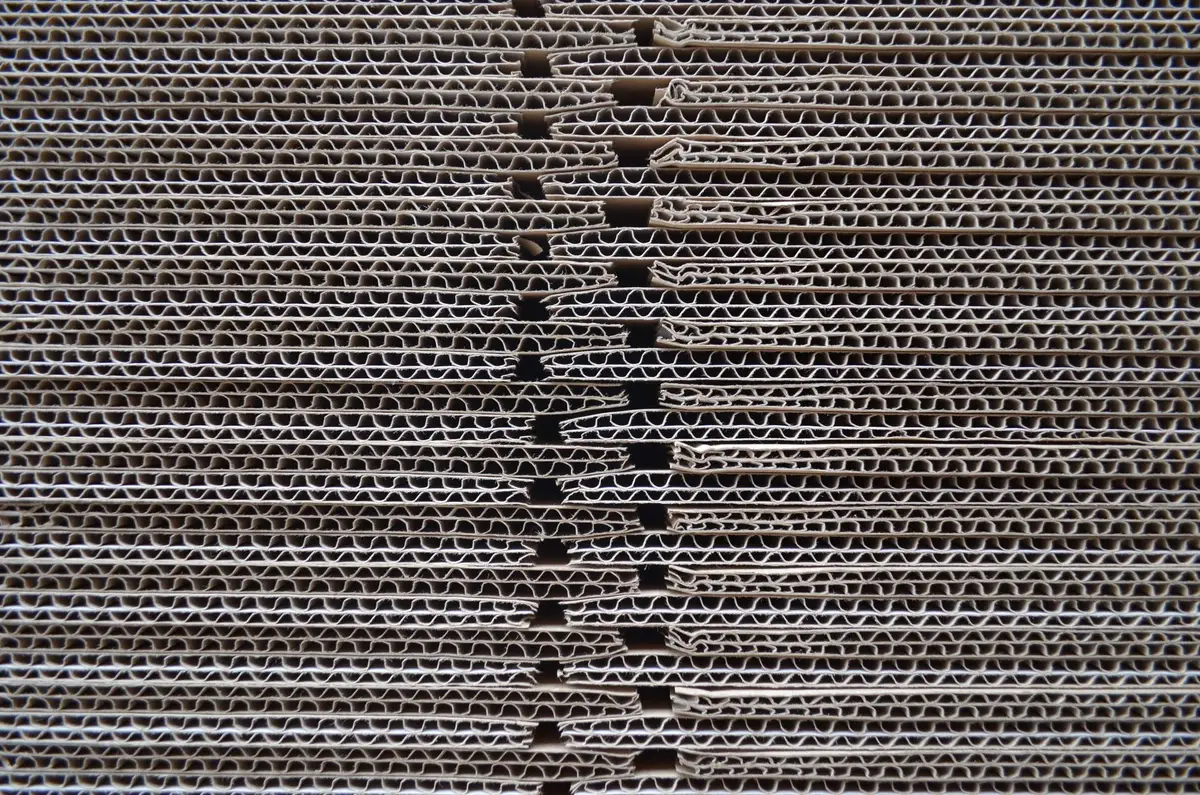
Corrugated Box Maker: How to Find and Vet the Right Supplier
A sourcing guide to corrugated box makers: how boxes are made, which flute type fits your product, pricing ranges, and how to verify a supplier before ordering.
Sep 23, 2026
Find verified suppliers on Tawaf
Create Free AccountIndia's toy industry is booming.
An Indian toys manufacturer is a company based in India that designs, produces, and exports toys across categories including wooden, plastic, educational, electronic, and traditional toys. India's toy industry is valued at $3 billion and has grown approximately 40% annually since 2020, driven by a 200% increase in import duties on foreign toys, government manufacturing incentives, and rising domestic demand from 400 million children under 14.
India's toy manufacturing sector has undergone a dramatic transformation. Until 2019, India imported 80% of its toys, primarily from China. Then the Indian government imposed a 60% basic customs duty on toy imports (up from 20%), introduced mandatory BIS (Bureau of Indian Standards) quality certification for all toys sold domestically, and launched the "Toycathon" initiative to encourage indigenous toy development.
The result was predictable and dramatic. Indian toy manufacturers rapidly expanded production capacity. Chinese toy imports dropped 70% by value. Domestic production scaled to fill the gap. Indian toy exports simultaneously grew by 60% as manufacturers who had invested in quality for the domestic market found they could compete internationally.
This protectionist-to-export pipeline is still playing out. Manufacturers who built capacity to serve India's domestic market of 400 million children are now turning to export markets across the Middle East, Africa, Southeast Asia, and Europe. For international buyers, this means a growing supply base of Indian toy manufacturers with modern production capabilities and competitive pricing.
The opportunity for B2B buyers is timing. Indian toy manufacturers are actively seeking export partners and are willing to offer favorable terms — lower MOQs, competitive pricing, and customization flexibility — to establish international relationships. Browse Indian manufacturers on the Tawaf India supplier directory.
Indian manufacturers specialize in five toy categories: wooden toys (Channapatna cluster produces UNESCO-recognized lacquerware), educational and STEM toys, traditional and cultural games, plastic toys and action figures, and soft toys and plush. Wooden and educational toys represent India's strongest export categories, commanding premium pricing in Western markets while maintaining a 40-60% cost advantage over European equivalents.
India's toy manufacturing landscape is diverse, with distinct regional clusters specializing in different categories:
| Toy Category | Manufacturing Hub | Wholesale Price Range | Export Strength | Annual Growth |
|---|---|---|---|---|
| Wooden Toys | Channapatna (Karnataka) | $1–$15 per piece | Strong (Europe, US) | 35% |
| Educational/STEM | Delhi NCR, Bangalore | $2–$25 per piece | Growing (Global) | 45% |
| Traditional Games | Jaipur, Varanasi | $1–$10 per piece | Moderate (Diaspora) | 25% |
| Plastic Toys | Delhi NCR, Mumbai | $0.50–$8 per piece | Emerging (Africa, ME) | 40% |
| Soft Toys/Plush | Delhi NCR, Kolkata | $1–$12 per piece | Moderate (ME, Asia) | 30% |
| Board Games | Pune, Bangalore | $3–$20 per piece | Growing (Global) | 50% |
| Electronic Toys | Shenzhen partnerships | $5–$30 per piece | Emerging | 35% |
Wooden Toys — Channapatna: This Karnataka town has produced lacquered wooden toys for over 200 years. The craft is recognized by UNESCO as an Intangible Cultural Heritage. Channapatna toys use ivory wood (Wrightia tinctoria) turned on lathes and finished with natural vegetable dyes. Products range from simple spinning tops ($0.50 wholesale) to elaborate dollhouses ($15-$30 wholesale). The natural, non-toxic materials position these toys perfectly for the premium eco-conscious market segment growing at 25% annually in Europe and North America.
Educational and STEM Toys: India's strength in IT and engineering translates into a growing educational toy sector. Manufacturers in Delhi NCR and Bangalore produce coding robots, science experiment kits, math manipulatives, and geography puzzles. The category benefits from government support through the National Education Policy 2020, which emphasizes experiential learning through play.
Traditional Games: Ludo (Pachisi), Chess (Chaturanga), and Snakes and Ladders all originated in India. Manufacturers in Jaipur and Varanasi produce premium handcrafted versions using marble, wood, brass, and fabric. These items sell as both toys and home decor, accessing a wider retail market than standard toys.
Join Tawaf and connect with verified businesses across 47 countries. No middlemen, no commissions.
Join Tawaf FreeIndia's toy manufacturing concentrates in five hubs: Channapatna (Karnataka) for wooden toys, Delhi NCR for plastic and educational toys, Jaipur (Rajasthan) for traditional games and wooden items, Mumbai-Pune corridor for board games and puzzles, and Kolkata for soft toys. Each hub has distinct capabilities, price points, and minimum order requirements shaped by local materials, labor skills, and manufacturing traditions.
Understanding the geography of Indian toy manufacturing helps buyers identify the right suppliers for their product requirements:
Channapatna, Karnataka: Population 55,000, but it punches far above its weight in global toy trade. Over 5,000 artisans work in approximately 300 workshops and 50 larger manufacturing units. The Channapatna Toys cluster is supported by the Indian government's SFURTI scheme (Scheme of Fund for Regeneration of Traditional Industries). Production capabilities range from hand-turned artisanal pieces (MOQ: 100 pieces) to machine-assisted production for larger orders (MOQ: 1,000+ pieces). Lead time is typically 3-6 weeks.
Delhi NCR (Delhi, Noida, Gurgaon): India's largest concentration of plastic toy manufacturers and educational toy companies. The region houses over 1,000 toy manufacturing units ranging from small workshops to large factories with injection molding, blow molding, and assembly capabilities. Delhi NCR manufacturers benefit from proximity to India's largest domestic market and efficient logistics to ports and airports. MOQs range from 500 to 10,000 pieces depending on product complexity.
Jaipur, Rajasthan: Known for traditional toys, puppets (Kathputli), and handcrafted wooden games. Jaipur manufacturers combine traditional craftsmanship with contemporary design sensibility. The city's artisan community produces hand-painted toys, block-printed fabric toys, and marble game sets that retail as premium products in international markets.
Mumbai-Pune Corridor: Home to India's major board game and puzzle manufacturers. Companies here produce licensed board games, educational puzzles, and card games with modern printing and finishing capabilities. The corridor also houses India's largest toy packaging and distribution operations.
Kolkata, West Bengal: India's primary soft toy manufacturing center. Kolkata manufacturers produce plush animals, fabric dolls, and stuffed toys for both domestic and export markets. The city benefits from lower labor costs than western India and proximity to Kolkata port for exports.
For international buyers, the Tawaf supplier network provides access to manufacturers across all these hubs with verified profiles and direct messaging capability.
Indian toy manufacturers exporting to global markets must comply with BIS IS 9873 (India's toy safety standard aligned with ISO 8124), EN 71 for European markets, ASTM F963 for the US market, and specific standards for individual countries like Japan's ST mark. Since 2020, all toys sold in India require mandatory BIS certification, which has significantly raised the quality baseline across the industry.
The regulatory landscape for toys is among the most stringent of any product category because the end user is a child. Indian manufacturers serving export markets must navigate multiple compliance frameworks:
| Standard | Market | Key Requirements | Certification Body | Typical Cost |
|---|---|---|---|---|
| BIS IS 9873 | India (mandatory) | Mechanical, physical, flammability, chemical safety | Bureau of Indian Standards | $2,000–$5,000 |
| EN 71 (Parts 1-13) | European Union | Physical/mechanical, flammability, migration of elements | Notified bodies (SGS, TUV) | $3,000–$8,000 |
| ASTM F963 | United States | Comprehensive safety (physical, chemical, flammability) | CPSC-accepted labs | $2,500–$6,000 |
| ISO 8124 | International | Base standard (EN 71 and IS 9873 derived from this) | Various | $2,000–$5,000 |
| GB 6675 | China | Similar to ISO 8124 with additional chemical limits | CQC | $3,000–$7,000 |
The BIS mandate that took effect in 2020 was a turning point for Indian toy manufacturing quality. Before the mandate, small manufacturers could sell domestically without safety testing. After the mandate, every toy requires third-party testing and BIS certification. Manufacturers who invested in compliance became export-ready almost automatically, since BIS IS 9873 is harmonized with ISO 8124.
For B2B buyers, this means that any Indian manufacturer holding BIS certification has already demonstrated basic compliance with international safety standards. Additional testing for EN 71 or ASTM F963 is required for specific export markets, but the foundation is already in place.
According to the Bureau of Indian Standards, over 1,200 Indian toy manufacturers have obtained BIS certification since 2020, up from fewer than 50 pre-mandate.
Indian toy manufacturers are 10-30% more expensive than Chinese equivalents for basic plastic toys but 20-40% cheaper for wooden, handcrafted, and educational categories. India's cost advantage in labor-intensive, artisan products is structural. For commodity plastic toys, China retains the price edge through scale and automation. India competes most effectively in categories where craftsmanship, natural materials, and cultural authenticity add value.
The pricing comparison between Indian and Chinese toy manufacturers depends entirely on category:
| Category | India FOB Price | China FOB Price | India Advantage? | Notes |
|---|---|---|---|---|
| Basic Plastic Toys | $0.60–$2.00 | $0.40–$1.50 | No | China wins on scale |
| Wooden Toys | $1.00–$12.00 | $1.50–$18.00 | Yes (20–40% cheaper) | India's artisan base |
| Educational STEM | $2.00–$20.00 | $2.50–$22.00 | Yes (10–20% cheaper) | Growing segment |
| Soft Toys | $1.00–$8.00 | $0.80–$6.00 | Marginal | Competitive |
| Traditional/Cultural | $1.00–$10.00 | N/A | Unique | No equivalent |
| Board Games | $2.00–$15.00 | $1.50–$12.00 | No | China printing edge |
The tariff environment also affects comparative pricing. India's 60% import duty on toys creates a protected domestic market that sustains manufacturing capacity even when export prices are not the lowest globally. For export buyers, the relevant comparison is landed cost including duties in the destination country. India benefits from preferential trade agreements with several markets and from lower anti-dumping risk compared to Chinese toys, which face additional duties in several countries.
Looking for Indian toy manufacturers for wholesale or export? Join Tawaf free and connect directly with verified toy manufacturers across India. Send inquiries, request samples, and negotiate terms without intermediaries.
Source from Indian toy manufacturers through B2B platforms, direct factory visits to manufacturing clusters, Indian trade shows (Spielwarenmesse India, India Toy Fair), and through the Toy Association of India's member directory. For international buyers, start with B2B platforms to identify potential suppliers, verify BIS and export certifications, order samples, and place a trial order before committing to production volumes.
The sourcing process for Indian toys follows a structured path:
Step 1: Supplier Discovery. Use Tawaf's supplier directory to browse Indian toy manufacturers with verified profiles. Filter by product category, manufacturing location, and MOQ range. Alternatively, contact the Toy Association of India (TAI) for member directories organized by category and region.
Step 2: Certification Verification. Request the manufacturer's BIS certificate number and verify it against the BIS database. For export-specific certifications (EN 71, ASTM F963), request test reports from recognized laboratories. Ask if certifications cover the specific products you intend to order — some manufacturers certify only their bestselling lines.
Step 3: Sample Orders. Order samples across the product range you are considering. For wooden toys, check finish quality, paint adhesion, and smoothness of edges. For plastic toys, check for sharp edges, small parts risk, and material odor. For educational toys, test the learning mechanism to ensure it actually works as described. Budget $200-$500 for samples including shipping.
Step 4: Factory Assessment. For orders above $5,000, consider a factory visit or a third-party audit. India's toy manufacturing clusters are accessible — Channapatna is a 90-minute drive from Bangalore airport, Delhi NCR manufacturers are within the city, and Jaipur is well-connected by air. A factory visit lets you assess production capacity, quality control processes, and working conditions.
Step 5: Trial Order. Place a trial order representing 20-30% of your intended first full order. This tests the manufacturer's ability to deliver on time, at the specified quality, with correct packaging and documentation.
Indian toy exports reached $325 million in 2025, growing from $130 million in 2020. The fastest-growing export destinations are the United States, United Kingdom, Germany, UAE, and Australia. Wooden and educational toys lead export growth at 50% annually. The Indian government's PLI (Production-Linked Incentive) scheme for toys provides 4-6% incentives on incremental sales, making Indian toy exports increasingly price-competitive.
India's toy export trajectory is one of the manufacturing sector's standout stories. The numbers tell the growth clearly:
| Year | Export Value (USD) | Growth Rate | Top Export Categories |
|---|---|---|---|
| 2019 | $110M | — | Soft toys, plastic toys |
| 2020 | $130M | 18% | Soft toys, wooden toys |
| 2021 | $177M | 36% | Wooden toys, educational |
| 2022 | $225M | 27% | Educational, wooden, plastic |
| 2023 | $270M | 20% | Educational, wooden, board games |
| 2024 | $310M | 15% | Educational, wooden, STEM |
| 2025 | $325M | 5% | Educational, wooden, traditional |
The government's Production-Linked Incentive (PLI) scheme for toys, announced as part of the broader PLI program, provides manufacturers with 4-6% incentives on incremental sales above a base year. This effectively subsidizes the transition from domestic to export orientation. Combined with the import duty protection that built domestic manufacturing capacity, the PLI creates a double incentive for Indian toy manufacturers to pursue export markets.
The India Brand Equity Foundation (IBEF) projects Indian toy exports to reach $1 billion by 2028 based on current growth trajectories and government support programs.
For B2B buyers, the export growth creates a favorable negotiating environment. Indian manufacturers are actively seeking international distribution partners and are motivated to offer competitive terms for first orders to establish relationships.
Explore Indian toy manufacturers alongside other Indian product categories through the Tawaf supplier directory and the broader suppliers by country hub.
Key challenges include longer lead times compared to Chinese manufacturers (6-10 weeks versus 3-6 weeks for comparable orders), inconsistent quality between samples and bulk production for smaller workshops, limited containerized shipping options from some inland manufacturing hubs, and smaller production scale that may not suit orders above 100,000 pieces per SKU.
Indian toy manufacturing has real limitations that buyers should factor into sourcing decisions:
Lead Times: Indian manufacturers typically deliver in 6-10 weeks from order confirmation, compared to 3-6 weeks from established Chinese toy factories. The difference comes from less mature supply chain management, smaller inventory buffers for raw materials, and less automated production processes. For seasonal products with fixed delivery windows, start the sourcing process 2-4 weeks earlier than you would with a Chinese supplier.
Quality Consistency: Large, BIS-certified factories produce consistent quality. Smaller artisan workshops — particularly in Channapatna and Jaipur — may show batch-to-batch variation, especially in hand-finished products. For artisan products, this variation is partly the point (each piece is unique), but it can be problematic for retail consistency standards. Specify acceptable tolerance ranges in your purchase order and conduct pre-shipment inspection.
Logistics from Inland Hubs: Channapatna (nearest port: Chennai, 350 km) and Jaipur (nearest port: Mundra, 700 km) require inland freight that adds $500-$1,500 per container. Delhi NCR has better logistics infrastructure through the Inland Container Depot network. Factor inland logistics costs into your landed cost calculation.
Scale Limitations: For orders above 100,000 pieces of a single SKU, few Indian manufacturers can fulfill the order from a single factory. China's manufacturing clusters offer significantly larger per-factory capacities. India is best suited for orders in the 1,000-50,000 piece range per SKU, which aligns well with specialty retailer and boutique buyer requirements.
Despite these challenges, the quality and pricing advantages for wooden, educational, and artisan toy categories make India a compelling sourcing origin for the right buyer profile. Connect with manufacturers directly on the Tawaf B2B marketplace to evaluate capabilities against your specific requirements.
India's toy industry is shifting toward three growth vectors: STEM and technology-integrated toys driven by the National Education Policy emphasis on experiential learning, eco-friendly and sustainable toys responding to global demand for non-plastic alternatives, and licensed character merchandise as India's animation industry produces globally popular IP. Each vector creates distinct opportunities for international wholesale buyers.
The evolution of India's toy sector mirrors broader economic shifts:
STEM Toys: India produces more engineering graduates annually than any country except China. This talent pool is channeling into educational toy design — coding kits, robotics starter sets, science experiment kits, and math manipulatives. Indian STEM toy manufacturers combine pedagogical content (many founders are former educators) with cost-effective production. The category appeals to schools, educational retailers, and parents globally.
Sustainable Toys: With 80% of global toy production being plastic, the sustainable toy segment represents a growing counterpoint. India's wooden toy, fabric toy, and natural material toy manufacturers are positioned to capture this demand. Channapatna's vegetable-dye lacquerware, Jaipur's cotton fabric toys, and bamboo construction sets from northeast India offer genuinely sustainable alternatives at competitive wholesale prices.
Licensed Merchandise: India's animation industry has produced globally recognized characters (Chhota Bheem, Motu Patlu) that are expanding into toy merchandise. Additionally, international IP holders are increasingly licensing to Indian manufacturers for regional production, creating opportunities for Indian factories to produce licensed toys for South Asian and Middle Eastern markets.
The Tawaf supplier network for manufacturing lists Indian manufacturers across these emerging categories alongside established toy producers.
Minimum order quantities vary significantly by manufacturer size and product type. Large plastic toy factories require 5,000 to 10,000 pieces per SKU. Medium-sized wooden toy manufacturers accept 500 to 2,000 pieces per design. Artisan workshops in Channapatna and Jaipur will produce as few as 100 to 200 pieces for handcrafted items. Educational toy companies typically start at 300 to 1,000 units. For first orders, many manufacturers offer reduced MOQs of 50 to 70 percent of their standard minimum to help establish the business relationship.
Verify safety compliance by requesting the manufacturer's BIS certification number and checking it against the Bureau of Indian Standards online database. For export markets, ask for EN 71 or ASTM F963 test reports issued by accredited laboratories such as SGS, TUV, or Bureau Veritas. Verify that test reports are current and cover the specific products you plan to order. For ongoing orders, conduct periodic random testing at an independent laboratory to confirm continued compliance.
Sea freight is the standard for toy shipments above 3 cubic meters, with major ports at Mumbai (JNPT), Chennai, and Mundra handling the majority of toy exports. A 20-foot container from India to the US East Coast costs approximately $2,500 to $4,000 with a transit time of 25 to 35 days. Air freight via Delhi, Mumbai, or Bangalore airports costs $4 to $7 per kilogram with 4 to 7 day transit. Express courier works for samples and urgent small shipments under 50 kilograms.
Indian toys are competitive with Chinese alternatives in specific categories. Wooden toys from India cost 20 to 40 percent less than comparable Chinese wooden toys due to lower raw material and labor costs for hand-finished products. Educational and STEM toys are 10 to 20 percent cheaper from India. Basic plastic toys remain 20 to 30 percent cheaper from China due to scale advantages. The pricing gap is narrowing as Indian manufacturers invest in automation and as China's manufacturing labor costs continue rising at 8 to 10 percent annually.
The India Toy Fair held annually in February in New Delhi is the country's largest toy trade event with over 300 exhibitors. Spielwarenmesse India in Mumbai connects international buyers with Indian manufacturers. The India International Trade Fair (IITF) in November includes a significant toy section. For overseas meetings, Indian manufacturers exhibit at Spielwarenmesse Nuremberg in January and Hong Kong Toys and Games Fair in January, though their presence is smaller than Chinese exhibitors.
Get Started
Create your free account and start connecting with verified suppliers and buyers worldwide.
Create Free Account
We help businesses navigate cross-border trade. Our team covers supplier verification, trade compliance, and B2B marketplace strategies to connect verified businesses worldwide.
A sourcing guide to corrugated box makers: how boxes are made, which flute type fits your product, pricing ranges, and how to verify a supplier before ordering.
Sep 23, 2026

A directory guide to product wholesalers by category: beauty, fashion, food, jewelry, and craft. Compare sourcing paths and connect with verified suppliers.
Sep 14, 2026
Medical equipment is a massive market. The global medical device industry exceeded $595 billion in 2025 and is projected to reach $750 billion by 2030, driven by aging populations, expanding healthcare access in emerging markets, and technological innovation. For B2B buyers --- hospital procurement
May 18, 2026