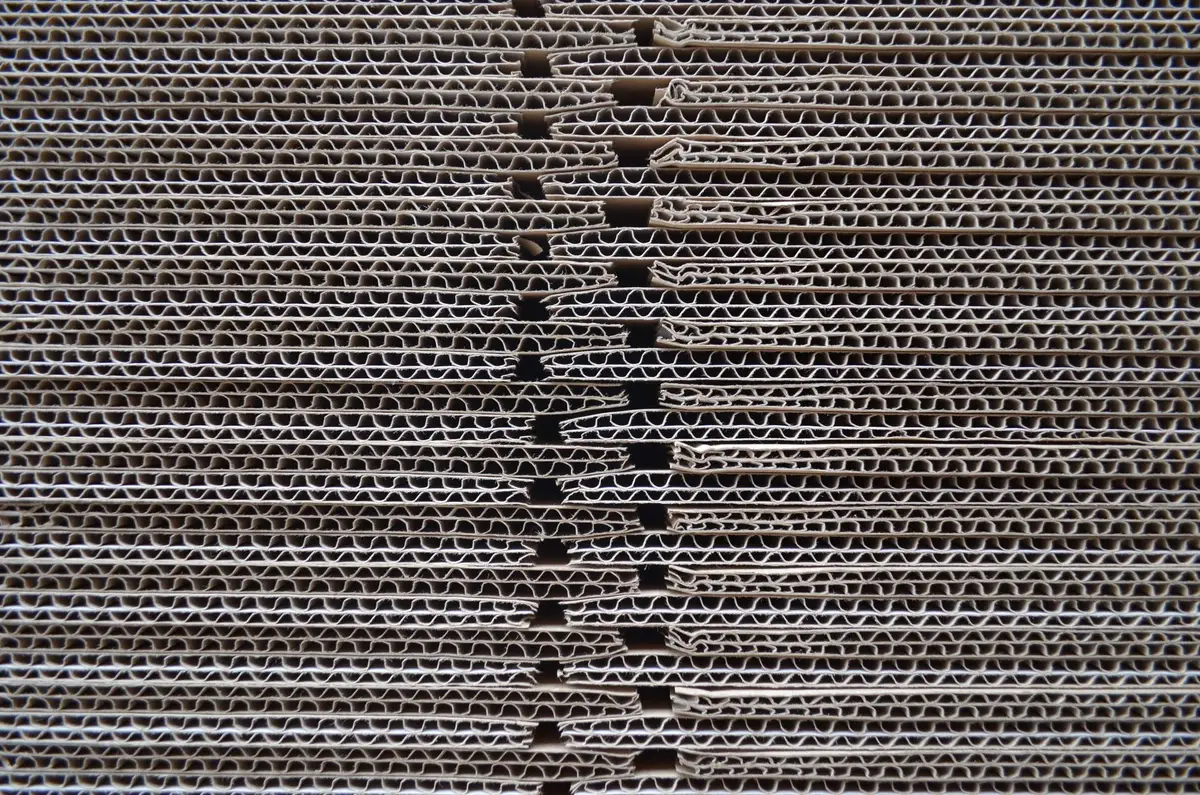
Corrugated Box Maker: How to Find and Vet the Right Supplier
A sourcing guide to corrugated box makers: how boxes are made, which flute type fits your product, pricing ranges, and how to verify a supplier before ordering.
Sep 23, 2026
Find verified suppliers on Tawaf
Create Free AccountHair extensions are a margin machine.
Hair extension suppliers are manufacturers, processors, and distributors who sell hair products in bulk to salons, retailers, e-commerce brands, and beauty distributors. The wholesale market operates on a tiered system: raw hair collectors (temples, donors) sell to processing factories, which sell to wholesale distributors, who sell to brand owners and retailers. Cutting out intermediaries improves margins but increases quality control responsibility.
The hair extension industry generated $4.2 billion in global revenue in 2025, according to Grand View Research. Growth projections put it at $6.3 billion by 2030, driven by social media visibility, increasing adoption in African and Middle Eastern markets, and the normalization of extensions as everyday styling rather than special-occasion wear.
Understanding the supply chain is the first step to finding the right supplier. Here is how hair moves from source to consumer:
Stage 1: Collection. Human hair is collected from temples (India's temple hair auctions are the world's largest), individual donors (China, Southeast Asia), and salon floor sweepings (lowest quality). Synthetic hair is manufactured in Chinese factories using modacrylic and kanekalon fibres.
Stage 2: Processing. Raw hair is sorted by length, washed, chemically treated (for non-virgin grades), coloured, and assembled into wefts, bundles, or individual application units (tape tabs, micro-rings, keratin tips).
Stage 3: Distribution. Processed hair ships to wholesale distributors globally. Major distribution hubs include Guangzhou (China), Chennai (India), Lagos (Nigeria), Atlanta (USA), and London (UK).
Stage 4: Retail. Brand owners package the hair under their labels and sell through salons, beauty supply stores, and e-commerce.
For brand owners sourcing wholesale, the critical decision is where to enter this chain. Buying direct from processors gives you better pricing but requires larger MOQs and more quality oversight. Buying from distributors costs more per unit but offers lower minimums and easier logistics.
Browse wholesale beauty and personal care products on Tawaf to find hair extension suppliers with verified trade licenses.
The six main types are clip-in (removable, entry-level market), tape-in (semi-permanent, salon-installed), sew-in/weave (braided base, long-wearing), micro-link/micro-bead (no heat or glue), fusion/keratin-tip (individual strand bonding), and wigs/closures (full coverage). Sew-in weaves and wigs dominate the global wholesale market by volume, while clip-ins dominate e-commerce direct-to-consumer sales.
Each type serves a different customer segment and has different supplier requirements:
| Extension Type | Application Method | Wear Duration | Target Customer | Wholesale Price Range (per unit) | Retail Markup |
|---|---|---|---|---|---|
| Clip-in sets | Self-applied, clips | Same-day removal | DIY consumers, e-commerce | $15–$80 | 3–5x |
| Tape-in packs (20 pcs) | Salon, adhesive tabs | 6–8 weeks | Salon clients | $30–$120 | 2–3x |
| Sew-in bundles | Salon, needle/thread | 8–12 weeks | Regular extension wearers | $25–$200 | 2–4x |
| Micro-link packs | Salon, metal beads | 3–4 months | Gentle-method preference | $40–$150 | 2–3x |
| Fusion/keratin tips (50 strands) | Salon, heat tool | 3–6 months | Long-term, natural look | $50–$250 | 2–3x |
| Lace front wigs | Self or salon | Varies | Full coverage, versatility | $50–$500 | 2–4x |
| Closures/frontals | Salon, sewn or glued | 8–12 weeks | Sew-in complement | $20–$150 | 2–3x |
For e-commerce resellers, clip-in extensions are the easiest entry point: no salon dependency, lower price point, higher volume. For salon distributors, tape-in and sew-in bundles generate recurring revenue because clients return every 6–12 weeks for reinstallation.
Wigs and closures have surged in demand since 2020. The protective styling movement — particularly strong in the Black beauty community — drives consistent demand for full lace, lace front, and HD lace wigs. This segment carries the highest per-unit margins.
Join Tawaf and connect with verified businesses across 47 countries. No middlemen, no commissions.
Join Tawaf FreeThe five primary origins are Indian (temple remy and donor hair — the global gold standard for unprocessed hair), Brazilian (thick, wavy, often blended with other origins), Peruvian (soft, versatile, medium density), Malaysian (naturally silky, holds curl well), and Chinese (the largest producer by volume, dominant in synthetic and processed human hair). "Brazilian" and "Peruvian" labels are frequently marketing terms applied to Chinese-processed hair.
This is where the industry gets murky. Origin labeling in hair extensions is loosely regulated. A bundle labeled "Brazilian virgin hair" may contain Chinese-sourced hair that was processed in a Guangzhou factory to mimic Brazilian hair texture. This is not necessarily fraud — it is industry-standard practice — but it means buyers must verify claims independently.
Here is what each origin actually means:
Indian hair. India supplies an estimated 60–70% of the world's raw human hair, according to the International Trade Centre. The Tirumala temple in Andhra Pradesh alone auctions over 500 tonnes of hair annually. Indian temple hair is the most consistently available virgin human hair on the global market. Textures range from straight to wavy, with fine to medium density.
Chinese hair. China is the world's largest hair extension manufacturer and the dominant source of synthetic extensions. Chinese human hair tends to be thick, coarse, and straight. Most Chinese hair sold as extensions has been heavily processed (acid-bathed to strip the cuticle, then coated with silicone). China also processes hair imported from other countries.
Brazilian, Peruvian, and Malaysian hair. These are real origins — hair is collected from donors in these countries — but the volume of genuine Brazilian/Peruvian/Malaysian hair on the global market is tiny compared to what is sold under those labels. Most "Brazilian hair" sold by Chinese and Indian suppliers is locally sourced hair that has been processed and textured to match the characteristics associated with Brazilian hair (thick, bouncy, loose wave).
Cambodian and Vietnamese hair. Emerging origins with growing reputations for quality. Vietnamese hair is naturally straight and silky. Cambodian hair tends to be wavy and durable. Smaller supply volume means higher prices and more genuine origin claims.
The industry uses three primary grades: virgin (completely unprocessed, cuticles intact and aligned), remy (cuticles intact and aligned but may be lightly processed — washed, coloured), and non-remy (cuticles stripped, hair direction mixed, heavily processed). Beyond these, sellers use numbered grading systems (7A through 12A) that have no standardized meaning and are primarily marketing tools.
The "A" grading system is the biggest source of confusion for new buyers. There is no industry body certifying what "10A" means versus "8A." Each supplier defines their own grades. One supplier's "8A" may be superior to another supplier's "12A." Ignore the number. Focus on these actual quality indicators:
| Quality Indicator | What to Check | How to Test |
|---|---|---|
| Cuticle alignment | Hair strands run in same direction | Run fingers root-to-tip; should feel smooth. Reverse direction; should feel rough if cuticles are intact |
| Chemical processing | Whether hair has been acid-bathed or dyed | Burn test: virgin hair burns slowly, smells like burning feathers. Chemically processed hair burns faster |
| Tangling | Hair tangles easily with wear | Wet the hair, comb through, let dry. Excessive tangling after 2–3 washes indicates poor quality |
| Shedding | Hair falls out of the weft | Hold the weft and pull gently. Excessive loose hairs indicate weak weft construction |
| Texture consistency | All bundles match in wave/curl pattern | Compare 3+ bundles from the same order side by side |
| Colour consistency | Even colour throughout | Examine under natural light, not shop lighting |
How to spot fake virgin hair: True virgin hair has never been chemically processed. Common fakes are non-remy hair coated in silicone (feels silky initially but degrades after 3–5 washes). To test: wash a sample with clarifying shampoo three times. Fake virgin hair will become dry, tangly, and matted. Genuine virgin hair will maintain its texture.
Wholesale pricing ranges from $5 per bundle for low-grade Chinese synthetic to $500+ per bundle for high-grade Indian virgin remy in long lengths (30+ inches). MOQs vary dramatically: Chinese factories often require 50–100 bundles minimum, Indian processors start at 10–20 bundles, and established wholesalers may sell as few as 3–5 bundles per order to new accounts. Dropship-ready suppliers typically charge 20–40% more but have no MOQ.
Pricing depends on four variables: hair origin, processing level, length, and weight per bundle. Here is a representative price matrix:
| Hair Type | 12-inch bundle | 18-inch bundle | 24-inch bundle | 30-inch bundle | Typical MOQ |
|---|---|---|---|---|---|
| Chinese synthetic | $3–$8 | $5–$12 | $8–$18 | $12–$25 | 100+ bundles |
| Chinese processed human | $15–$30 | $25–$50 | $40–$80 | $60–$120 | 50+ bundles |
| Indian non-remy | $10–$25 | $20–$45 | $35–$70 | $55–$100 | 30+ bundles |
| Indian remy | $25–$50 | $45–$90 | $70–$150 | $100–$250 | 10–20 bundles |
| Indian virgin (temple) | $40–$80 | $70–$140 | $120–$250 | $200–$500 | 10+ bundles |
| Brazilian (genuine) | $50–$90 | $80–$160 | $140–$280 | $220–$450 | 5–10 bundles |
Weight matters. Standard bundles weigh 100 grams (3.5 oz). Some suppliers sell 80g bundles at 100g pricing — always confirm weight per bundle before ordering.
Shipping costs add $3–$8 per bundle for international orders via express courier (DHL, FedEx). Sea freight drops this to under $1 per bundle but requires minimum container loads and 30–45 day transit times.
Starting a hair extension brand or scaling your salon supply? Register on Tawaf for free to browse hair extension suppliers, request quotes, and compare MOQs — all in one platform.
Building a hair brand requires five steps: identify your niche (luxury virgin, affordable everyday, or textured/specialty), find two to three reliable suppliers for redundancy, order samples and test thoroughly before committing, invest in branding (packaging, website, social media) before inventory, and start with a focused SKU range (3–5 products) rather than trying to stock everything. Successful brands differentiate on trust, consistency, and education — not just price.
The hair extension market is crowded. The barrier to entry is low — anyone can order bundles from a Chinese factory and slap a label on them. What separates brands that survive from those that disappear is consistency and customer education.
Niche selection matters. The brands thriving in 2026 occupy specific lanes:
Supplier redundancy is non-negotiable. Relying on a single supplier is the most common cause of brand failure. Factories close, quality slips, pricing changes without warning. Maintain relationships with at least two suppliers who can produce your core products to your specifications.
Testing protocol before launch:
Use the Tawaf blog on wholesale sourcing for deeper guidance on vetting suppliers and structuring your first wholesale order.
Verify suppliers using five checks: confirm their business registration or trade license, request factory photos or video tours, order samples before bulk purchasing, ask for references from existing clients, and check whether they are listed on verified B2B platforms. Avoid suppliers who refuse samples, demand full payment upfront for first orders, or cannot provide documentation of their business registration.
Red flags that indicate a problematic supplier:
Green flags that indicate a reliable supplier:
Regulations vary by country. In the US, human hair extensions are classified as cosmetic accessories and must comply with FDA labeling requirements. The EU requires REACH compliance for any chemical treatments. Most countries require accurate origin labeling and prohibit deceptive "virgin" claims. Import duties on human hair range from 0% to 15% depending on HS code classification and destination country, according to the World Customs Organization.
Key regulatory considerations by market:
Customs classification is critical. Misclassifying hair extensions can result in unexpected duty charges or shipment holds. Work with a customs broker experienced in beauty products for your first import.
Virgin hair is completely unprocessed — never dyed, permed, bleached, or chemically altered. Remy hair has intact, aligned cuticles but may have been gently processed (washed with chemicals, lightly coloured). All virgin hair is remy by definition, but not all remy hair is virgin. Virgin commands a 2–3x price premium over remy.
A minimum viable inventory for an online hair brand is 20–30 bundles across 3 lengths (14", 18", 22") in 2 textures (straight, body wave). This costs $1,000–$4,000 depending on quality tier. Add $500–$1,500 for packaging, website, and initial marketing. Total startup: $1,500–$5,500 for a lean launch.
Yes. Several suppliers offer dropshipping with white-label packaging. Margins are thinner (20–40% versus 60–80% with your own inventory), but you eliminate inventory risk. Dropshipping works best as a testing phase — validate demand first, then transition to holding inventory for better margins.
Build a quality guarantee into your brand from day one. Offer exchanges (not refunds, unless the product is defective) for hair that does not meet stated specifications within 7 days of purchase. Document every quality issue and feed it back to your supplier. Consistent complaints about the same issue mean it is time to switch suppliers.
India leads for raw virgin hair supply. China leads for processed human hair and synthetic extensions. Brazil and Peru produce premium but limited-volume hair. Cambodia and Vietnam are emerging as quality origins with smaller supply chains. The "best" origin depends on your price point and target customer.
Get Started
Create your free account and start connecting with verified suppliers and buyers worldwide.
Create Free Account
We help businesses navigate cross-border trade. Our team covers supplier verification, trade compliance, and B2B marketplace strategies to connect verified businesses worldwide.
A sourcing guide to corrugated box makers: how boxes are made, which flute type fits your product, pricing ranges, and how to verify a supplier before ordering.
Sep 23, 2026

A directory guide to product wholesalers by category: beauty, fashion, food, jewelry, and craft. Compare sourcing paths and connect with verified suppliers.
Sep 14, 2026

Medical equipment is a massive market. The global medical device industry exceeded $595 billion in 2025 and is projected to reach $750 billion by 2030, driven by aging populations, expanding healthcare access in emerging markets, and technological innovation. For B2B buyers --- hospital procurement
May 18, 2026