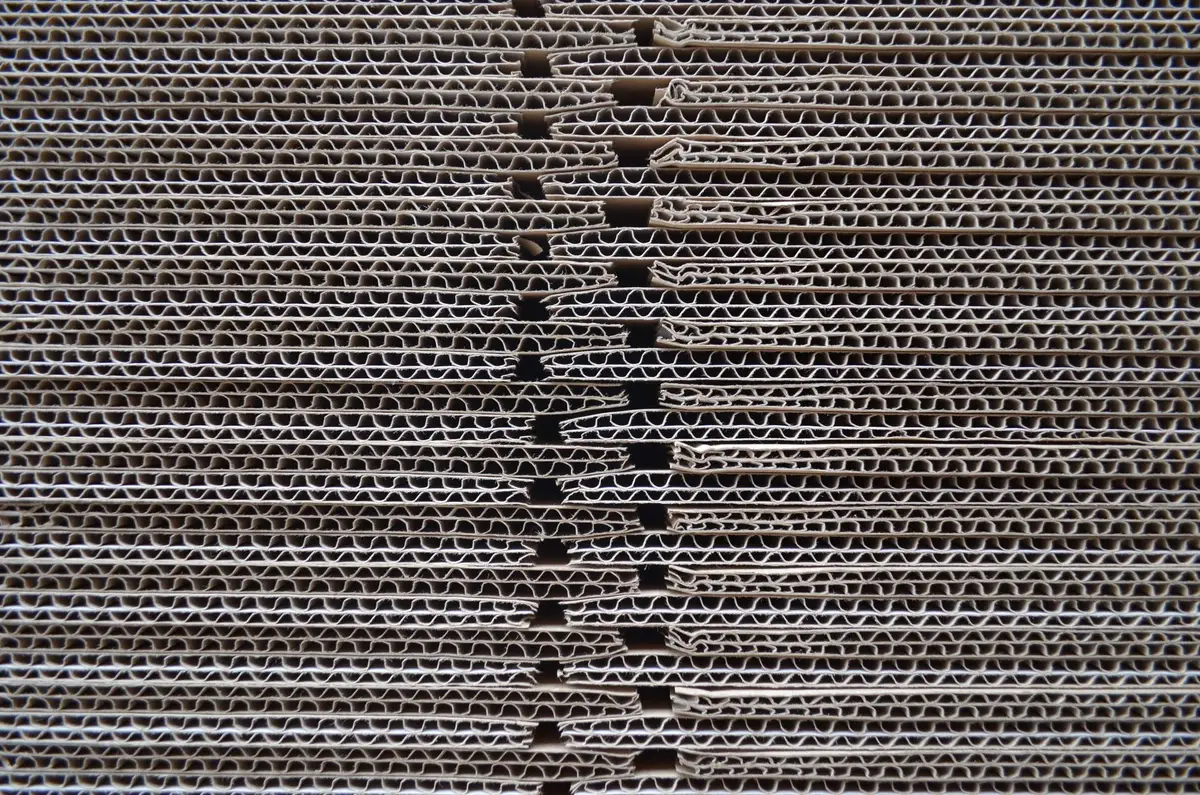
Corrugated Box Maker: How to Find and Vet the Right Supplier
A sourcing guide to corrugated box makers: how boxes are made, which flute type fits your product, pricing ranges, and how to verify a supplier before ordering.
Sep 23, 2026
Find verified suppliers on Tawaf
Create Free AccountWholesale clothing vendors are manufacturers, trading companies, or distributors that sell garments in bulk to retailers, boutiques, and e-commerce sellers at below-retail prices. They operate across the fashion supply chain, offering branded or unbranded apparel with minimum order quantities ranging from 50 pieces for small distributors to 5,000+ pieces for factory-direct orders.
Fashion wholesale drives a $700 billion market. Behind every boutique, department store, and online clothing brand sits at least one wholesale vendor supplying the actual product. Whether you're stocking a physical store, launching an e-commerce label, or supplying uniforms to corporate clients, finding the right wholesale clothing vendor determines your margins, your product quality, and your ability to restock on time.
The wholesale clothing landscape has fragmented significantly since 2020. Traditional models — where retailers visited trade shows, wrote orders six months in advance, and received seasonal deliveries — still exist but now compete with fast-turnaround vendors who can produce and ship in 2-4 weeks. B2B platforms have also compressed the discovery process, making it possible to find and vet vendors from Turkey, India, China, and elsewhere without booking a plane ticket.
This guide breaks down the vendor landscape by category, sourcing region, and buying strategy so you can make informed decisions about where to place your wholesale orders.
The six major wholesale clothing categories are women's wear (40% of market), men's wear (28%), children's wear (15%), activewear/athleisure (8%), modest fashion (5%), and workwear/uniforms (4%). Each category has different vendor specializations, margin structures, and lead time expectations that shape your sourcing approach.
The largest and most competitive segment. Subcategories include dresses, blouses, pants, outerwear, and evening wear. Trend cycles are shortest here — popular styles can peak and decline within 8-12 weeks. Vendors specializing in women's fashion need to be fast and flexible.
Wholesale price range: $5-$50 per piece (mass market) to $30-$200+ (premium/designer)
More stable than women's fashion. Core categories include suits, shirts, trousers, casual wear, and outerwear. Men's fashion cycles are longer (seasonal rather than trend-driven), which means inventory risk is lower but buyers need to plan further ahead.
On Tawaf, MONO UOMO from Turkey specializes in men's suits for wholesale. Turkish suit manufacturers are known for quality tailoring at price points between Chinese mass-market and Italian luxury — a sweet spot that serves most mid-range retailers well.
Wholesale price range: $8-$40 per piece (casual) to $50-$300+ (suits, tailored)
Safety regulations are stricter for children's clothing (flammability testing, small parts restrictions, chemical limits). This raises the compliance bar and limits the vendor pool to manufacturers with proper certifications. CPSIA compliance (US), EN 14682 (EU), and OEKO-TEX certification are standard requirements.
Wholesale price range: $3-$25 per piece
The fastest-growing category. Performance fabrics (moisture-wicking, four-way stretch, compression) require specialized manufacturing equipment. Not every garment factory can produce activewear — the technical requirements narrow the vendor field.
Wholesale price range: $6-$35 per piece
A $300 billion global market serving consumers who prefer full-coverage clothing. Includes abayas, hijabs, long dresses, tunics, and loose-fit garments. Sourcing hubs include Turkey, UAE, Indonesia, and Malaysia.
Wholesale price range: $10-$60 per piece
B2B-focused category with large order volumes and repeat purchasing. Hotels, restaurants, airlines, hospitals, and corporate offices purchase uniforms in bulk. Vendor relationships here tend to be long-term contracts rather than seasonal orders.
Wholesale price range: $8-$45 per piece
Join Tawaf and connect with verified businesses across 47 countries. No middlemen, no commissions.
Join Tawaf FreeTurkey leads in quality suits, dresses, and denim. India excels at cotton casual wear, embroidered garments, and organic textiles. China dominates fast fashion and activewear by volume. Pakistan produces high-quality cotton basics. Bangladesh offers the lowest labor costs for basic garments. Each country has distinct strengths that match specific product categories and price tiers.
Turkey is the supplier of choice for mid-to-premium fashion. The country's garment industry combines European design sensibility with competitive manufacturing costs. Istanbul's Laleli and Merter districts are famous wholesale hubs, but Turkey's manufacturing base extends across the country.
Best for: Men's suits, women's dresses, denim, knitwear, modest fashion, leather jackets
Typical MOQ: 100-500 pieces per style per color
Lead time: 3-6 weeks
Tawaf lists fashion businesses from Turkey, including MONO UOMO, which supplies men's suits to buyers across the Middle East and Europe. For a deeper exploration of clothing manufacturers in Turkey, we've published a dedicated guide.
India's garment industry is the world's second-largest, employing over 45 million people. The country produces everything from handloom cotton kurtas to factory-made fast fashion. India's advantage is in cotton-based products — the country is the world's largest cotton producer, giving manufacturers direct access to raw materials.
Best for: Cotton basics, casual wear, embroidered garments, organic textiles, bridal wear
Typical MOQ: 200-1,000 pieces per style
Lead time: 4-8 weeks
On Tawaf, Indian fashion businesses list products across multiple categories. Buyers can browse Indian suppliers to find garment manufacturers and exporters.
China produces more clothing than any other country — approximately 30% of global garment output. The Guangdong province (Guangzhou, Shenzhen, Dongguan) is the epicenter, with thousands of factories producing everything from $2 t-shirts to $200 technical jackets.
Best for: Fast fashion, activewear, outerwear, accessories, large-volume orders
Typical MOQ: 300-3,000 pieces per style
Lead time: 2-6 weeks (fastest for reorders)
Pakistan's textile industry focuses on cotton production and basic garments. The country produces high-quality cotton yarn and fabric, and Karachi and Lahore have large garment manufacturing clusters.
Best for: Cotton t-shirts, polo shirts, denim, towels, bed linen, basic knitwear
Typical MOQ: 500-2,000 pieces per style
Lead time: 4-8 weeks
| Factor | Turkey | India | China | Pakistan | Bangladesh |
|---|---|---|---|---|---|
| Avg. labor cost/hr | $5-7 | $2-3 | $4-6 | $1.50-2.50 | $0.95-1.50 |
| Quality tier | Mid-premium | Mid | All tiers | Mid | Basic-mid |
| Lead time | 3-6 weeks | 4-8 weeks | 2-6 weeks | 4-8 weeks | 6-10 weeks |
| MOQ flexibility | High | Medium | Low (large) | Medium | Low (large) |
| Design capability | Strong | Moderate | Strong | Moderate | Limited |
| Cotton quality | Good | Excellent | Imported | Excellent | Good |
Wholesale clothing MOQs (Minimum Order Quantities) range from 50 pieces with small distributors to 5,000+ pieces for factory-direct orders. Pricing drops 15-30% at each tier: distributors charge $12-20 per piece for basics, trading companies charge $8-15, and factories charge $4-10 for the same product. Your order volume determines your position in this pricing ladder.
Understanding the pricing structure prevents two common mistakes: overpaying because you're buying from the wrong supplier type, and underbidding because you don't understand the cost floor.
| Supplier Type | MOQ Range | Price Level | Markup Over Factory | Best For |
|---|---|---|---|---|
| Factory/manufacturer | 1,000-5,000+ pcs | Lowest | Base price | Large retailers, brands |
| Trading company | 300-1,000 pcs | Low-mid | 15-30% above factory | Mid-size buyers |
| Wholesale distributor | 50-300 pcs | Mid | 40-70% above factory | Boutiques, startups |
| Wholesale marketplace | 10-100 pcs | Highest | 80-120% above factory | Test orders, micro-retailers |
Consolidate styles: Ordering 500 pieces across 5 styles is more expensive per unit than ordering 500 pieces of 1 style. Factories set up production lines per style, and each changeover costs time and money.
Commit to repeat orders: Tell the vendor your annual volume projection. A factory that expects 4 orders per year will offer better pricing than one expecting a single order.
Be flexible on delivery timing: Rush orders cost 10-20% more. If you can wait 6-8 weeks instead of 3-4, you'll get better pricing.
Order in full container loads (FCL): Shipping 1 FCL (approximately 5,000-15,000 pieces depending on garment type) costs 40-60% less per piece in freight than shipping LCL (less than container load).
Pay on favorable terms for the vendor: Cash against delivery or T/T advance gets you 3-5% discount compared to L/C or net-30 terms.
Ready to connect with verified wholesale clothing vendors? Create your free Tawaf account to browse fashion supplier profiles from Turkey, India, and beyond. View product catalogs, compare pricing, and send direct inquiries — no middlemen, no trade show fees.
Evaluate clothing vendors on six criteria: sample quality (request before ordering), production capacity and current utilization, certification compliance (OEKO-TEX, BSCI, WRAP), size consistency across production runs, communication responsiveness, and references from existing wholesale buyers. A vendor who fails on any one of these is a risk to your business.
Vendor evaluation in fashion is more tactile than in most B2B categories. You can't evaluate a garment from a product listing alone — you need to touch the fabric, check the stitching, and try the sizing. Here's a structured approach:
Request samples of the specific styles you want to order, not just "best sellers." Evaluate:
Ask the vendor:
A factory running at 90%+ capacity will deprioritize your order if a bigger buyer needs rush delivery. Conversely, a factory at 30% capacity might have quality control issues driving away customers.
| Certification | What It Covers | Why It Matters |
|---|---|---|
| OEKO-TEX Standard 100 | Chemical safety of textiles | Required by many EU retailers |
| BSCI (Business Social Compliance) | Labor conditions, ethical manufacturing | Required by major retail chains |
| WRAP (Worldwide Responsible Accredited Production) | Labor, environment, customs compliance | Common in US supply chains |
| GOTS (Global Organic Textile Standard) | Organic fiber content and processing | Required for "organic" claims |
| ISO 9001 | Quality management system | General quality indicator |
Tawaf lists verified wholesale clothing vendors from Turkey, India, Cameroon, and other countries. Current fashion suppliers include MONO UOMO (Turkey, men's suits), Indian casual wear manufacturers, and African artisan producers offering handmade sandals, caps, and accessories. All vendors go through business verification before listing products on the platform.
The advantage of sourcing through a B2B platform like Tawaf versus cold-contacting factories is the verification layer. Every business on Tawaf has submitted documentation confirming their legal registration and business operations. This doesn't guarantee product quality — only samples can do that — but it eliminates outright scams and ghost companies.
Browsing the wholesale products directory shows fashion vendors offering:
The platform is growing its vendor base across fashion subcategories. If you're a clothing manufacturer or wholesaler, registering on Tawaf puts your products in front of international buyers actively looking for new suppliers.
The five most common mistakes are: ordering bulk without requesting samples first, choosing the cheapest vendor without considering quality consistency, ignoring certification requirements for your target market, underestimating shipping costs and import duties in landed-cost calculations, and relying on a single vendor for your entire product range.
Every experienced clothing buyer has a story about a bulk order that looked nothing like the product photos. Fabric weight, color, construction quality, and sizing all vary between samples and mass production — and they vary more with less reputable vendors. Budget $200-$500 for samples before committing to any new vendor.
The cheapest garment per unit is rarely the cheapest landed cost. Factor in:
Selling children's clothing in the US without CPSIA testing? That's a federal violation. Selling garments in the EU without REACH chemical compliance? Your shipment gets stopped at customs. Every market has textile regulations, and your vendor needs to produce goods that comply. If the vendor doesn't know what OEKO-TEX or CPSIA means, find a different vendor.
Your cost isn't the FOB price. It's FOB + shipping + insurance + import duty + customs clearance + local freight + warehouse handling. For clothing, import duties alone can add 10-30% depending on the destination country and fabric composition. According to the World Trade Organization's tariff database, textiles and clothing remain among the most heavily tariffed product categories globally.
Relying on one vendor for everything means one factory fire, one shipment delay, or one quality issue shuts down your entire supply. Maintain relationships with at least 2-3 vendors across different countries. Use your primary vendor for 60-70% of volume and secondary vendors for the rest.
Three shifts define wholesale fashion in 2026: the compression of lead times to 2-3 weeks through near-shoring and pre-production fabric stocking, the growth of direct-to-retailer B2B platforms that bypass traditional wholesale agents, and increasing buyer demand for supply chain transparency driven by EU and US due diligence regulations.
European buyers increasingly source from Turkey and Morocco instead of China to cut lead times. US buyers look to Mexico and Central America. The trade-off is higher per-unit cost versus faster restock cycles and lower inventory risk. For fashion — where trends shift faster than ever — speed often beats price.
B2B marketplaces like Tawaf are replacing the trade show model for vendor discovery. Instead of flying to Istanbul or Guangzhou twice a year, buyers browse verified vendor profiles online, request samples digitally, and negotiate terms through messaging. The platforms don't replace the need for physical samples and factory visits for large orders, but they compress the discovery and initial vetting phases from months to days.
The EU's Corporate Sustainability Due Diligence Directive (CSDDD) and similar regulations in the US and UK require fashion brands to document their supply chain from raw material to finished garment. This means your wholesale vendor needs to tell you where their fabric comes from, who spun the yarn, and under what labor conditions the garment was made. Vendors who cannot provide this information will lose access to regulated markets.
According to McKinsey's State of Fashion report, 67% of fashion companies plan to increase near-shore sourcing by 2027, and supply chain transparency is the top-cited regulatory pressure for the industry.
Minimum orders vary by vendor type. Factory-direct orders require 500 to 5,000 pieces per style per color. Trading companies and smaller manufacturers accept 100 to 500 pieces. Wholesale distributors serve small buyers with MOQs as low as 50 pieces, though per-unit pricing is significantly higher. Some B2B platforms allow mixed-style orders where you combine different products to meet a minimum dollar amount rather than a per-style piece count.
Start with industry-specific B2B marketplaces, trade association directories, and regional wholesale districts (like the LA Fashion District, Istanbul's Merter, or Guangzhou's Shahe). Attend local trade shows — even small regional ones connect you with distributors. For international vendors, platforms like Tawaf list verified suppliers by country, letting you filter by product category and verify business credentials before placing a first order.
Target a keystone markup (2x wholesale cost) as a baseline. A garment purchased wholesale at $15 should retail at $30 or more. Premium and designer segments achieve 2.5-3x markups. Basics and commodity items may only support 1.5-1.8x due to price competition. After factoring in shipping, duties, overhead, and returns, your net margin should land between 30-50% for a healthy clothing retail business.
Negotiate the defect allowance in writing before your first order. Standard practice is a 2-3% defect tolerance — the vendor accepts responsibility for defects above that threshold via credit, replacement, or refund. Document defects with photos immediately upon receiving shipments. Factories are more responsive to claims filed within 7 days of delivery than claims filed weeks later. For recurring quality issues, require pre-shipment inspection by a third party.
Manufacturers offer lower per-unit costs but require larger MOQs, longer lead times, and more hands-on quality management. Distributors offer smaller MOQs, faster shipping, and mixed-product orders but charge 40-70% more per unit. Most growing clothing businesses use distributors early on to test styles and build customer data, then shift to direct manufacturer sourcing once their volume justifies the MOQs and their product line stabilizes.
Get Started
Create your free account and start connecting with verified suppliers and buyers worldwide.
Create Free Account
We help businesses navigate cross-border trade. Our team covers supplier verification, trade compliance, and B2B marketplace strategies to connect verified businesses worldwide.
A sourcing guide to corrugated box makers: how boxes are made, which flute type fits your product, pricing ranges, and how to verify a supplier before ordering.
Sep 23, 2026

A directory guide to product wholesalers by category: beauty, fashion, food, jewelry, and craft. Compare sourcing paths and connect with verified suppliers.
Sep 14, 2026

Medical equipment is a massive market. The global medical device industry exceeded $595 billion in 2025 and is projected to reach $750 billion by 2030, driven by aging populations, expanding healthcare access in emerging markets, and technological innovation. For B2B buyers --- hospital procurement
May 18, 2026