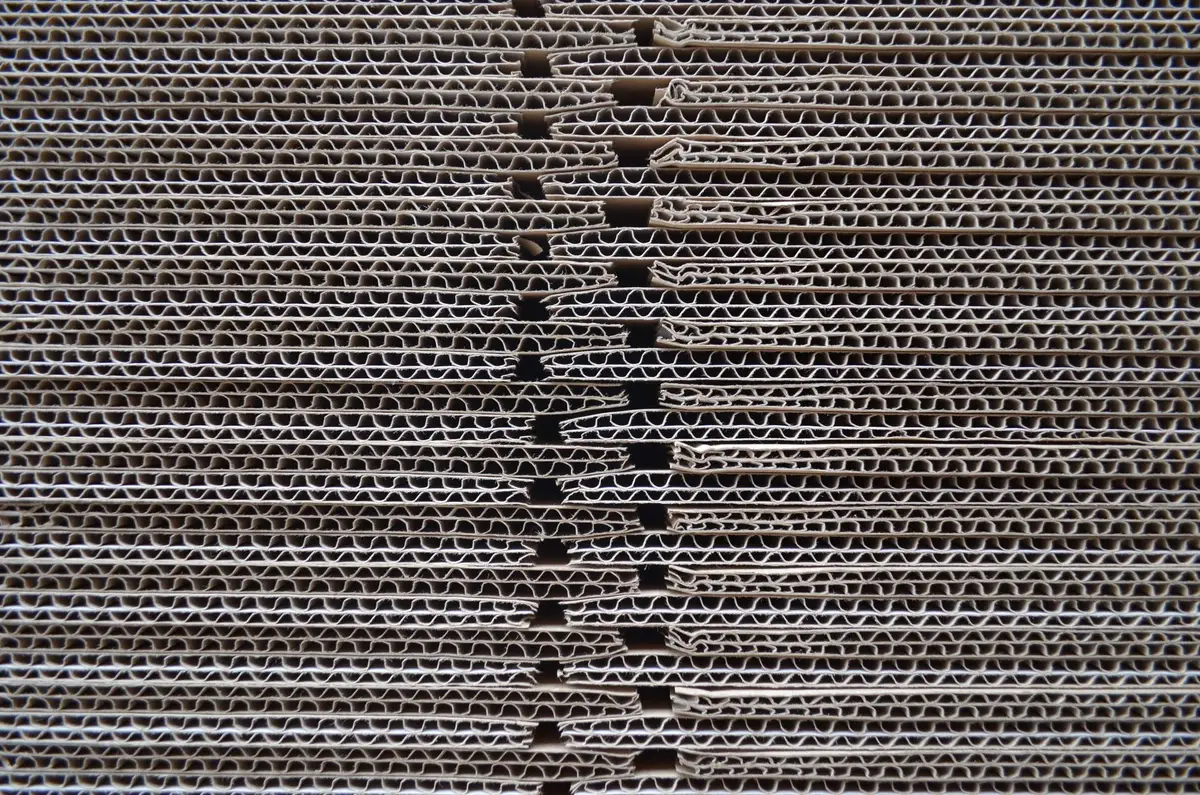
Corrugated Box Maker: How to Find and Vet the Right Supplier
A sourcing guide to corrugated box makers: how boxes are made, which flute type fits your product, pricing ranges, and how to verify a supplier before ordering.
Sep 23, 2026
Find verified suppliers on Tawaf
Create Free AccountJewelry carries the highest retail markups.
Wholesale jewelry suppliers are manufacturers, refineries, or trading companies that sell finished jewelry or components in bulk to retailers, e-commerce sellers, and resellers at 40-80% below retail prices. The global jewelry market is valued at $340 billion, with wholesale B2B channels handling approximately 55% of all distribution to independent jewelers and fashion retailers.
The jewelry wholesale market operates differently from apparel or general merchandise. Precious metal and gemstone pricing introduces commodity-linked volatility that does not exist in other product categories. When gold moves $50 per ounce, every gold jewelry vendor recalculates their price sheets. This commodity exposure creates both risk and opportunity for informed buyers.
Jewelry wholesale splits into two broad segments: fine jewelry (gold, silver, platinum, gemstones) and fashion jewelry (base metals, plated finishes, synthetic stones, costume pieces). Fine jewelry carries higher absolute margins but requires larger capital investment, authentication infrastructure, and regulatory compliance. Fashion jewelry offers lower entry barriers, faster turnover, and higher percentage markups.
For retailers entering jewelry wholesale, the choice between fine and fashion depends on your customer base, capital, and operational capacity. A boutique owner adding jewelry as a complement to clothing should start with fashion jewelry. A dedicated jewelry retailer with gemological knowledge should pursue fine jewelry.
The wholesale jewelry supply chain involves several layers: mining/refining, component manufacturing (findings, chains, settings), assembly/finishing, and distribution. You can enter at any point depending on your capability. Buying finished pieces from a wholesaler is simplest. Buying components and assembling is more profitable but requires tools and skill.
Fashion jewelry delivers the highest percentage markup at 200-500% while requiring the least capital. Silver jewelry offers a strong middle ground with 100-200% markups and growing consumer demand. Gold jewelry produces the highest absolute margin per piece but ties up significant working capital and demands authentication processes most small retailers lack.
Here is how the major jewelry categories compare for wholesale buyers:
| Category | Wholesale Price Range | Retail Markup | MOQ Range | Capital Required | Expertise Needed |
|---|---|---|---|---|---|
| Fashion/Costume | $0.50–$8 | 200–500% | 50–500 pcs | Low ($500+) | Basic |
| Silver (925 Sterling) | $5–$40 | 100–200% | 20–200 pcs | Medium ($2,000+) | Moderate |
| Gold Plated | $3–$15 | 150–300% | 50–300 pcs | Low ($1,000+) | Basic |
| Gold Vermeil | $10–$50 | 120–250% | 20–100 pcs | Medium ($3,000+) | Moderate |
| 14K/18K Gold | $50–$500 | 80–150% | 10–50 pcs | High ($10,000+) | Advanced |
| Gemstone | $20–$200 | 100–300% | 10–100 pcs | High ($5,000+) | Advanced |
| Stainless Steel | $1–$10 | 200–400% | 100–1,000 pcs | Low ($500+) | Basic |
Fashion jewelry deserves attention from anyone starting out. The entry cost is minimal, the risk per piece is negligible, and the percentage return is the highest in the table. A $2 wholesale bracelet retailing at $12 is a 500% markup. You can test dozens of styles with a $500 investment.
Silver jewelry sits in a sweet spot for mid-market retailers. Sterling silver (925) carries perceived value, does not require the authentication infrastructure of gold, and retails at price points ($30-$150) that enable impulse purchases. Consumer preference for silver has grown 22% since 2023 according to The Silver Institute's annual survey.
Stainless steel jewelry is an emerging category worth watching. It is hypoallergenic, durable, and mimics the look of platinum at a fraction of the cost. The category has grown 35% year-over-year as consumers seek affordable, long-lasting alternatives.
Join Tawaf and connect with verified businesses across 47 countries. No middlemen, no commissions.
Join Tawaf FreeChina's Yiwu and Guangzhou dominate fashion jewelry production with the lowest prices globally. India's Jaipur and Rajkot are the world's leading centers for gemstone cutting and silver jewelry. Turkey's Grand Bazaar district specializes in gold jewelry with unique designs. Thailand's Bangkok is the hub for colored gemstones and fine jewelry manufacturing.
Each sourcing region has distinct specializations:
China — Yiwu and Guangzhou: China produces approximately 70% of the world's fashion jewelry. Yiwu International Trade City has an entire floor dedicated to jewelry wholesale, with vendors offering MOQs as low as 12 pieces for stock items. Guangzhou's Liwan district focuses on higher-end fashion jewelry and gold-plated pieces. Pricing is unmatched globally, but quality control requires diligence. The variance between vendors in the same building can be enormous.
India — Jaipur and Rajkot: Jaipur is the world's gemstone cutting capital, processing 90% of the world's emeralds and a significant share of rubies and sapphires. Rajkot dominates silver jewelry manufacturing, producing over 40% of India's silver jewelry exports. Indian vendors offer craftsmanship that combines traditional techniques with modern designs. MOQs are typically 50-200 pieces for stock items. Explore Indian jewelry suppliers through Tawaf's India supplier directory.
Turkey — Istanbul: Turkey's jewelry manufacturing centers around the Grand Bazaar and Kuyumcular Carsi (Jewelers' Bazaar). Turkish vendors specialize in 14K and 22K gold jewelry with distinctive Ottoman and Mediterranean design influences. Quality standards are consistently high, with government hallmarking requirements enforcing purity standards.
Thailand — Bangkok: Bangkok's Silom and Charoen Krung districts house Thailand's jewelry manufacturing and trading hub. Thai manufacturers specialize in colored gemstone jewelry, particularly rubies, sapphires, and jade. Thailand processes and re-exports gemstones from Myanmar, Sri Lanka, and Africa, making it a one-stop sourcing point for colored stone jewelry.
Browse verified jewelry suppliers across all these regions on the Tawaf B2B marketplace.
Verify jewelry quality through hallmark inspection, acid testing for precious metals, gemstone certification from GIA or IGI laboratories, weight verification against invoiced specifications, and plating thickness testing for gold-plated items. Never purchase fine jewelry without third-party authentication — the counterfeiting rate in wholesale precious metals exceeds 15% by some industry estimates.
Jewelry authentication is not optional; it is the foundation of your business credibility. Selling a piece marketed as gold that turns out to be gold-plated destroys customer trust permanently.
For gold jewelry, verify the karat stamp (hallmark) and cross-reference with the vendor's assay certificate. Gold hallmarking requirements vary by country — Turkey mandates government hallmarking, India has a BIS hallmarking scheme, and many other countries rely on self-declaration. If dealing in significant quantities, send random samples to an independent assay office.
For silver, the 925 stamp indicates sterling silver (92.5% silver content). An acid test kit ($15-$25) provides quick field verification. For large orders, request a mill certificate from the silver supplier showing purity testing results.
For gemstones, insist on certification from recognized laboratories. The Gemological Institute of America (GIA) is the global standard, but IGI, HRD, and Gubelin are also respected. Uncertified gemstones are a gamble — you cannot accurately represent what you cannot verify.
For fashion jewelry, quality verification focuses on plating thickness (measured in microns — 1-3 microns is thin and will tarnish quickly, 5+ microns provides reasonable durability), nickel content (regulated in the EU under REACH, a common allergen), and closure mechanisms (clasps, posts, and hooks that break generate returns).
Fashion jewelry vendors typically require 100% upfront payment for first orders with MOQs of 50-500 pieces. Fine jewelry suppliers work on 30-50% deposits with balance on delivery for established buyers. Gold jewelry pricing fluctuates with daily spot prices and is typically quoted as "making charge" plus metal weight at current market rate.
Jewelry pricing works differently depending on the category:
Fashion jewelry uses fixed unit pricing. A vendor quotes $3.50 per bracelet, and that price holds for the duration of the order. Volume discounts apply at standard thresholds:
| Order Volume | Typical Discount | Payment Terms |
|---|---|---|
| 50–200 pieces | List price | 100% upfront |
| 200–500 pieces | 5–10% off | 100% upfront |
| 500–1,000 pieces | 10–15% off | 50/50 split |
| 1,000–5,000 pieces | 15–25% off | 30/70 split |
| 5,000+ pieces | 25–35% off | Net 30–60 |
Gold and silver jewelry pricing has two components: metal value (based on daily spot price multiplied by weight) and making charge (the cost of manufacturing, typically 8-25% of metal value for machine-made pieces and 15-40% for handcrafted). This means your purchase price changes daily with commodity markets.
For retailers buying gold jewelry, timing matters. Track gold spot prices and buy during dips. A $50 swing in gold price changes the wholesale cost of a 10-gram necklace by approximately $16. Across a 100-piece order, that is $1,600.
Ready to source wholesale jewelry from verified suppliers? Create your free Tawaf account and connect directly with jewelry manufacturers across India, Turkey, China, and Thailand. No middleman markup, no listing fees.
A profitable jewelry product mix follows the 60-20-20 rule: 60% high-turnover fashion pieces priced under $30 retail, 20% mid-range silver or vermeil pieces at $30-$100, and 20% statement or fine pieces above $100. This structure generates consistent cash flow from the base while the premium tier drives margin and brand perception.
The common mistake in jewelry retail is either going all-in on cheap fashion pieces (high volume but brand-limiting) or all-in on fine jewelry (high margin but slow turnover and capital-intensive). The solution is a structured mix.
Your base layer — the 60% — should be fashion jewelry and stainless steel pieces that customers buy impulsively. Earrings, stackable bracelets, simple pendants. These pieces should wholesale at $1-$5 and retail at $12-$25. They drive foot traffic, repeat purchases, and email list growth.
Your mid-tier — the 20% — should be sterling silver or gold vermeil pieces with design distinction. These are the products customers photograph for Instagram, gift for birthdays, and associate with your brand identity. Wholesale at $10-$40, retail at $30-$100.
Your premium tier — the top 20% — sets your brand ceiling. These are gemstone pieces, 14K gold items, or artisan-crafted statement jewelry. They may sell slowly, but they establish your store as a serious jewelry destination, not just a fashion accessory stall.
Jewelry import regulations vary significantly by market. The US requires FTC compliance for precious metal claims and nickel content disclosure. The EU mandates REACH compliance for nickel and lead limits plus hallmarking in several member states. Customs duties range from 0% for unmounted gemstones to 11% for fashion jewelry in the US. Incorrect HS code classification triggers delays and fines.
Import compliance for jewelry is more complex than for apparel because precious metals and gemstones fall under specific regulatory frameworks.
In the United States, the FTC's Jewelry Guides govern how you describe and market jewelry. Calling something "gold" requires it to be at least 10 karats. "Gold-plated" requires a specific minimum thickness. Violations carry penalties and lawsuits.
In the European Union, the REACH regulation limits nickel release in jewelry that contacts skin to 0.5 micrograms per square centimeter per week. Lead content in fashion jewelry is restricted under the Toys Directive for children's items and under REACH for adult jewelry. Non-compliant shipments are stopped at customs.
Customs classification matters. Jewelry HS codes range from 7113 (precious metal jewelry, duty 5-6.5% in the US) to 7117 (imitation jewelry, duty 11% in the US). Gemstones enter under 7103-7104 with duties of 0-6.5% depending on whether they are cut or uncut. Getting the HS code wrong means paying incorrect duties and potentially facing penalties during audits.
Work with a customs broker experienced in jewelry imports. The fee ($200-$400 per shipment) is insignificant compared to the cost of a misclassified shipment.
For a broader view of sourcing across product categories, visit the wholesale products directory on Tawaf.
The five biggest risks are counterfeit precious metals, undisclosed treatments in gemstones, nickel allergies causing customer complaints, plating that degrades within weeks, and intellectual property violations from copying branded designs. Each risk has a specific mitigation strategy, and ignoring any one of them can shut down your business through lawsuits, returns, or reputation damage.
Counterfeiting is the most financially damaging risk. Gold-filled pieces sold as solid gold, lab-created stones sold as natural, nickel alloys stamped as sterling silver — these misrepresentations flow through the wholesale chain and land on your shelves. Your customer does not sue the Chinese factory; they sue you.
Mitigation: test random pieces from every shipment. A $25 acid test kit catches most precious metal fraud. A $100 diamond tester distinguishes natural from synthetic. For significant orders, send samples to an independent lab.
Gemstone treatments are another minefield. Heat treatment, irradiation, fracture filling, and dye injection are all common in the gemstone trade. Many treatments are acceptable and disclosed, but selling a fracture-filled ruby as a natural ruby is fraud. Request treatment disclosure in writing from your supplier.
Plating durability affects fashion jewelry specifically. Gold-plated jewelry should specify plating thickness in microns. Anything under 3 microns will visibly degrade within months of regular wear. If your supplier cannot specify plating thickness, find one who can.
Explore verified jewelry suppliers with transparent product specifications on the Tawaf supplier network.
3D printing enables rapid prototyping of custom designs, reducing sampling time from weeks to days. CAD/CAM manufacturing produces consistent quality at scale. Blockchain-based provenance tracking lets retailers verify gemstone origins. B2B platforms connect retailers directly with manufacturers, eliminating one to two intermediary layers and their 20-40% combined markup.
Technology is compressing the jewelry supply chain in ways that benefit retailers. 3D printing (specifically lost-wax casting from 3D-printed wax models) has cut custom jewelry prototyping costs by 70% and time by 80%. A retailer can now design a custom ring, have it 3D printed in wax, cast in silver, and receive a sample within 10 days — a process that previously took six to eight weeks.
CAD/CAM (Computer-Aided Design/Manufacturing) has standardized production quality. Pieces designed in CAD maintain dimensional consistency across production runs, eliminating the variation that comes with purely manual manufacturing.
B2B digital platforms are the most impactful shift for independent retailers. Traditional jewelry wholesale required attending trade shows in Las Vegas (JCK), Hong Kong (September Fair), or Basel (now relocated to Geneva). These shows remain valuable but the cost — $3,000-$8,000 per trip including flights, hotels, and show passes — excludes many small retailers. Digital platforms provide comparable supplier discovery at zero travel cost.
You can start a fashion jewelry retail business with $1,000 to $2,500 for initial inventory from wholesale suppliers. This budget covers 200 to 500 fashion jewelry pieces across 10 to 15 styles. For sterling silver jewelry, budget $3,000 to $5,000 for a focused initial collection. Fine gold jewelry requires $10,000 minimum due to precious metal costs. Add $200 to $400 for quality testing equipment regardless of category.
Gold-filled jewelry has a thick layer of gold mechanically bonded to a base metal, comprising at least 5% of the item's total weight in gold. Gold-plated jewelry has a thin electroplated layer typically 0.5 to 3 microns thick. Gold-filled lasts years of daily wear without tarnishing while gold-plated can show base metal within months. Gold-filled costs 3 to 5 times more at wholesale but commands proportionally higher retail prices and generates fewer returns.
Search B2B marketplaces that list MOQs transparently, attend local wholesale markets where walk-in purchases have no minimums, and look for suppliers marketing to "boutique" or "small business" buyers. Domestic wholesalers and distributors typically accept smaller orders than overseas manufacturers. Stock item vendors carry finished inventory ready to ship in quantities as low as 6 to 12 pieces per style.
Earrings consistently outperform other jewelry categories online because sizing is not an issue, photography is straightforward, and price points support impulse buying. Sterling silver minimalist pieces photograph well and appeal to the broadest demographic. Personalized jewelry such as initial pendants and birthstone pieces command premium prices with high perceived value. Stackable rings and layering necklaces generate higher average order values through multi-piece purchases.
Apply a minimum 2x markup on fine jewelry and 3 to 5x on fashion jewelry to cover your landed cost, overhead, payment processing, returns, and profit. Calculate from landed cost, not wholesale price — add shipping, duties, insurance, and testing costs to your per-unit cost before applying markup. Price relative to your market, not relative to your cost. A piece that cost you $8 landed may retail at $45 in a boutique but $28 online depending on channel expectations.
Get Started
Create your free account and start connecting with verified suppliers and buyers worldwide.
Create Free Account
We help businesses navigate cross-border trade. Our team covers supplier verification, trade compliance, and B2B marketplace strategies to connect verified businesses worldwide.
A sourcing guide to corrugated box makers: how boxes are made, which flute type fits your product, pricing ranges, and how to verify a supplier before ordering.
Sep 23, 2026

A directory guide to product wholesalers by category: beauty, fashion, food, jewelry, and craft. Compare sourcing paths and connect with verified suppliers.
Sep 14, 2026

Medical equipment is a massive market. The global medical device industry exceeded $595 billion in 2025 and is projected to reach $750 billion by 2030, driven by aging populations, expanding healthcare access in emerging markets, and technological innovation. For B2B buyers --- hospital procurement
May 18, 2026