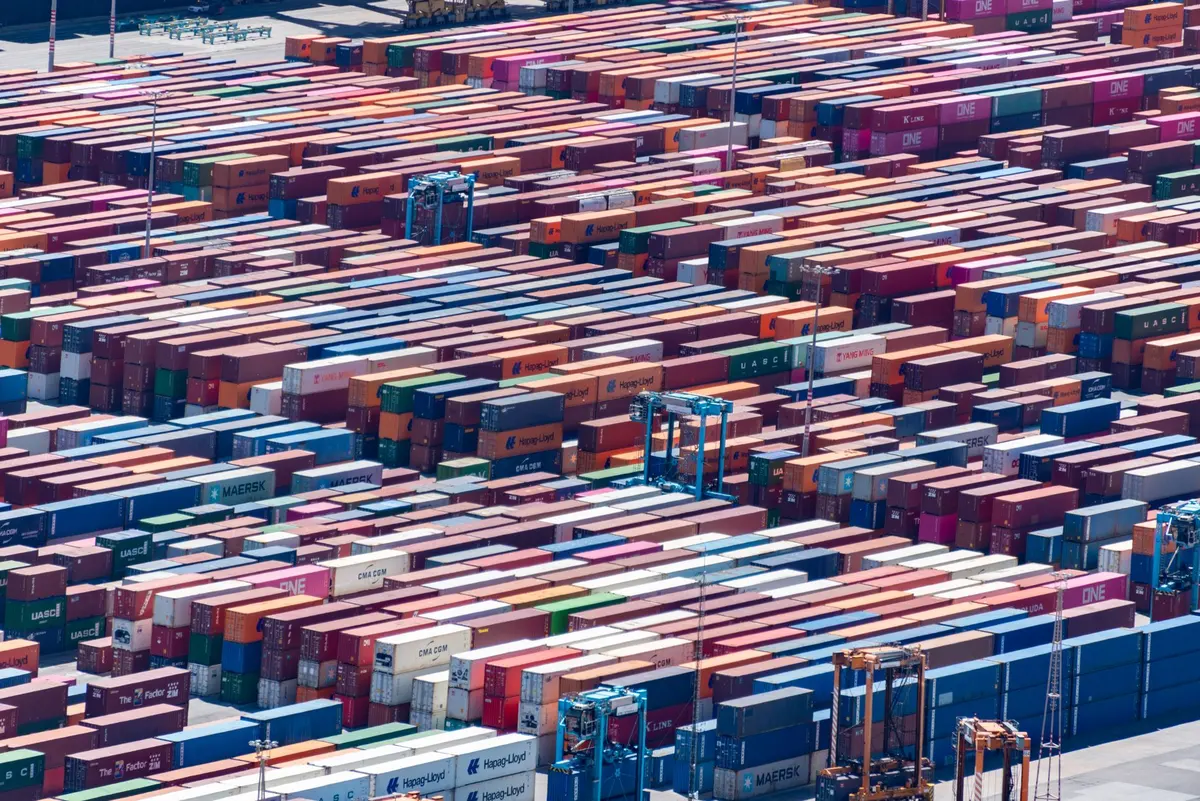
11 Best Sites Like Alibaba for B2B Sourcing in 2026
Alibaba is not always the right fit. Here are 11 alternative B2B marketplaces, ranked by sourcing region and use case, so you can find suppliers Alibaba's algorithm never surfaces.
Sep 30, 2026
Find verified suppliers on Tawaf
Create Free AccountB2B trade is moving online fast.
The shift from phone calls, trade fairs, and faxed purchase orders to digital marketplaces has been accelerating since 2020. According to Statista, the global B2B e-commerce market reached $20.9 trillion in 2025, dwarfing the B2C market by a factor of six. But despite this scale, many small and mid-size businesses still approach B2B marketplaces with uncertainty --- unsure what these platforms actually do, how they differ from consumer marketplaces, or which one fits their specific trade.
A business to business marketplace is an online platform where companies buy from and sell to other companies, rather than individual consumers. It connects manufacturers, wholesalers, distributors, and retailers in a digital environment that facilitates product discovery, supplier verification, price negotiation, order management, and sometimes payment and logistics. Unlike B2C platforms (Amazon, eBay), B2B marketplaces handle bulk orders, negotiated pricing, trade documentation, and longer sales cycles that are standard in commercial transactions.
The definition sounds straightforward, but the practical implications are significant. A B2B marketplace is fundamentally different from a consumer marketplace in ways that affect how you use it.
Here are the key structural differences:
| Feature | B2B Marketplace | B2C Marketplace |
|---|---|---|
| Buyer type | Businesses (retailers, distributors, manufacturers) | Individual consumers |
| Order size | Bulk (dozens to thousands of units) | Single units typically |
| Pricing | Negotiated, volume-based, often hidden until inquiry | Fixed, publicly displayed |
| Sales cycle | Days to months (involves negotiation, sampling, contracts) | Minutes to hours |
| Payment terms | Net 30/60/90, letters of credit, escrow | Immediate (credit card, PayPal) |
| Product information | Technical specifications, certifications, MOQs | Features, reviews, photos |
| Relationship | Ongoing (repeat orders, contracts) | Transactional (one-time or subscription) |
| Documentation | Invoices, certificates of origin, compliance docs | Receipt |
| Decision makers | Multiple (procurement, finance, quality, management) | Individual |
This table explains why you cannot simply "use Amazon" for B2B purchasing. The buying process is fundamentally different. A procurement manager comparing three textile suppliers needs MOQ flexibility, sample ordering, quality certification documentation, and the ability to negotiate pricing for a 10,000-unit order. Amazon's "Add to Cart" button does not accommodate this workflow.
B2B marketplaces fall into four categories: horizontal (sell everything to everyone, like Alibaba), vertical (specialize in one industry, like Joor for fashion wholesale), open (any verified business can join) and closed/private (invitation-only networks for specific industries or supply chains). Horizontal platforms offer the widest selection; vertical platforms offer deeper industry expertise, better-matched buyers and sellers, and more relevant product categorization.
Understanding the taxonomy helps you choose the right platform:
Horizontal Marketplaces
These platforms span multiple industries and product categories. They prioritize breadth over depth.
Vertical Marketplaces
These platforms serve specific industries with specialized features:
Managed/Transaction Marketplaces
Some platforms go beyond connecting buyers and sellers to actually manage the transaction --- handling payment, logistics, quality inspection, and dispute resolution. These add cost (typically 5-15% commission) but reduce risk.
Private/Closed Networks
Enterprise buyers sometimes operate private procurement marketplaces accessible only to approved suppliers. These are common in automotive, aerospace, and government procurement. SAP Ariba and Coupa are platforms that power many of these private networks.
Join Tawaf and connect with verified businesses across 47 countries. No middlemen, no commissions.
Join Tawaf FreeAlibaba dominates in Chinese supplier coverage but has trust challenges. Amazon Business is strongest for standardized products in the US and Europe. IndiaMART is the default for sourcing from India. Tawaf fills a gap for verified, cross-border trade with Middle East, African, and South Asian suppliers. TradeKey serves the Pakistan-Middle East corridor. The best platform depends on where your suppliers are, what you are buying, and how much risk mitigation you need.
Here is a detailed comparison:
| Platform | Founded | Suppliers | Geographic Focus | Key Strength | Primary Weakness | Supplier Verification | Revenue Model |
|---|---|---|---|---|---|---|---|
| Alibaba | 1999 | 200,000+ | China, global | Scale and variety | Supplier quality varies widely | Paid (Gold Supplier) | Membership + ads |
| Amazon Business | 2015 | 500,000+ | US, EU | Transaction convenience | Not for negotiated/custom orders | Amazon seller verification | Commission (8-15%) |
| IndiaMART | 1999 | 7,000,000+ | India | Indian supplier depth | Mostly inquiry-based, no transaction | TrustSEAL (paid) | Membership |
| Tawaf | 2025 | Growing | ME, Africa, South Asia | Verified businesses, cross-border | Newer, smaller supplier base | Trade license verified | Free for buyers |
| TradeKey | 2006 | 9,000,000+ | Pakistan, ME, global | Pakistan-Middle East trade | Interface dated | GoldKey, TrustPass | Membership |
| Global Sources | 1970 | 10,000+ | Asia | Curated quality | Smaller scale | Verified manufacturers | Membership + events |
| Faire | 2017 | 100,000+ | US, EU | Indie brand wholesale | Higher prices, consumer-adjacent | Brand-vetted | Commission (25% first, 15% repeat) |
A few observations from this comparison:
Alibaba is the default starting point for many buyers, but its scale is a double-edged sword. With 200,000+ suppliers, finding reliable partners requires significant vetting effort. The "Gold Supplier" badge is a paid subscription, not a quality indicator. Trade Assurance provides payment protection but does not guarantee product quality.
Amazon Business works well for office supplies, IT equipment, and other standardized products where you want quick, transactional purchasing. It does not serve custom manufacturing, bulk commodity purchasing, or negotiated trade.
Tawaf addresses a specific gap: verified B2B trade in emerging markets. If you are sourcing from Pakistani exporters, Turkish manufacturers, or African suppliers, the platform's business verification process provides a layer of trust that larger platforms do not consistently deliver for these regions.
Verification matters because B2B transactions involve larger sums ($5,000-$500,000+), longer fulfillment timelines (weeks to months), and greater consequences if a supplier fails to deliver. Unlike B2C where a $30 refund resolves most issues, a failed B2B shipment can mean missed retail seasons, broken contracts with your own customers, and significant financial loss. Platforms that verify supplier business registration, manufacturing capability, and trade history reduce these risks substantially.
The verification problem is the central challenge of B2B e-commerce. When you buy a $15 book on Amazon and it arrives damaged, the platform refunds you instantly. When you wire $50,000 to a supplier for a container of textiles that arrives with wrong specifications, the resolution process takes months and may require legal action.
Verification levels across platforms:
| Verification Level | What It Confirms | Platforms That Offer It | Buyer Confidence |
|---|---|---|---|
| Basic (self-reported) | Business name and contact info | Most platforms (free tier) | Low |
| Document verification | Business license, registration confirmed | Tawaf, some Alibaba tiers | Moderate |
| Factory audit | Physical inspection of manufacturing facility | Alibaba (Verified Supplier), SGS/Bureau Veritas | High |
| Transaction history | Proven record of completed orders | Amazon Business, Faire | High |
| Full certification | ISO, industry-specific compliance confirmed | Specialty platforms | Very high |
Tawaf's approach requires business document verification during the onboarding process. This means that before a supplier's profile goes live, their trade license and business registration have been confirmed. It is not the most rigorous verification possible (a factory audit is more thorough), but it eliminates the most common form of B2B fraud: companies that simply do not exist or misrepresent their operations.
For a deeper look at what makes Tawaf different, we have written about the platform's design philosophy and how it serves cross-border trade specifically.
B2B marketplaces give small businesses four advantages they previously could not access: discovery (being found by international buyers without trade show budgets), credibility (platform verification signals trustworthiness to new buyers), efficiency (digital communication and order management replaces manual processes), and market access (reaching buyers in countries where they have no sales team or distributor). For small suppliers, a B2B marketplace profile can function as their international sales department.
The democratization argument for B2B marketplaces is real, not just marketing.
Consider a textile manufacturer in Faisalabad, Pakistan. Before B2B marketplaces, reaching a retail buyer in Germany required:
With a B2B marketplace, the same manufacturer creates a verified profile, lists products with specifications and pricing, and becomes discoverable to any buyer searching for Pakistani textiles. The platform handles communication, and the buyer can verify the manufacturer's credentials before initiating contact.
For buyers, the benefits mirror:
Choose based on four criteria: where your target suppliers or buyers are located (geographic match), what you are buying or selling (category depth), how much risk mitigation you need (verification level), and your budget (subscription costs vs. transaction fees). Use multiple platforms simultaneously for discovery, but consolidate transactions on the platform that provides the best combination of supplier quality, trust mechanisms, and cost.
Decision framework:
If you are a buyer:
If you are a supplier:
Ready to explore a B2B marketplace built for cross-border trade? Create your free Tawaf account to browse verified suppliers, list your products, or both. No subscription fees for buyers.
The four primary risks are supplier fraud (receiving products that do not match specifications), payment loss (wiring money to non-existent or unreliable companies), intellectual property theft (sharing designs that suppliers copy and sell independently), and quality inconsistency (first orders are fine, subsequent orders degrade). Mitigation strategies include using platform escrow or payment protection, ordering samples before bulk, protecting IP through NDAs before sharing proprietary designs, and conducting regular quality inspections.
Risk management is not optional in B2B e-commerce. Here is a structured approach:
Risk 1: Supplier Fraud
Risk 2: Payment Loss
Risk 3: IP Theft
Risk 4: Quality Inconsistency
Three shifts are transforming B2B marketplaces in 2026: AI-powered matching (algorithms that connect buyers with optimal suppliers based on requirements, not just keyword search), embedded finance (trade credit, invoice factoring, and payment protection built into the platform), and vertical specialization (industry-specific platforms overtaking generalists in sectors like chemicals, agriculture, and medical devices). Platforms that combine verified suppliers with smart matching and financial services will win the next phase.
The evolution is meaningful for both buyers and suppliers:
AI-powered discovery: Instead of keyword searching and scrolling through pages of results, buyers describe their requirements and AI matches them with suitable suppliers. This is particularly valuable for complex procurement where product specifications, certifications, delivery requirements, and pricing all factor into supplier selection.
Embedded financial services: B2B marketplaces are adding trade finance directly into the platform. This includes:
Supply chain transparency: Post-COVID, buyers want visibility into their supply chain beyond the first tier. Marketplaces that can show where raw materials come from, how products are manufactured, and what compliance standards are met are winning buyer preference.
Regional platform growth: While Alibaba dominates the China-centric corridor, regional platforms are emerging for trade routes that Alibaba serves poorly. Tawaf for Middle East-Africa-South Asia trade, Tundra for Canadian wholesale, and numerous vertical platforms are capturing trade that falls outside Alibaba's sweet spot.
Getting started takes four steps: create a verified buyer account (provide business documentation for better access to suppliers), define your sourcing requirements clearly (product specifications, target price, quantity, delivery timeline, quality certifications needed), send structured inquiries to multiple suppliers (3-5 per product), and evaluate responses systematically (compare pricing, MOQ, lead time, verification level, and communication quality). Expect the first sourcing cycle to take 2-4 weeks from inquiry to sample approval.
A practical first-time buyer playbook:
Register on 2-3 platforms that match your sourcing geography. Create complete profiles --- suppliers take incomplete buyer profiles less seriously.
Write clear RFQs (Requests for Quotation) that include:
Send to multiple suppliers (3-5 per product). This gives you pricing benchmarks and negotiation leverage.
Evaluate responses using a scoring matrix:
| Criterion | Weight | Supplier A | Supplier B | Supplier C |
|---|---|---|---|---|
| Price competitiveness | 25% | |||
| MOQ flexibility | 15% | |||
| Lead time | 15% | |||
| Verification level | 20% | |||
| Communication quality | 15% | |||
| Certifications held | 10% |
Request samples from your top 2 candidates. Budget for sample costs and international shipping.
Place a trial order with the winning supplier before committing to full volume.
The Tawaf B2B marketplace is designed to facilitate this exact workflow, with verified supplier profiles, structured inquiry forms, and direct messaging for negotiation.
Is a B2B marketplace the same as a wholesale website? Not exactly. A wholesale website typically belongs to a single supplier selling their own products. A B2B marketplace is a platform hosting multiple suppliers, allowing buyers to compare options. Think of it as the difference between a brand's own store and a shopping mall. B2B marketplaces add value through supplier aggregation, verification, search functionality, and sometimes payment protection.
Do I need a business license to buy on B2B marketplaces? Requirements vary by platform. Amazon Business requires a business account. Alibaba allows individual buyers but reserves some features for verified businesses. Tawaf focuses on verified business-to-business transactions. IndiaMART is open to inquiries without business verification. Having a business license generally gives you access to better pricing and more suppliers.
How much does it cost to use a B2B marketplace? For buyers, most platforms are free to browse and send inquiries. Alibaba and IndiaMART are free for basic buyer access. Tawaf is free for buyers. Faire charges suppliers, not buyers. Amazon Business charges standard marketplace fees to sellers. Costs to suppliers range from free listings (Tawaf) to $2,000-$6,000/year (Alibaba Gold Supplier) to 15-25% transaction commissions (Faire).
Can B2B marketplaces handle international shipping and customs? Most B2B marketplaces do not handle logistics directly. They facilitate the connection between buyer and supplier, and the parties arrange shipping independently or through recommended freight forwarders. Amazon Business is an exception for domestic US orders, where it handles fulfillment. Some platforms partner with logistics providers to offer integrated shipping quotes. For cross-border trade, buyers typically work with freight forwarders for customs clearance and international shipping.
What is the difference between Alibaba and a B2B marketplace like Tawaf? Alibaba is the world's largest B2B marketplace with 200,000+ suppliers, predominantly from China. Its scale means enormous selection but variable supplier quality. Tawaf is a newer platform focused on verified, cross-border trade particularly for Middle East, African, and South Asian markets. The key difference is verification depth --- Tawaf requires business document verification at onboarding, while Alibaba's verification (Gold Supplier) is a paid subscription that signals investment but not necessarily quality.
Get Started
Create your free account and start connecting with verified suppliers and buyers worldwide.
Create Free Account
We help businesses navigate cross-border trade. Our team covers supplier verification, trade compliance, and B2B marketplace strategies to connect verified businesses worldwide.
Alibaba is not always the right fit. Here are 11 alternative B2B marketplaces, ranked by sourcing region and use case, so you can find suppliers Alibaba's algorithm never surfaces.
Sep 30, 2026

A trade marketplace connects buyers and sellers online. Here is how they work, what to check before joining one, and how Tawaf fits the Southeast Asian and cross-border trade landscape.
Sep 8, 2026
Trust is the currency of trade. Every international transaction requires a buyer to trust that a seller will deliver what was promised, and a seller to trust that a buyer will pay. When that trust is misplaced, the consequences are severe. The average SME fraud loss from unverified suppliers ranges
May 14, 2026