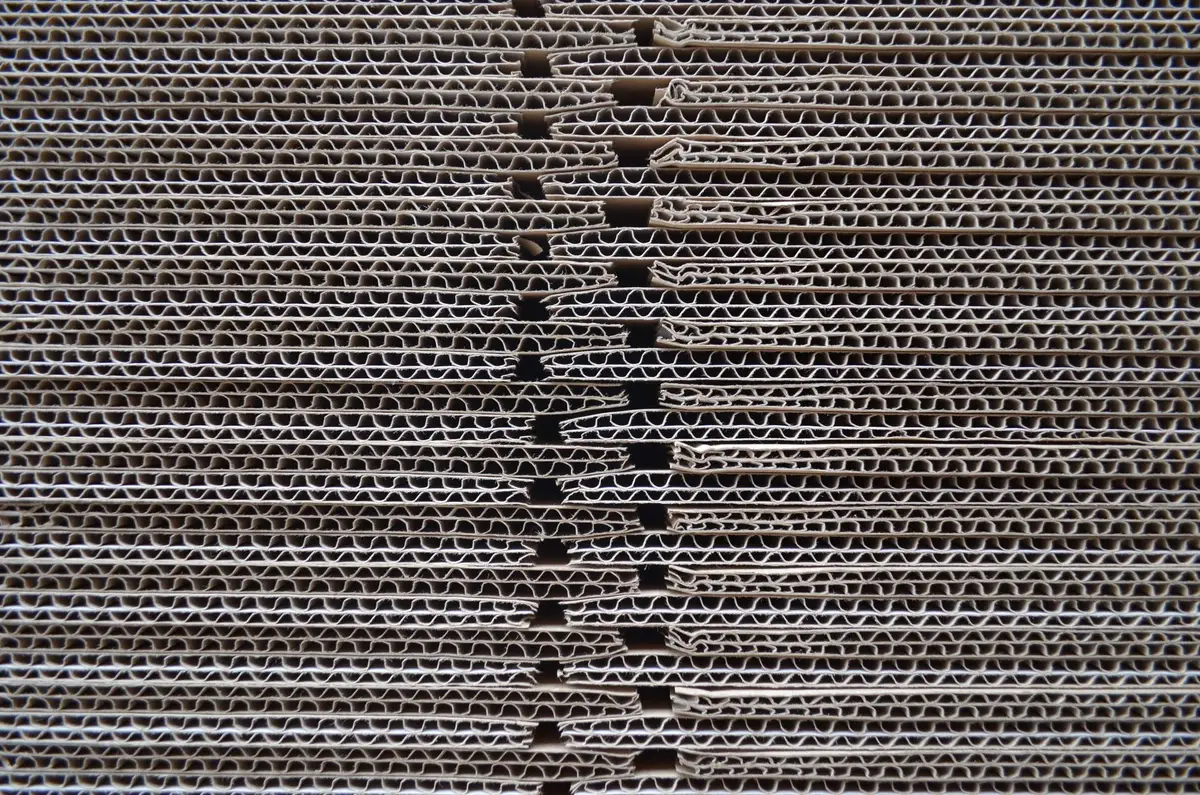
Corrugated Box Maker: How to Find and Vet the Right Supplier
A sourcing guide to corrugated box makers: how boxes are made, which flute type fits your product, pricing ranges, and how to verify a supplier before ordering.
Sep 23, 2026
Find verified suppliers on Tawaf
Create Free AccountJapan ships electronics everywhere.
That single fact underpins a $700-billion-per-year export economy and a secondary market for graded used devices that most Western buyers still underestimate. If you trade in smartphones, tablets, solar panels, auto parts, or heavy equipment, Japanese wholesale channels deserve a permanent spot in your sourcing rotation. This guide breaks down what is available right now, how Japanese grading works, who is already exporting on Tawaf, and how to place your first B2B order.
Wholesale electronics from Japan refers to the bulk purchase of new, pre-owned, or surplus electronic goods — smartphones, tablets, solar panels, and components — sourced from Japanese manufacturers, carriers, or certified resellers and exported under B2B trade terms with standardized grading for used inventory.
The phrase covers three distinct supply streams:
Japan's domestic replacement cycle is aggressive. Consumers upgrade smartphones every 18-24 months. Corporations swap out solar arrays when efficiency thresholds dip even slightly. Construction firms rotate heavy equipment on fixed depreciation schedules regardless of mechanical condition. The result: a steady, high-quality supply pipeline that feeds wholesale export channels year-round.
Japan ranks as the world's 4th-largest electronics exporter, moving roughly $120 billion in electronic goods annually. Strict domestic quality standards, short consumer upgrade cycles, and a mature logistics infrastructure make Japanese wholesale electronics consistently reliable for international B2B buyers.
Three structural advantages set Japan apart from competing export markets:
Quality control is cultural. Japanese inspection standards for used goods exceed what most markets classify as "refurbished." A Grade-B iPhone from a Tokyo warehouse often arrives in better condition than a Grade-A device from less rigorous markets. This is not opinion — it is the reason resellers in the Middle East, Africa, and Southeast Asia pay a premium for Japanese-graded stock.
Supply is predictable. Japan's three major carriers — NTT Docomo (36% market share), SoftBank (21%), and au/KDDI (27%) — run structured trade-in programs that generate consistent volumes of used smartphones and tablets every quarter (Statista, Japan Telecom Market). Wholesale exporters like TOZAI ENTERPRISE INC aggregate this inventory and ship it B2B.
Logistics infrastructure is world-class. Port of Yokohama, Port of Kobe, Narita cargo terminal — Japan's export corridors are optimized for containerized B2B shipments. Customs documentation is standardized. Shipping to Dubai, Nairobi, Manila, or Lagos follows well-established freight routes.
Join Tawaf and connect with verified businesses across 47 countries. No middlemen, no commissions.
Join Tawaf FreeThe Japanese grading system classifies used electronics into three tiers: Grade A (near-new, minimal signs of use), Grade B (minor cosmetic wear, fully functional), and Grade C (visible wear, fully functional). This standardized system lets B2B buyers order by grade without inspecting each unit.
Here is the grading breakdown in detail:
| Grade | Cosmetic Condition | Functional Status | Typical Price vs. New | Best For |
|---|---|---|---|---|
| A | Near-new. No scratches, no dents. Screen flawless. | 100% functional, battery health 85%+ | 55-70% of retail | Retail resellers, premium markets |
| B | Minor scratches on body. Screen clean or light marks. | 100% functional, battery health 75%+ | 40-55% of retail | Mid-tier resellers, rental fleets |
| C | Visible scratches, possible small dents. Screen may have light marks. | 100% functional, battery health 65%+ | 25-40% of retail | Budget markets, parts harvesting |
TOZAI ENTERPRISE INC, a verified Japanese exporter on Tawaf, ships iPad 7th Gen 32GB units in lots of 1,000 using this exact grading system. Buyers specify the grade mix — say, 500 Grade A and 500 Grade B — and TOZAI sorts and palletizes accordingly.
The grading system eliminates a problem that plagues used electronics sourcing in other markets: ambiguity. When a Lagos-based reseller orders 200 Grade-B iPhones from Japan, they know exactly what "Grade B" means. No guesswork, no post-delivery disputes.
Japanese wholesale exporters carry far more than phones and tablets. A single verified exporter like TOZAI ENTERPRISE INC lists smartphones, iPads, OEM auto parts, surplus solar panels, heavy construction equipment, industrial printing presses, watches, ceramics, and bulk pre-owned clothing — all available for B2B export.
Most buyers discover Japanese wholesale through smartphones. Then they see the catalog. Here is what TOZAI ENTERPRISE INC currently lists on Tawaf:
This is where Japanese wholesale gets serious. Japan's construction sector retires equipment early by global standards. The machines are maintained on factory schedules, stored indoors, and documented with full service histories.
That is 15+ product categories from a single exporter. Browse the full list on Tawaf's supplier directory.
Ready to source wholesale electronics and equipment from Japan? TOZAI ENTERPRISE INC is verified on Tawaf and actively shipping to buyers worldwide. Create your free buyer account to send your first enquiry — no middlemen, no listing fees.
Tawaf connects verified buyers with verified suppliers directly. You browse product listings, send an enquiry with your quantity and grade requirements, negotiate terms in a threaded message system, and finalize the order — all within the platform. No brokers, no cold emails.
Here is the step-by-step process:
The platform removes the two biggest friction points in cross-border B2B sourcing: finding a verified supplier and maintaining a structured communication trail. Every message, every quote, every counter-offer is logged.
Pricing depends on product category, grade, and order volume. Used smartphones start around $40-80 per unit for Grade C and reach $150-250 for Grade A iPhones. iPads in 1,000-unit lots range from $60-180 per unit depending on grade. Heavy equipment pricing is quoted per unit based on hours and condition.
Exact pricing is negotiated per order — this is B2B, not a catalog with fixed sticker prices. But here are realistic ranges based on current market conditions:
| Product | Grade/Condition | Typical B2B Price Range | MOQ |
|---|---|---|---|
| iPhone (mixed models) | Grade A | $150-250/unit | 100 |
| iPhone (mixed models) | Grade B | $80-150/unit | 100 |
| iPhone (mixed models) | Grade C | $40-80/unit | 100 |
| iPad 7th Gen 32GB | Grade A | $120-180/unit | 100 |
| iPad 7th Gen 32GB | Grade B | $80-120/unit | 100 |
| OEM Auto Parts (Toyota) | New surplus | Varies by part | Pallet |
| Surplus Solar Panels | Pre-owned | $0.08-0.15/watt | Container |
| Komatsu D475A Bulldozer | Pre-owned | $180,000-350,000 | 1 |
| Caterpillar D11R | Pre-owned | $200,000-400,000 | 1 |
| 220-350 Ton Cranes | Pre-owned | $250,000-800,000 | 1 |
These ranges shift with exchange rates (JPY/USD), global demand cycles, and seasonal supply patterns. Japanese fiscal year-end (March) often produces a spike in surplus inventory as companies clear books — which means March through May is historically a strong buying window.
Buyers span five main segments: mobile phone resellers across Africa and the Middle East, refurbishment operations in Southeast Asia, construction firms importing heavy equipment for infrastructure projects, auto parts distributors serving Japanese-brand vehicle fleets, and solar energy companies sourcing affordable panels.
The buyer profile for Japanese wholesale is more diverse than most people expect:
Mobile resellers (Africa, Middle East, South Asia) — Grade A and B smartphones from Japan are the backbone of the used phone trade in Lagos, Dubai, Karachi, and Nairobi. A container of 5,000 graded iPhones shipped FOB Yokohama can generate 30-50% margins at street-level retail in these markets.
Corporate fleet buyers — Companies that deploy tablets for field workers, retail POS, or education programs buy iPads in bulk. The iPad 7th Gen 32GB listing on Tawaf is specifically packaged for this buyer type.
Construction and mining companies — Japanese-maintained bulldozers and cranes are in constant demand across Africa, Southeast Asia, and the Middle East. A Caterpillar D11R from Japan with 8,000 documented hours will outperform a "newer" machine from a market with poor maintenance culture.
Auto parts distributors — Toyota, Nissan, Mitsubishi, and Honda dominate vehicle fleets in over 100 countries. OEM spare parts sourced directly from Japanese dismantlers and surplus channels undercut authorized dealer pricing by 30-60%.
Solar installers — Pre-owned Japanese solar panels offer 80-90% of original output at 40-60% of the cost of new panels. For off-grid projects and rural electrification, the economics are compelling.
Three areas require attention: customs classification (HS codes vary by product type and condition), import regulations for used electronics in your destination country, and payment security. Always use trade finance instruments like letters of credit for first orders with any new supplier.
Practical considerations for first-time importers:
Customs and HS codes. Used smartphones and new smartphones may fall under different HS codes in your country. Used electronics sometimes face additional import duties or require environmental compliance certificates. Check with your customs broker before placing a large order.
Destination country regulations. Some countries restrict or ban the import of used electronics (notably, certain West African nations have tightened e-waste regulations). Confirm that your intended products are legally importable.
Payment terms. For first orders, use a letter of credit (L/C) or escrow service. TOZAI ENTERPRISE INC and other verified exporters on Tawaf are accustomed to L/C transactions — it protects both sides. After establishing a relationship, many buyers shift to T/T (telegraphic transfer) with 30% deposit and 70% before shipping.
Inspection. For high-value equipment like cranes and bulldozers, arrange a pre-shipment inspection through a third party (SGS, Bureau Veritas, or equivalent). Most Japanese exporters welcome this — it demonstrates professionalism on both sides.
Shipping. Electronics ship in 20ft or 40ft containers. Heavy equipment may require flat-rack or roll-on/roll-off (RoRo) shipping. Japanese freight forwarders are experienced with both. Average transit time from Yokohama to Jebel Ali (Dubai) is 18-22 days; to Mombasa (Kenya) is 28-35 days.
In most countries, yes. Japan is a recognized export origin for used electronics, and its grading system is accepted by customs authorities worldwide. However, some nations impose restrictions on used electronic imports — particularly around e-waste concerns. Always verify your destination country's import regulations for used goods before ordering. Your customs broker can confirm the applicable HS codes and duty rates for graded used devices.
Minimum order quantities vary by product and supplier. For smartphones and tablets, most Japanese wholesalers set MOQs at 50-100 units per grade. For heavy equipment, the MOQ is typically one unit. TOZAI ENTERPRISE INC on Tawaf lists iPads in 1,000-unit lots, but buyers can enquire about smaller quantities. MOQs are always negotiable — especially for first-time buyers building a relationship.
On Tawaf, suppliers go through a verification process before their listings go live. Look for the verified badge on the supplier profile. Beyond the platform, check for a registered Japanese corporate number (available via the National Tax Agency's corporate database), confirm a physical address in Japan, and request references from existing buyers. TOZAI ENTERPRISE INC is a verified exporter with 15+ active product listings on Tawaf.
Yes. Most reputable Japanese exporters welcome warehouse visits and pre-shipment inspections. TOZAI ENTERPRISE INC operates out of Japan and can arrange buyer visits by appointment. For buyers who cannot travel, third-party inspection services like SGS Japan can perform on-site checks and provide detailed photo and video reports before shipment.
Ocean freight from Yokohama or Kobe to Jebel Ali (Dubai) takes 18-22 days. To Mombasa (Kenya), expect 28-35 days. To Lagos (Nigeria), transit is 35-45 days depending on routing. Air freight is available for high-value, low-volume orders — typically 3-5 days to major international hubs. Your supplier or freight forwarder will provide exact timelines based on your destination port.
Get Started
Create your free account and start connecting with verified suppliers and buyers worldwide.
Create Free Account
We help businesses navigate cross-border trade. Our team covers supplier verification, trade compliance, and B2B marketplace strategies to connect verified businesses worldwide.
A sourcing guide to corrugated box makers: how boxes are made, which flute type fits your product, pricing ranges, and how to verify a supplier before ordering.
Sep 23, 2026

A directory guide to product wholesalers by category: beauty, fashion, food, jewelry, and craft. Compare sourcing paths and connect with verified suppliers.
Sep 14, 2026

Medical equipment is a massive market. The global medical device industry exceeded $595 billion in 2025 and is projected to reach $750 billion by 2030, driven by aging populations, expanding healthcare access in emerging markets, and technological innovation. For B2B buyers --- hospital procurement
May 18, 2026